High Blood Pressure

High blood pressure increases the risk of heart disease, stroke, and other serious health complications, making regular monitoring and management essential. 

When to consult a doctor for high blood pressure?

If blood pressure readings are consistently high

See a doctor if your blood pressure is persistently above 140/90 mmHg, or above 130/80 mmHg if you have diabetes or kidney disease, to manage hypertension effectively.

If severe symptoms occur

Call 000 if you experience severe headaches, chest pain, dizziness, blurred vision, shortness of breath, or nosebleeds, as these may indicate complications of high blood pressure.

If sudden changes or risk factors are present

Seek medical advice if your blood pressure suddenly rises above 180/120 mmHg, if you are pregnant or planning pregnancy, have a family history of hypertension, heart disease, diabetes, obesity, high cholesterol, or are already on blood pressure medication.

This guide does not replace professional care. Consult a doctor to manage your symptoms. In emergencies, call 000. The content is research-backed & medically reviewed by Dr. Ammar AL-ANI, MBChB, CCBST, AMC

Symptoms

  • Headaches, dizziness or blurred vision 
  • Chest pain 
  • Shortness of breath 
  • Fatigue 
  • Nosebleeds 
  • Irregular heartbeat 

How high blood pressure affects organs?

High blood pressure can silently damage multiple organs over time, especially when left untreated. 

  • Heart: Risk of heart attack, heart failure, irregular heart rhythms 
  • Brain: Risk of stroke, cognitive decline, dementia 
  • Eyes: Can cause hypertensive retinopathy → vision problems 
  • Kidneys: Damage to kidney function → chronic kidney disease risk 
  • Arteries: Arterial stiffness & atherosclerosis → reduced blood flow 

How to manage high blood pressure?

Effective management involves lifestyle changes and, in some cases, medication: 

  • Adopt a heart-healthy diet: Reduce sodium, eat more fruits, vegetables, and whole grains. 
  • Exercise regularly: Aim for at least 30 minutes of moderate exercise most days of the week. 
  • Limit alcohol & quit smoking: Reducing both can significantly lower blood pressure. 
  • Manage stress: Practices like meditation and deep breathing can help. 
  • Maintain a healthy weight: Shedding extra kilos can help control blood pressure. 
  • Monitor blood pressure: Regular checks at home or with a GP are crucial. 
high-blood-pressure-treatment-hola-health

Telehealth assessment

It is important to speak to a GP first to understand and manage your symptoms. 

Hola Health provides a convenient way for you to consult a doctor online, 24/7 across Australia. Our AHPRA-registered Australian online GP will conduct a comprehensive assessment to provide the best possible care.  

Start your GP consult now

Clinical note: An online GP consult provides medical advice for blood pressure management and evaluates if a prescription renewal, medication adjustment, or pathology referral is appropriate. Telehealth is a complementary service; an in-person physical examination is the clinical standard for initial diagnosis and screening for end-organ damage (such as heart murmurs or bruit). Online GPs can provide pathology referrals, as well as prescriptions if clinically indicated. Assessment and prescribing via telehealth rely on the accuracy of home blood pressure readings provided by the patient using a validated device.  In case of a blood pressure reading above 180/120 mmHg, sudden severe headache, chest pain, or blurred vision, call 000 or visit an Emergency Department immediately. We recommend sharing your consult summaries with your regular GP to ensure continuity of care.

patient-seeking-virtual-care-with-online-doctor-from-home-resting
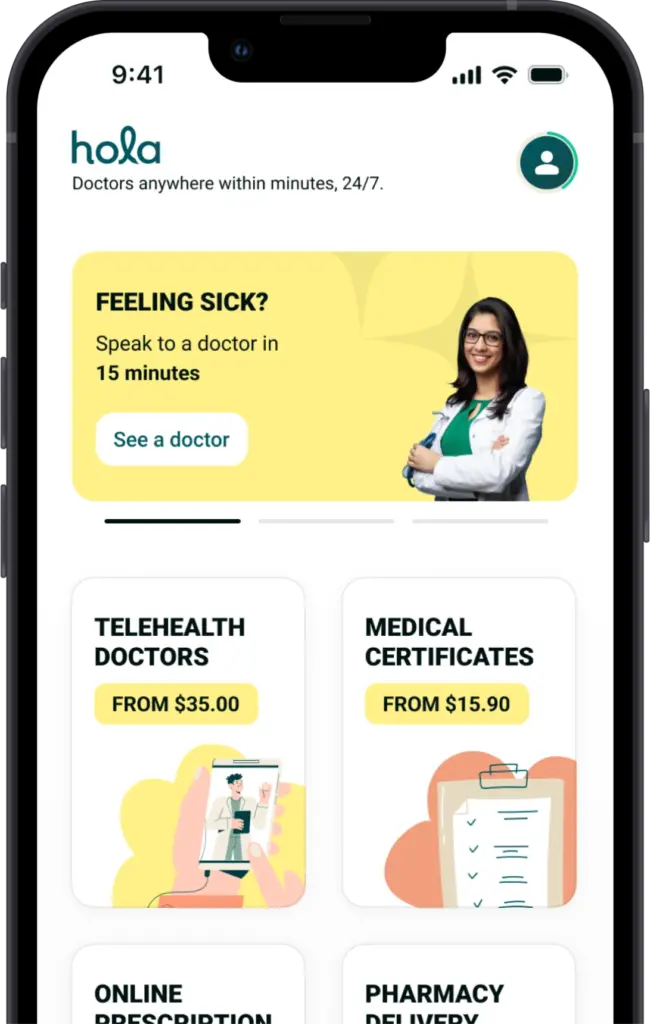
Hola-Health-mobile-app,-showing-a-smartphone-with-the-app-interface.

Download our Mobile App for better performance

download-hola-app Scan the QR Code to download the Hola app.