

Contents
When a teen shuts down emotionally

 ChatGpt
  Google AI Mode
  Perplexity
  Claude
 This blog is for educational purposes only and does not replace professional medical advice or diagnosis. If you have health concerns, consult an AHPRA-registered telehealth doctor or request a medical certificate online if clinically appropriate. Please note: Hola Health does not currently offer Mental Health Care Plans.
Overview
Teenage years are marked by significant physical and emotional shifts. Teenagers face a range of difficulties, from managing school pressures to developing their identity and navigating relationships. During this difficult phase, many teens may undergo emotional detachment, where they shut down emotionally, cease communication, and pull away from the people around them. More than one in four Australian teens suffer from mental health distress. Emotional withdrawal may be a coping mechanism, but it may also indicate underlying emotional challenges. Understanding why teenagers shut down emotionally and the effects it has on their lives is important for parents, teachers, and peers to offer the necessary support.
What causes a child to shut down emotionally?
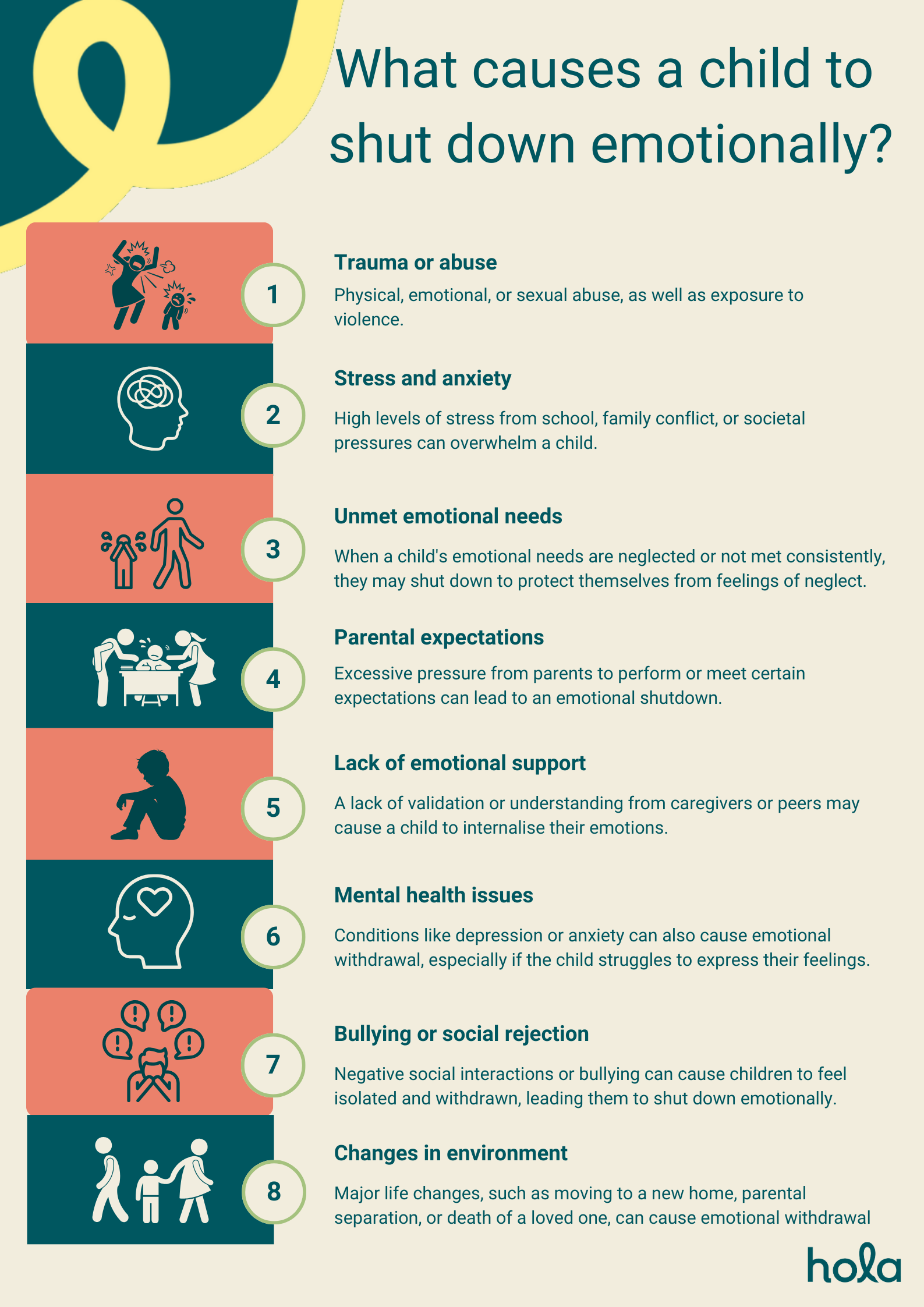
A child may shut down emotionally due to various factors, often linked to their environment, experiences, or developmental stage. Some common causes include:
- Trauma or abuse: Physical, emotional, or sexual abuse, as well as exposure to violence, can cause a child to emotionally withdraw as a defence mechanism to cope with overwhelming feelings.
- Stress and anxiety: High levels of stress from school, family conflict, or societal pressures can overwhelm a child, leading them to withdraw emotionally as a way of coping with anxiety.
- Unmet emotional needs: When a child’s emotional needs are neglected or not met consistently, they may shut down to protect themselves from feelings of neglect or abandonment.
- Parental expectations: Excessive pressure from parents to perform or meet certain expectations can lead to an emotional shutdown, especially if the child feels they are constantly falling short.
- Lack of emotional support: A lack of validation or understanding from caregivers or peers may cause a child to internalise their emotions, leading them to shut down to avoid rejection or further distress.
- Mental health issues: Conditions like depression or anxiety can also cause emotional withdrawal, especially if the child struggles to express or understand their feelings.
- Bullying or social rejection: Negative social interactions or bullying can cause children to feel isolated and withdrawn, leading them to shut down emotionally to protect themselves from further hurt.
- Changes in environment: Major life changes, such as moving to a new home, parental separation, or the death of a loved one, can create feelings of insecurity and cause emotional withdrawal.
How to get the shutdown teen to open up?
To assist withdrawn adolescents in expressing themselves, it is essential to establish a safe and non-judgmental environment in which they can feel at ease. It is important to demonstrate patience and allow sufficient time for them to share their thoughts, refraining from imposing any pressure or urgency. Convey genuine interest in their perspectives and emotions, while ensuring that active listening is practiced without interruption or unsolicited advice unless it is explicitly requested. It is also vital to acknowledge and validate their feelings by recognising their challenges and reassuring them that their emotions are acceptable. Encouraging discussions about their interests, hobbies, or everyday experiences can foster trust and facilitate open communication. Additionally, it is crucial to provide consistent support and demonstrate emotional availability, offering comfort without overwhelming them. Should the adolescent continue to withdraw, it may be beneficial to suggest seeking professional assistance, such as therapy, as a constructive step towards obtaining the necessary support.
See an AHPRA-registered doctor online, anytime
24/7 across Australia
Authors

Editorial staff
Medically reviewed by

Amira Shah
Master’s in Counselling Psychology, Psychotherapist & Counsellor
8+ Years of Experience
Amira Shah is a trauma-informed psychotherapist with over a decade of experience in supporting women through complex mental health challenges. She holds a Master’s in Counselling Psychology and has worked extensively at a women’s centre, offering therapy to survivors of physical abuse, sexual assault, PTSD, and human trafficking. Amy owns her practice, Empathetic Counselling & Psychotherapy (ECP), and is committed to continuing her support for women.
Disclaimer
This blog is for general informational purposes only and does not indicate that Hola Health provides all treatments or preventive measures mentioned. It is not intended to be a substitute for professional medical advice. Always seek the guidance of your doctor or other qualified health professional with any questions you may have regarding your health or a medical condition. For emergencies please immediately contact 000. Any medical topics discussed are intended to educate, not to imply availability through Hola Health.
Note: At Hola Health, we're committed to offering trustworthy, accurate and up-to-date health information. Our Editorial Process entails thorough research, fact- checking, and medical review by doctors in diverse health fields, including medical practitioners, doctors, and psychotherapists based in Australia. We take guidance from qualified Australian doctors. We prioritise primary sources and avoid tertiary references wherever possible.
See a Aussie GP online, available 24/7
Download the app today.