

Contents
Mental health issues at the workplace: Key factors & what can help

 ChatGpt
  Google AI Mode
  Perplexity
  Claude
 This blog is for educational purposes only and does not replace professional medical advice or diagnosis. If you have health concerns, consult an AHPRA-registered telehealth doctor or request a medical certificate online if clinically appropriate. Please note: Hola Health does not currently offer Mental Health Care Plans.
Overview
Mental health challenges at work, like stress, anxiety, and burnout, are often driven by long hours, heavy workloads and constant pressure. Employers can help by promoting open communication, offering mental health problems, doctors certificate online, and encouraging work-life balance to enhance productivity.
Mental health in the workplace is no longer a buzzword—it’s a growing concern affecting everyone from junior employees to senior executives. With long working hours, demanding tasks, and ongoing performance pressure, it’s no surprise that mental health issues like stress, anxiety, and burnout are on the rise.
According to Gallup’s State of the Global Workplace 2023 Report, around 59% of Australian workers experience significant stress. But here’s the good news: By identifying the root causes and taking proactive action, we can foster a healthier, happier, and more productive work culture for everyone.
Mental health issues at work
Key factors
Several factors contribute to mental health problems at work, including:
- Lack of work-life balance: The challenge of stepping away from work, particularly with remote work and flexible schedules, can leave employees feeling fatigued and mentally exhausted, impacting their personal lives and emotional health.
- Work-related stress: Excessive workloads, strict deadlines, and continuous performance pressure may overwhelm employees, contributing to persistent stress, fatigue, and anxiety.
- Toxic workplace culture: A hostile work atmosphere dominated by harassment, partiality, or disrespect can contribute to feelings of isolation, depression, and disconnection.
- Weak management and communication: Poor leadership, unclear guidelines, and a lack of emotional support can cause frustration, confusion, and stress among employees.
- Job instability: Worries about job loss or unstable work conditions can lead to stress and unease, making employees feel unsupported and disengaged.
- Lack of appreciation and support: When employees feel disregarded or undervalued, it may result in reduced motivation, self-doubt, and mental health issues.
Key factors affecting mental health at work include high stress, poor work-life balance, job insecurity, toxic workplace culture, weak management, and lack of recognition. These issues may cause burnout, depression, anxiety, and decreased productivity.
Common mental health issues
Common mental health issues seen in the workplace include:
- Chronic stress
- Anxiety
- Sleep disorders
- Depression
- Burnout
- Substance abuse
- Post-Traumatic Stress Disorder (PTSD)
Mental health struggles in the workplace, such as stress, anxiety, and burnout, are frequently caused by heavy workloads, poor communication, a toxic environment, and lack of recognition. Addressing these problems can improve overall employee performance and health.
Causes
Several factors influence mental health at work, including:
- Workload and job demand
- Professional connections
- Management and leadership
- Job security
- Work atmosphere
- Work-life balance
- Recognition and support
Workload, workplace bonds, management style, job stability, work atmosphere, work-life balance, and recognition influence mental health at work. Intense pressure, poor communication, insufficient support, and a toxic workplace may negatively impact mental well-being, while nurturing environments foster better well-being and productivity.
How to address mental health issues in the workplace?
Addressing mental health issues effectively can reduce stress, improve employee well-being, and create a supportive work environment:
- Encourage open dialogue: Foster discussions around mental health to diminish stigma and cultivate a supportive culture.
- Provide mental health support: Offer employee assistance programs (EAPs), counselling access, and wellness initiatives.
- Promote work-life balance: Advocate for flexible hours, regular downtime, and realistic workload expectations to avert burnout.
- Train managers on mental health awareness: Equip leaders with the tools to support their teams and identify signs of distress.
- Foster a positive workplace: Address stress factors, implement anti-harassment policies, and advocate for equity.
- Regularly check in: Conduct mental health assessments, deliver support, and make necessary changes to enhance well-being.
Focusing on mental health in the workplace fosters a supportive and efficient environment. Encouraging open dialogue, providing resources, and proactive leadership can make employees feel appreciated and driven. A mentally healthy workplace is advantageous for both individuals and the organisation as a whole.
What to do when your work is affecting your mental health?
If your job is impacting your mental health, it’s crucial to take proactive measures to safeguard your well-being. Here’s what you can do:
- Recognise your emotions: Be aware of the signs of stress, anxiety, or burnout. If you find yourself frequently feeling overwhelmed, drained, or disinterested, it’s time to take action.
- Determine the sources of stress: Identify which aspects of your job are causing you distress. This might include a heavy workload, difficult coworkers, a lack of appreciation, or unrealistic goals.
- Establish boundaries: Try to refrain from bringing work home and set clear work hours. Learn to decline excessive tasks and delegate responsibilities when necessary.
- Make self-care a priority: Allocate time for activities that help you unwind, like exercising, meditating, engaging in hobbies, or spending time with friends. Eating nutritious foods and getting adequate sleep can also bolster your resilience to stress.
- Reach out for support: Discuss your concerns with a trusted coworker, supervisor, or HR representative. If your workplace has an employee assistance program (EAP), consider utilising counselling services.
- Think about taking time off: If stress becomes unmanageable, consider taking a break, which can be either a short vacation or a mental health day. A temporary pause can help you recharge and gain perspective.
- Consider long-term solutions: If your work environment remains consistently harmful to your mental health, think about seeking new job opportunities or career paths that better align with your well-being.
- Seek professional help: If job-related stress is severely affecting your mental health, reach out to a therapist or counsellor who can offer coping strategies and guidance.
Prioritising mental health at work is essential for overall well-being. Recognising stress, setting boundaries, practising self-care, and seeking support can help manage workplace challenges. If issues persist, consider professional help or long-term changes to create a healthier work-life balance.
When to get mental health support
Obtain mental health support if you find yourself continually feeling overwhelmed, anxious, or depressed, particularly if it disrupts your daily activities, relationships, or work. Seek assistance if you frequently experience mood swings, trouble focusing, severe fatigue, or notable changes in sleep and appetite.
If stress triggers panic attacks, thoughts of self-harm, or substance abuse, professional help is essential. Therapy can also address workplace burnout, unresolved trauma, or significant life changes. There’s no need to wait until a crisis occurs—early intervention can prevent issues from escalating. Prioritising mental health is vital for overall well-being and long-term resilience.
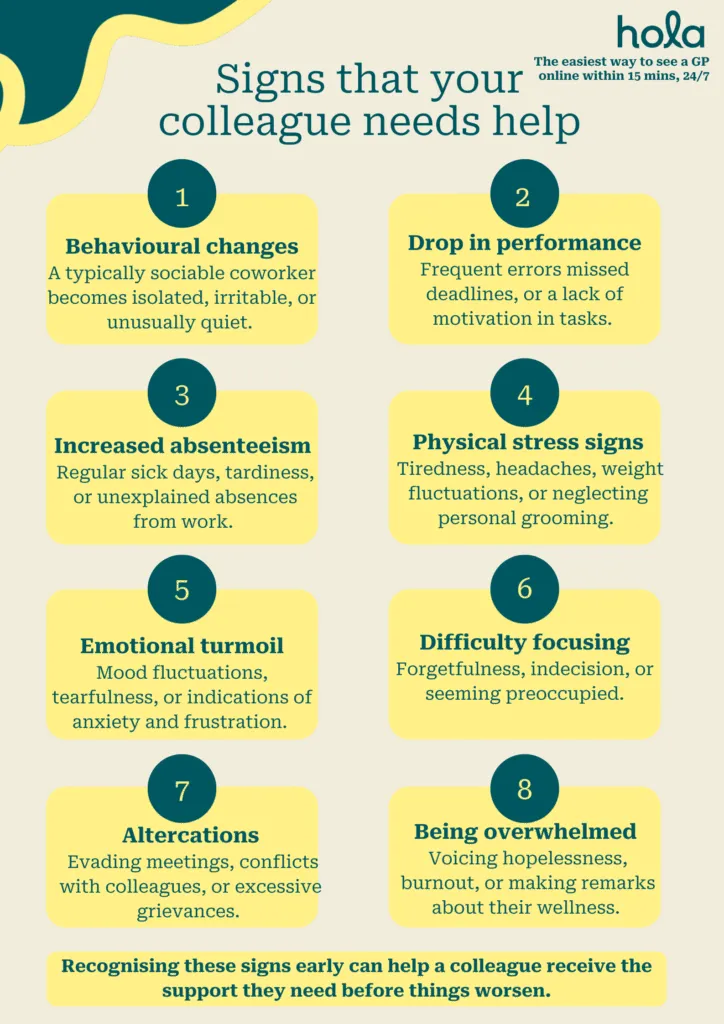
Signs that a work colleague needs help
It’s important to look out for colleagues who may be struggling with their mental health. Noticing the signs early can help them get the support they need before things worsen.
- Behavioural changes: A typically sociable coworker becomes isolated, irritable, or unusually quiet.
- Drop in work performance: Frequent errors, missed deadlines, or a lack of motivation in tasks.
- Increased absenteeism: Regular sick days, tardiness, or unexplained absences from work.
- Physical indicators of stress: Tiredness, headaches, weight fluctuations, or neglecting personal grooming.
- Emotional turmoil: Mood fluctuations, tearfulness, or indications of anxiety and frustration.
- Difficulty focusing: Forgetfulness, indecision, or seeming preoccupied.
- Alterations in social interactions: Evading meetings, conflicts with colleagues, or excessive grievances.
- Expressing feelings of being overwhelmed: Voicing hopelessness, burnout, or making concerning remarks about their wellness.
Recognising these signs early can help a colleague receive the support they need before things worsen. By offering empathy, checking in, and encouraging professional help, you can contribute to a healthier and more supportive workplace environment.
Supporting someone at work
It’s crucial to assist coworkers who might be dealing with mental health challenges. Simple gestures of kindness and empathy can significantly impact their overall well-being.
- Listen with an open mind: Allow them to express their emotions without interruption or rushing to provide solutions.
- Regular check-in: A brief “How are you?” can help establish a safe environment for them to open up.
- Encourage seeking professional assistance: Recommend reaching out to HR, utilising employee support programs, or considering therapy if necessary.
- Provide tangible help: Offer to lighten their workload if possible or aid in locating beneficial resources.
- Honour their confidentiality: Keep their issues private and refrain from discussing their situation with others.
- Promote a nurturing work atmosphere: Advocate for breaks, collaboration, and a culture that prioritises mental health.
Assisting a colleague facing mental health difficulties can have a significant impact. By listening, providing support, and encouraging professional assistance, you contribute to a more empathetic workplace. A supportive environment promotes well-being, collaboration, and a healthier organisational culture for everyone. Creating a mentally healthy workplace goes beyond providing support—it’s about cultivating a culture where employees feel heard, valued, and balanced. By fostering open communication, offering mental health resources, and promoting work-life balance, employers can minimise stress and improve overall well-being. A little compassion can make a big difference in developing a thriving, productive work atmosphere!
See an AHPRA-registered doctor online, anytime
24/7 across Australia
Authors

Editorial staff
Medically reviewed by

Amira Shah
Master’s in Counselling Psychology, Psychotherapist & Counsellor
8+ Years of Experience
Amira Shah is a trauma-informed psychotherapist with over a decade of experience in supporting women through complex mental health challenges. She holds a Master’s in Counselling Psychology and has worked extensively at a women’s centre, offering therapy to survivors of physical abuse, sexual assault, PTSD, and human trafficking. Amy owns her practice, Empathetic Counselling & Psychotherapy (ECP), and is committed to continuing her support for women.
Disclaimer
This blog is for general informational purposes only and does not indicate that Hola Health provides all treatments or preventive measures mentioned. It is not intended to be a substitute for professional medical advice. Always seek the guidance of your doctor or other qualified health professional with any questions you may have regarding your health or a medical condition. For emergencies please immediately contact 000. Any medical topics discussed are intended to educate, not to imply availability through Hola Health.
Note: At Hola Health, we're committed to offering trustworthy, accurate and up-to-date health information. Our Editorial Process entails thorough research, fact- checking, and medical review by doctors in diverse health fields, including medical practitioners, doctors, and psychotherapists based in Australia. We take guidance from qualified Australian doctors. We prioritise primary sources and avoid tertiary references wherever possible.
See a Aussie GP online, available 24/7
Download the app today.