

Contents
Sleep anxiety & its impact on mental health

 ChatGpt
  Google AI Mode
  Perplexity
  Claude
 This blog is for educational purposes only and does not replace professional medical advice or diagnosis. If you have health concerns, consult an AHPRA-registered telehealth doctor or request a medical certificate online if clinically appropriate. Please note: Hola Health does not currently offer Mental Health Care Plans.
Overview
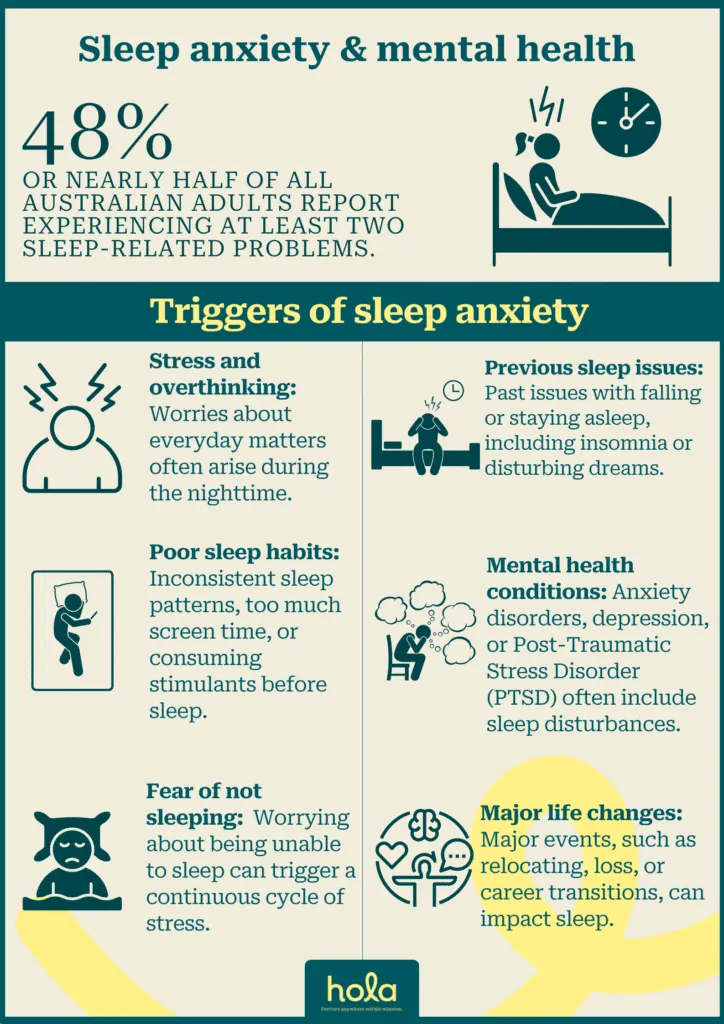
Sleep anxiety disrupts rest and harms mental health, causing stress, cognitive decline, and emotional imbalance. It creates a self-perpetuating cycle of sleeplessness and worry, impacting overall well-being. Evidence-based solutions like cognitive behavioural therapy, relaxation techniques, and good sleep hygiene can help regain restful sleep and improve mental health. Sleep is meant to be a time for relaxation and rejuvenation, but for some people, it can turn into a nightly struggle. Rather than peacefully falling asleep, the worry of not being able to sleep takes over, turning bedtime into a stressful event. This is known as sleep anxiety—a silent disruptor of our peace of mind and rest. Nearly half (48%) of all Australian adults report experiencing at least two sleep-related problems, making sleep anxiety more common than we might think. Over time, this anxiety can escalate into more serious mental health concerns, making it difficult to stay alert during the day. Understanding the impact of sleep anxiety is the first step to overcoming it and regaining the restorative sleep we all deserve.
What is sleep anxiety?
Sleep anxiety is more than insomnia. It often creates a vicious cycle – worry about sleep, difficulty sleeping, increased anxiety about sleep- repeat. Also read: What are the Most Common Causes of Sleep Disturbance?
What does sleep anxiety feel like?
Sleep anxiety can feel like a restless blend of worry and tension just before bedtime. You may experience emotional and physical symptoms, including:
1. Emotional symptoms:
- Pre-sleep panic (“what if I can’t sleep tonight?”)
- Nighttime rumination (replaying conversations/events) Morning dread (anticipating another bad night) Irritability from chronic tiredness
2. Physical symptoms:
- Muscle tension (especially jaw, shoulders) Racing heart rate when trying to sleep Shallow breathing or cheat tightness restless body (constant repositioning)
Sleep anxiety involves emotional signs like racing thoughts, dread of bedtime, and irritability, as well as physical signs such as tense muscles, increased heartbeat, and restlessness. These symptoms create a cycle that makes it difficult to sleep and worsens anxiety. Understanding emotional and physical signs is key to managing and improving sleep.
What triggers sleep anxiety?
Sleep anxiety stems from multiple interconnected factors that create and sustain the sleep-worry cycle. The most common triggers include
- Stress and overthinking: Worries about career, relationships, and everyday matters often arise during the nighttime.
- Poor sleep habits: Inconsistent sleep patterns, too much screen time, or consuming stimulants like caffeine before bedtime can disrupt sleep.
- Fear of not sleeping: Worrying about being unable to sleep can trigger a continuous cycle of stress.
- Previous sleep issues: Past issues with falling or staying asleep, including insomnia or disturbing dreams, may cause a sense of dread at night.
- Mental health conditions: Anxiety disorders, depression, or Post-Traumatic Stress Disorder (PTSD) often include sleep disturbances.
- Major life changes: Major events, such as relocating, loss, or career transitions, can impact sleep temporarily or over an extended period.
Sleep anxiety can be triggered by stress, poor sleep habits, fear of not sleeping, past sleep problems, mental health conditions, or major life changes. These factors initiate a loop of worry and disturb sleep. Identifying the underlying cause can assist in effectively tackling and reducing sleep anxiety.
Somniphobia symptoms to recognise
Somniphobia (fear of sleep) is a specific phobia in which the individual experiences an intense fear of falling asleep. Symptoms include:
1. Emotional symptoms:
- Extreme fear or anxiety at the thought of falling asleep
- Nighttime dread or reluctance to go to bed
- Constant worry about sleep-related circumstances or nightmares
- Feeling overwhelmed by the need to sleep, yet unable to unwind
2. Physical symptoms:
- Restlessness or trouble unwinding before sleep
- Increased heart rate or palpitations as bedtime approaches
- Shaking or trembling at the thought of sleep
- Perspiration or a feeling of tightness in the chest
- Sleep disturbances like insomnia or frequent awakenings throughout the night
Somniphobia, or the fear of sleep, involves emotional symptoms like intense fear, panic, and dread of bedtime, along with physical symptoms such as restlessness, increased heartbeat, and sweating. These signs can cause sleep disturbances, including insomnia. Recognising these symptoms is essential for addressing somniphobia effectively.
How does sleep impact your mental health?
Sleep is vital for mental health. Sufficient restorative sleep helps stabilise mood, improve cognitive function, and manage stress. It strengthens emotional resilience, reduces anxiety and depression, and improves memory and decision-making skills. Conversely, poor sleep or sleep deprivation can worsen mental health, resulting in irritability, increased stress, anxiety, and a higher risk of developing depression.
Do individuals vary in the amount of sleep they need?
Individuals require different amounts of sleep, which can be influenced by various factors such as age, genetics, lifestyle, and health status. While the typical recommendation for adults is between 7 to 9 hours of sleep each night, some may feel rejuvenated with slightly less, whereas others might require more to operate optimally. Children need 9-12 hours, teenagers 8-10 hours and older adults 7-8 hours on average. Aspects like stress, level of physical activity, and medical issues can also affect how much sleep a person needs. Sleep requirements are not universally applicable. Paying attention to your body’s signals and assessing how you feel during the day can help determine your ideal sleep duration.
How can I overcome sleep anxiety?
Sleep anxiety can create a cycle that prevents restful slumber. To combat this, begin by establishing a soothing bedtime routine. Engage in activities such as reading, gentle stretching, or 4-7-8 breathing exercises to calm your mind and body before sleep. Refrain from screens at least 1 hour before bed, caffeine after 2pm, and heavy meals in the evening, as these can heighten anxiety and disturb sleep patterns. Consider Cognitive behavioural therapy for insomnia (CBT-I) has proven to be one of the most effective remedies. It helps in shifting negative perceptions about sleep and developing better sleeping practices. Maintaining a regular sleep schedule with no more than 1 hours variation on weekends. With appropriate strategies and support, sleep anxiety can be effectively managed, allowing for more restful nights and enhanced overall well-being.
How can I prevent sleep anxiety?
Sleep anxiety can perpetuate a cycle that hinders your ability to sleep. To address it, establish a relaxing pre-sleep routine. Consider engaging in calming activities such as reading, gentle stretches, or breathing exercises to prepare your mind and body for rest. Limit screen exposure, caffeine, and heavy meals in the evening, as these can exacerbate anxiety and disrupt your ability to sleep. Cognitive behavioural therapy for insomnia (CBT-I) stands out as one of the most effective solutions. It assists in reframing negative thoughts associated with sleep and fosters healthier sleeping habits. For best results, try implementing these strategies consistently for at least 4 weeks. Sleep anxiety can be effectively managed by employing the right strategies and resources. This can promote restful nights and enhance overall well-being.
Tips for creating healthy sleep habits and improving sleep
Preventing sleep anxiety involves cultivating healthy sleep practices and creating a serene atmosphere that encourages relaxation. Adhere to a regular sleep routine by going to bed and waking at the same time every day, even on weekends. This approach regulates your body’s internal clock and lessens bedtime-related stress. Design a calming pre-bedtime routine, such as enjoying a warm shower, listening to relaxing music, or practising deep breathing. Reduce screen time at least one hour prior to sleep, as blue light can disrupt melatonin production. Steer clear of stimulants such as caffeine and alcohol in the evening, and ensure your sleeping area is comfortable, quiet, and dark. Psychotherapist Amira Shah mentions – The ideal sleep environment is cool (around 18-20 degree C) completely dark, and free from noise disruptions. By emphasising consistent routines and tranquil habits, you can diminish the likelihood of sleep anxiety and experience more restful, worry-free nights.
When to get support
Obtaining sufficient restorative sleep is vital for mental, emotional, and physical health. Here are some straightforward techniques to enhance your sleep quality:
- Follow a routine: To help regulate your body clock, retire to bed and wake up at the same time every day.
- Establish a calming bedtime routine: Wind down with soothing activities like reading or deep breathing.
- Enhance your sleep environment: Maintain a cool, quiet, dark, and comfortable bedroom.
- Minimise stimulants: Avoid caffeine, alcohol, and heavy meals before going to bed.
- Stay active: Regular physical activity promotes better sleep, but refrain from intense workouts late in the evening.
Implementing small, steady adjustments to your nightly practices can yield deeper, more restorative sleep over time. If sleep problems persist beyond 3-4 weeks, consider seeking professional help.
Where to get support
If you are experiencing difficulties with sleep or facing mental health issues that impact your daily routine, seeking help can significantly improve your situation. Begin by consulting your general practitioner, who can evaluate your symptoms and refer you to a specialist if necessary. Additionally, you should reach out to a psychologist or sleep therapist for personalised approaches. You can obtain a systematic method for addressing sleep and emotional well-being, directed by professionals from the comfort of your own home. Don’t hesitate—assistance is available when you need it the most. Sleep anxiety isn’t just a poor night’s sleep—it’s a barrier to poor mental health. However, with the right strategies, like better sleep habits and relaxation methods, it’s possible to break the pattern and enjoy peaceful nights again. Once you take charge of your sleep, you’ll be moving toward a healthier, more energised mind.
See an AHPRA-registered doctor online, anytime
24/7 across Australia
Authors

Editorial staff
Medically reviewed by

Amira Shah
Master’s in Counselling Psychology, Psychotherapist & Counsellor
8+ Years of Experience
Amira Shah is a trauma-informed psychotherapist with over a decade of experience in supporting women through complex mental health challenges. She holds a Master’s in Counselling Psychology and has worked extensively at a women’s centre, offering therapy to survivors of physical abuse, sexual assault, PTSD, and human trafficking. Amy owns her practice, Empathetic Counselling & Psychotherapy (ECP), and is committed to continuing her support for women.
Disclaimer
This blog is for general informational purposes only and does not indicate that Hola Health provides all treatments or preventive measures mentioned. It is not intended to be a substitute for professional medical advice. Always seek the guidance of your doctor or other qualified health professional with any questions you may have regarding your health or a medical condition. For emergencies please immediately contact 000. Any medical topics discussed are intended to educate, not to imply availability through Hola Health.
Note: At Hola Health, we're committed to offering trustworthy, accurate and up-to-date health information. Our Editorial Process entails thorough research, fact- checking, and medical review by doctors in diverse health fields, including medical practitioners, doctors, and psychotherapists based in Australia. We take guidance from qualified Australian doctors. We prioritise primary sources and avoid tertiary references wherever possible.
See a Aussie GP online, available 24/7
Download the app today.