

Toxic stress: Signs & positive ways to cope


Contents
 ChatGpt
  Google AI Mode
  Perplexity
  Claude
 This blog is for educational purposes only and does not replace professional medical advice or diagnosis. If you have health concerns, consult an AHPRA-registered telehealth doctor or request a medical certificate online if clinically appropriate. Please note: Hola Health does not currently offer Mental Health Care Plans.
Summary: Toxic stress is intense, prolonged stress that affects the mind and body. It causes emotional, physical, and behavioural symptoms but can be controlled through healthy coping mechanisms like mindfulness, support systems, and self-care. Identifying the symptoms and taking positive action helps reduce their effects, promoting improved mental well-being and resilience.
Imagine stress as a spice just a pinch can add flavour to life, helping you stay focused and driven. But in excess? It spoils the dish. That’s what toxic stress is when pressure builds up without a break, it overwhelms your mind and body. In fact, in 2020, more than half of Australians (59%) experienced at least one personal stressor in the previous 12 months. The bright side? By using the right tools, you can reduce stress and regain your sense of calm.
Key aspects of toxic stress
The key aspects of toxic stress include:
- Prolonged exposure: It arises from continuous stress without adequate relief or support.
- Emotional impact: It may lead to irritability, depression, anxiety, and feelings of helplessness.
- Behavioural changes: It may lead to harmful coping mechanisms like substance use, withdrawal, or isolation.
- Physical effects: Chronic stress can impair the immune system, disrupt sleep patterns, and lead to headaches or digestive issues.
- Health risks: Prolonged toxic stress increases the risk of heart problems, hypertension, and mental health disorders.
- Insufficient support: Unlike typical stress, toxic stress usually arises in situations where emotional support or coping resources are lacking.
Toxic stress involves prolonged, severe stress experienced without adequate support. It impacts emotional health, causes physical health issues, and leads to unhealthy behaviours. Unlike normal stress, it is long-lasting and may increase the risk of serious conditions such as depression, anxiety, and heart disease. Early recognition and seeking support are key to managing its impact.
Examples of toxic stress
Here are some common examples of toxic stress:
- Childhood abuse or neglect
- Staying in a hostile or unsafe setting
- Continued financial strain or economic insecurity
- Long-term health conditions or a lack of help in caregiving roles
- Losing a loved one suddenly
- Prolonged relationship conflict or domestic violence
- Living with discriminatory behaviour
- Facing natural disasters or traumatic events without proper support
These situations can overload the body’s stress system if there is no consistent emotional support or effective coping strategies.
Signs and symptoms of toxic stress in children
Signs and symptoms of toxic stress in children may manifest emotionally, behaviourally, and physically. Primary indicators include:
1. Emotional signs:
- Frequent mood swings
- Intensified fear or anxiety
- Sadness or helplessness
- Trouble expressing emotions
- Irritability
- Anger
2. Behavioural signs:
- Isolated or distancing behaviour
- Immature behaviour such as bedwetting or thumb-sucking
- Difficulty concentrating or focusing
- Aggression or resistance
- Difficulty in studies or social interactions
3. Physical signs:
- Frequent headaches or stomach aches
- Low energy or fatigue
- Changes in appetite
- Sleep disturbances
- Frequent illnesses due to a compromised immune system
Toxic stress in children, if not managed, can lead to lasting emotional and developmental challenges. Early intervention and assistance are vital.
Signs of toxic stress in children include emotional symptoms like mood swings, irritability, and anxiety; behavioural signs such as aggression, difficulty focusing, and withdrawal; and physical signs like headaches, stomach problems, sleep issues, and frequent illnesses. Prompt support and action are crucial to avoid lasting consequences.
Signs and symptoms of toxic stress in adults
Signs and symptoms of toxic stress in adults can appear emotionally, behaviourally, and physically, including:
1. Emotional signs:
- Constant fear or concern
- Irritability
- Mood swings
- Depression or feelings of hopelessness
- Persistent tension or nervousness
- Trouble processing emotions
2. Behavioural signs:
- Social withdrawal or isolation
- Changes in appetite
- Neglecting responsibilities or duties
- Struggles with attention or decision-making
- Substance abuse or unhealthy coping mechanisms
3. Physical signs:
- Sleep disturbances
- Fatigue
- Digestive issues
- Increased heart rate or hypertension
- Weakened immune system
If these symptoms persist, they can lead to serious mental and physical health complications, emphasising the need to address toxic stress promptly.
Signs of toxic stress in adults include emotional symptoms like depression, irritability, and anxiety; behavioural signs such as substance abuse, social withdrawal, and difficulty focusing; and physical symptoms like fatigue, sleep disruptions, and a weakened immune system. Persistent toxic stress can cause serious health problems and requires early action.
Toxic stress impacts your overall neurobiology & physical health
Toxic stress is the body’s extended response to severe and ongoing hardship, such as maltreatment, neglect, or persistent fear, without sufficient emotional backing. Unlike regular stress, which may be temporary and manageable, toxic stress keeps the body’s stress response in a constant state of activation.
Neurobiological impacts:
Continuous exposure to toxic stress changes brain structure and function. It influences areas such as the amygdala (responsible for processing emotions), the hippocampus (which governs memory), and the prefrontal cortex (essential for decision-making and impulse regulation). Over time, this can result in anxiety, depression, attention issues, and hindered cognitive development, particularly in children. These changes may reduce hippocampal volume by up to 10% in severe cases.
Consequences for physical health:
Toxic stress elevates levels of stress hormones like cortisol, harms the immune system, raises inflammation, and disturbs metabolic processes. It’s associated with an increased risk of heart disease, digestive issues, obesity, and even certain autoimmune conditions. Chronic inflammation from toxic stress doubles the risk of developing autoimmune disorders.
Long-term effects:
Without intervention, toxic stress might cause enduring health problems, lower educational achievement, and challenges in relationships. Nevertheless, the impact can be lessened through stable, nurturing relationships, therapy, and healthy coping mechanisms. Early intervention can reverse upto 80% of stress-related neural changes in children.
Toxic stress influences not only the mind but also reshapes the body and brain. Early assistance and mental health care can aid in minimising its effects and developing long-term resilience.
How do you deal with toxic stress?
Toxic stress can seem insurmountable, but there are strategies to manage and lessen its influence on your mental and physical well-being. The key is to create a supportive environment and adopt healthy habits to manage your stress effectively.
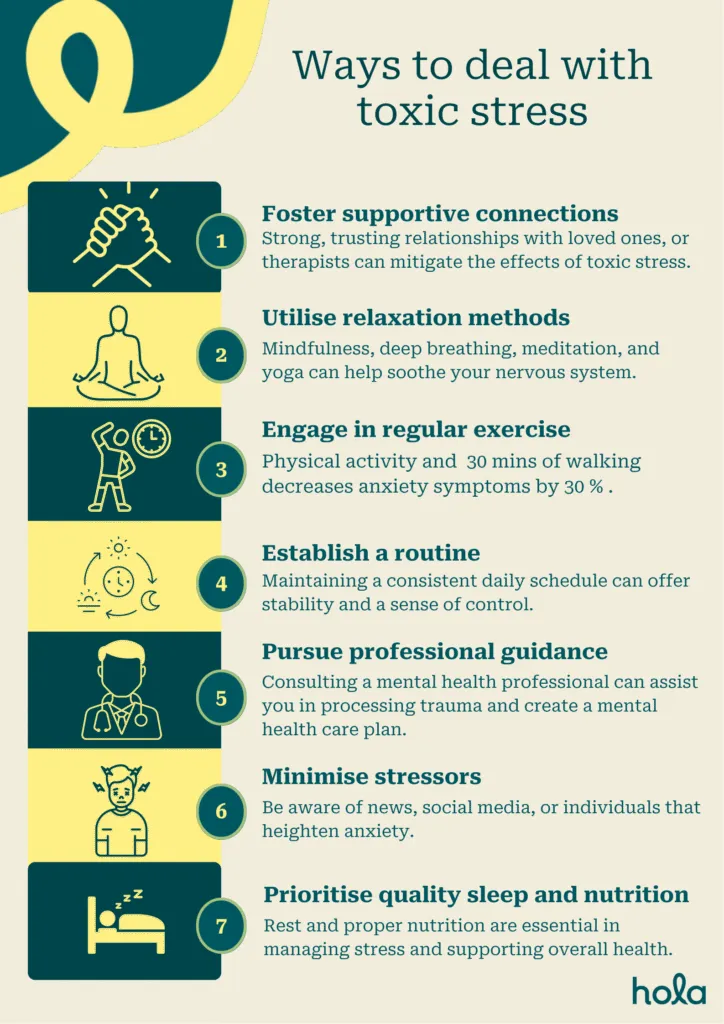
- Foster supportive connections: Having someone to confide in can greatly alleviate stress. Strong, trusting relationships with friends, family, or therapists can mitigate the effects of toxic stress. Social support reduces cortisol levels by an average of 25%
- Utilise relaxation methods: Techniques like mindfulness, deep breathing, meditation, and yoga can help soothe your nervous system and decrease the continual “fight or flight” response. Just 12 mins of daily meditation lowers inflammatory markers.
- Engage in regular exercise: Physical activity helps in lowering stress hormones and increases endorphin levels, enhancing mood and resilience. 30 mins of walking decreases anxiety symptoms by 30 %
- Establish a routine: Maintaining a consistent daily schedule can offer stability and a sense of control, which often diminishes during toxic stress.
- Pursue professional guidance: Consulting a mental health professional can assist you in processing trauma, developing coping strategies. CBT reduces stress symptoms in 50-60% of cases.
- Minimise stressors: Try to reduce exposure to stressful environments when feasible and be aware of news, social media, or individuals that heighten anxiety.
- Prioritise quality sleep and nutrition: Rest and proper nutrition are essential in managing stress and supporting overall health. Omega-3 fatty acids help repair stress-damaged neurons.
Addressing toxic stress involves continuous self-care, support, and occasional professional assistance. Recovery is feasible, and even modest steps can significantly influence your well-being.
When and where to get support
You should seek help for toxic stress when it begins to affect your everyday life, such as problems sleeping, mood fluctuations, anxiety, physical symptoms, or difficulties concentrating. If you have faced continuous trauma, neglect, or feel emotionally overwhelmed, obtaining early help can avert long-lasting consequences on your mental and physical well-being. Early intervention prevents 60% of stress related chronic illnesses.
Support options include:
- Mental health specialists: Psychologists, counsellors, and therapists can provide safe guidance in processing stress and trauma.
- Your general practitioner: They can evaluate symptoms, eliminate physical conditions, and connect you with mental health services.
- Online resources: Online telehealth offer virtual consultations, prescriptions, and referrals from the convenience of your home.
- Community resources: Local clinics, support groups, and helplines provide confidential and affordable assistance.
You don’t have to navigate toxic stress on your own. Reaching out for help can be a vital first step toward feeling better and regaining control.
Toxic stress can feel like a storm you can’t escape, but with the right strategies, like a support system, self-care, and a steady routine, you can navigate through it and come out stronger. It’s all about spotting the signs, taking steps to manage them, and reminding yourself that even intense stress is powerless against a well-rested, supported you.
See an AHPRA-registered doctor online, anytime
24/7 across Australia
Authors

Editorial staff
Medically reviewed by

Amira Shah
Master’s in Counselling Psychology, Psychotherapist & Counsellor
8+ Years of Experience
Amira Shah is a trauma-informed psychotherapist with over a decade of experience in supporting women through complex mental health challenges. She holds a Master’s in Counselling Psychology and has worked extensively at a women’s centre, offering therapy to survivors of physical abuse, sexual assault, PTSD, and human trafficking. Amy owns her practice, Empathetic Counselling & Psychotherapy (ECP), and is committed to continuing her support for women.
Disclaimer
This blog is for general informational purposes only and does not indicate that Hola Health provides all treatments or preventive measures mentioned. It is not intended to be a substitute for professional medical advice. Always seek the guidance of your doctor or other qualified health professional with any questions you may have regarding your health or a medical condition. For emergencies please immediately contact 000. Any medical topics discussed are intended to educate, not to imply availability through Hola Health.
Note: At Hola Health, we're committed to offering trustworthy, accurate and up-to-date health information. Our Editorial Process entails thorough research, fact- checking, and medical review by doctors in diverse health fields, including medical practitioners, doctors, and psychotherapists based in Australia. We take guidance from qualified Australian doctors. We prioritise primary sources and avoid tertiary references wherever possible.
See a Aussie GP online, available 24/7
Download the app today.