
Contents
How to understand my blood sugar levels? A GP’s guide
 ChatGpt
  Google AI Mode
  Perplexity
  Claude
 This blog is for educational purposes only and does not replace professional medical advice or diagnosis. If you have health concerns, consult an AHPRA-registered telehealth doctor or request a medical certificate online if clinically appropriate. Please note: Hola Health does not currently offer Mental Health Care Plans.
Have you ever had a mid-afternoon crash where all you want is something sweet to pick you up? Or maybe you’ve felt shaky and lightheaded when it’s been a bit too long since your last meal. These are signs that your blood sugar might be out of balance. As a GP, I get asked about this a lot, so let’s break it down.
How do you calculate your blood sugar level?
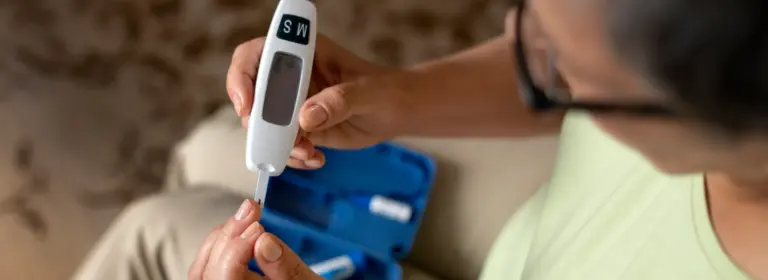
Think of your blood sugar like the fuel gauge in your car it shows you how much glucose (a type of sugar) is in your blood. We measure this in millimoles per litre (mmol/L). To check it, you use a glucose meter, which just requires a tiny finger prick for a drop of blood. You then simply put that drop of blood on a test strip, place it into the meter, and it’ll give you a reading.
What is a normal range for blood sugar?
The “normal” range can vary depending on factors like your age and when you last ate. But for most adults, a fasting blood sugar level (before eating) should be between 3.9 and 5.6 mmol/L (W.H.O). After meals, it can rise to 7.8 mmol/L or less. If you’re over 60, your normal range might be a bit higher, as the body’s ability to regulate blood sugar gets a little less efficient with age.
What do the numbers on a blood sugar meter mean?
Your blood sugar meter is like your body’s way of communicating with you. Lower readings (under 3.9 mmol/L) mean your blood sugar is too low (hypoglycaemia). This can make you feel shaky, sweaty, or confused. On the other hand, higher numbers (over 11.1 mmol/L) indicate your blood sugar is too high (hyperglycaemia), which, over time, can increase the risk of serious conditions like heart disease, kidney problems, and nerve damage.
Consult for online scripts anytime, receive via SMS
24/7 across Australia
What happens when my blood sugar levels are outside these ranges?
If your blood sugar is frequently outside the normal range, it might indicate a problem. High blood sugar levels could point to pre-diabetes or diabetes, meaning your body isn’t producing enough insulin or isn’t using it efficiently. On the flip side, low blood sugar, although less common, can be due to things like certain medications or even excessive alcohol.
What causes inconsistent blood glucose levels?
Your blood sugar naturally fluctuates throughout the day. Here are some things that can affect it:
- What you eat: Carbs and sugary foods spike your blood sugar faster than proteins or fats.
- Meal timing: Skipping meals or eating irregularly can throw off your blood sugar balance.
- Activity levels: Exercise helps your body use glucose for energy, lowering blood sugar levels.
- Stress: Stress hormones can cause a rise in blood sugar.
- Medications: Some drugs can have an impact on your blood sugar.
- Illness: Being sick can also cause blood sugar levels to rise.
What tests should be done?
If you’re concerned about your blood sugar, your GP can order tests like:
- Fasting blood glucose test: Measures blood sugar after an overnight fast.
- Oral glucose tolerance test (OGTT): You drink a sugary solution, and your blood sugar is measured over a few hours to see how well your body handles it.
- HbA1c test: This gives a snapshot of your average blood sugar levels over the past 2-3 months.
How often you need these tests depends on your risk factors. Most people without risk factors might only need to be tested every few years, but if you have a family history of diabetes or other risk factors, your GP might recommend more frequent health checks.
When would I need a blood glucose test?
Your GP might suggest a blood glucose test if you’re experiencing symptoms like:
- Increased thirst and urination
- Unexplained weight loss
- Blurred vision
- Slow-healing sores
- Frequent infections
- Tingling or numbness in your hands or feet
How do I prepare for a blood glucose test?
For a fasting test, avoid eating or drinking (except water) for 8-12 hours beforehand. If you’re getting an OGTT, you’ll also fast and then drink a specific sugary drink provided at the clinic.
When should I consult a doctor?
If you experience symptoms of very high or low blood sugar—like confusion, dizziness, or fainting—get medical help right away. Also, reach out to your GP if you have any concerns or notice unusual symptoms.
How Hola Health may be able to help
Hola Health is an Australian telehealth platform that connects you with registered doctors and nurse practitioners — from the comfort of your home, at a time that suits you. Depending on your situation, a Hola Health clinician may be able to help with:
- 24/7 General medical advice via telehealth doctor consult — talk through symptoms or health concerns with a registered doctor or medical practitioner
- Sick leave certificate — for work or personal leave, when clinically appropriate
- Referrals to specialists – or in-person services when needed
- Instant scripts online (if clinically appropriate)
- Pathology or imaging requests — when assessed as appropriate by your treating clinician
Hola Health clinicians are AHPRA-registered Doctors and medical practitioners in Australia. They will always recommend an in-person consultation, specialist referral, or emergency care if that is in your best interest.
Note: Telehealth is not suitable for all conditions. Hola Health does not replace your regular GP, specialist, or emergency services. If you are unsure whether telehealth is right for your situation, we recommend speaking with your usual healthcare provider. In emergencies, call 000.
In conclusion
Keeping track of your blood sugar levels is key to staying healthy. Think of it like watching your car’s fuel gauge—staying in the right range will help you avoid problems down the road. And remember, if you have any questions, your GP is there to help.
Authors

Medically reviewed by
Dr Nelson Lau
MBBS FRACGP, General Practitioner
30+ Years of Experience
Dr Nelson Lau is a highly experienced Doctors in Australia and digital health innovator with over 30 years of clinical practice. He is a graduate of the University of Western Australia and a Fellow of the Royal Australian College of General Practitioners (FRACGP).
Disclaimer
This blog is for general informational purposes only and does not indicate that Hola Health provides all treatments or preventive measures mentioned. It is not intended to be a substitute for professional medical advice. Always seek the guidance of your doctor or other qualified health professional with any questions you may have regarding your health or a medical condition. For emergencies please immediately contact 000. Any medical topics discussed are intended to educate, not to imply availability through Hola Health.
Note: At Hola Health, we're committed to offering trustworthy, accurate and up-to-date health information. Our Editorial Process entails thorough research, fact- checking, and medical review by doctors in diverse health fields, including medical practitioners, doctors, and psychotherapists based in Australia. We take guidance from qualified Australian doctors. We prioritise primary sources and avoid tertiary references wherever possible.
See a Aussie GP online, available 24/7
Download the app today.