

What is Telehealth? A Guide to Telehealth Doctor's Appointment

Contents
 Facebook
  X
X  Copy Link
Summarise with AI:
 ChatGpt
  Google AI Mode
  Perplexity
  Claude
 This blog is for educational purposes only and does not replace professional medical advice or diagnosis. If you have health concerns, consult an AHPRA-registered telehealth GP or request a medical certificate online if clinically appropriate.
Overview
In today’s era, the idea of “seeing a doctor” has evolved. Instead of booking, travelling, and waiting in line, you can now consult a doctor over the phone or video, from your home, car, office, or on the go. It is real healthcare made more convenient, helping Australians get the care they need. Whether you’re unwell, live far away, or simply short of time, telehealth brings a doctor within reach.What is telehealth?
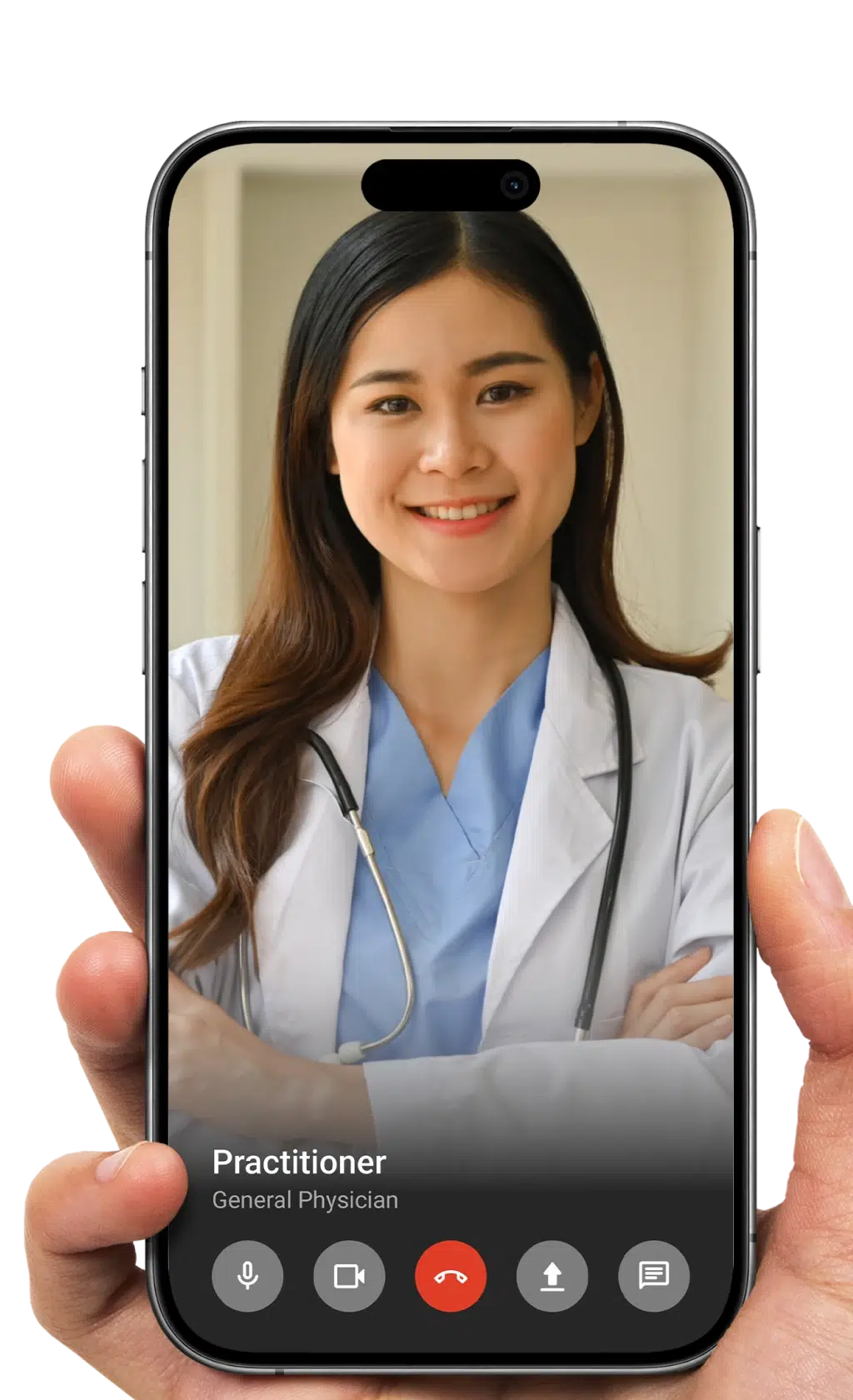
Telehealth is the delivery of healthcare services using digital communication tools such as phone calls, video consultations, and secure online platforms. Instead of meeting a doctor in person, you connect with them remotely in real time. Through telehealth, a qualified doctor can evaluate your symptoms, discuss your medical history, and make a diagnosis without needing a face-to-face visit. It covers a wide range of services, from quick GP consultations to managing mental health, specialist referrals and chronic health diseases.How telehealth doctor appointments work
Booking a telehealth appointment is quite similar to any other medical consultation. The main difference is how you connect. You choose a provider, book a session online or by phone and attend the consultation via a call or video link. During the appointment, you discuss your symptoms, the doctor asks questions, and they diagnose, advise, prescribe, refer, or issue a medical certificate, just like a regular in-person visit. All prescriptions, medical certificates, and referrals are issued at the sole clinical discretion of the doctor after a suitability assessment.Why telehealth is becoming popular
Australians have welcomed telehealth in a big way, and it's understandable why. The combination of convenience, speed, and growing digital usage has made remote healthcare a natural part of everyday life. Benefits of Telehealth:- Convenience
- Faster access
- Reduced waiting times
- Reduced infection risk
- Perfect for rural and remote areas
- Increased digital adoption
- Medicare coverage
Telehealth vs in-person doctor visits
Both modes of care are important. However, in some cases, one stands out. Here’s how they compare:| Factor | Telehealth | In-person |
| Convenience | Consult from home, no travel | Requires travel and waiting room time |
| Booking speed | Usually, the same day | May involve days of waiting |
| Access for rural patients | Excellent | Limited in remote areas |
| Physical examination | Not possible | Full physical examination |
| Prescriptions and referrals | Available electronically | Available |
| Diagnostic tests | Not available remotely | Available |
| Infection exposure risk | None | Risk of exposure in waiting rooms |
| Mental health consultations | Private, effective | Available, may involve waits |
| Emergency care | Not appropriate | Essential for urgent or critical situations |
| Medicare rebate | Yes, permanent since 2021 | Yes |
Types of telehealth services
Telehealth is much more than just a quick chat with a GP. Here’s what you can access remotely in Australia:- GP consultations
- Specialist referrals
- Mental health support
- Allied health services
- Follow-up appointments
- Chronic disease management
- Sexual and reproductive health
- Maternal and child health consultations
What conditions can be managed through telehealth
Many everyday health concerns can be managed through telehealth, including:- Cold and flu
- Chest Infections
- Skin conditions
- Minor infections
- Digestive issues
- Urinary tract infections
- Mental health concerns
- Sleep problems and fatigue
- General health advice and preventative care discussions
Consult an AHPRA-registered practitioner online, anytime
Consult NowAvailable 24/7 across Australia

Step-by-step: How to book a telehealth appointment
Booking a telehealth appointment is simple and often takes just a few minutes. Here’s how it works:- Choose a telehealth provider: Select an Australian-registered provider with qualified doctors.
- Select your appointment type and time: Most platforms let you book online or through an app.
- Enter your details: You will need to provide your Medicare card number, contact details, and a brief description of your concern.
- Receive a confirmation: You will get an email or SMS confirming your appointment time and instructions on how to join the session.
- Attend the consultation: Join the call at your scheduled time via a secure link.
- Receive your outcome: Prescriptions, medical certificates, or referrals are sent to you electronically, usually via SMS or email, after the consultation.
What to expect during a telehealth consultation
A telehealth consultation feels quite similar to any other doctor’s visit, just without the waiting room. Here’s what usually happens:- Introduction and verification: The doctor will verify your identity, Medicare details, and the reason for your visit.
- Symptom discussion: You discuss your symptoms and medical history
- Questions from the doctor: The doctor may ask a few questions to get a clearer picture of your health situation.
- Diagnosis and assessment: Based on your discussion, the doctor will advise you on the next steps.
- Treatment plan: This may include lifestyle recommendations, a prescription, a referral, or advice to seek in-person care if needed.
- Follow-up: The doctor may schedule a follow-up appointment.
Prescriptions, referrals, and medical certificates via telehealth
One of the most practical benefits of telehealth is that your doctor can handle your paperwork just as they would in an in-person visit. The only difference is that it arrives digitally, usually within minutes. This includes:- Electronic prescriptions sent to your phone
- Medical certificates for work or school
- Referrals to specialists, radiology, or pathology services
Benefits of telehealth for patients
Telehealth has several benefits:- Cost and time saving
- Convenience and comfort
- Reduced exposure to infections
- Mental health access
- Improved access to healthcare
When you should see a doctor in person instead
Telehealth is a powerful tool, but it is not suitable for every situation. In some cases, a face-to-face visit is necessary for:- Physical examination
- Diagnostic tests
- Emergency or severe symptoms
- Complex new diagnoses
- Procedures and treatments
Are telehealth appointments safe and private?
Yes, telehealth appointments in Australia are safe and private, and it’s worth understanding why. Telehealth services follow the same strict regulatory standards as in-person healthcare. All doctors must comply with guidelines issued by the Australian Health Practitioner Regulation Agency (AHPRA), which ensure consultations remain private and confidential.Challenges and limitations of telehealth
While otherwise helpful, telehealth has some limitations:- Internet or connectivity problems
- Digital literacy barriers
- Limited physical assessment
- Not suitable for all health concerns
Note: Some conditions, such as chest infections or abdominal pain, may require a physical examination or diagnostic tests that cannot be performed via telehealth. In these cases, your doctor will advise you to see a GP in person.
Tips for a successful telehealth appointment
Make the most of your telehealth consultation by keeping a few important things in mind:- Prepare your symptoms and questions
- Ensure you have a stable internet connection
- Keep your Medicare card and medication list handy
- Choose a quiet and private space for your telehealth session
- Keep your medical history handy
How Hola Health can help
Hola Health provides easy access to quality medical care from the comfort of home. With Hola Health, you can:- Get prescriptions and repeats
- Receive medical certificates for work
- Manage follow-up care from home
- Get mental health support
Conclusion
Telehealth is simple, convenient, and it has changed the way we look at healthcare. From GP consultations and prescription refills to managing a chronic condition, with telehealth, almost everything is just a click away. Although it doesn't completely replace in-person visits, it does enhance them. The key is understanding when to choose telehealth and when to see a doctor in person. If you’re unsure, a telehealth consult is a great starting point, and your doctor can advise on next steps.FAQs
What is a telehealth appointment?
A telehealth appointment is a medical consultation conducted remotely via phone or video call.How do I book a telehealth doctor consultation?
You can book online through a telehealth provider or call a clinic providing telehealth services.Can telehealth doctors prescribe medication?
Yes, telehealth doctors can issue electronic prescriptions.Is telehealth covered by Medicare in Australia?
Yes, many telehealth services are covered under Medicare, depending on eligibility and the type of consultation.When should I choose in-person care instead of telehealth?
Choose in-person care when you need a physical examination, diagnostic tests, or if there is an emergency.Consult an AHPRA-registered practitioner online, anytime
Consult NowAvailable 24/7 across Australia
See a Aussie GP online, available 24/7
Download the app today.


Related Articles



Disclaimer
This blog is for general informational purposes only and does not indicate that Hola Health provides all treatments or preventive measures mentioned. It is not intended to be a substitute for professional medical advice. Always seek the guidance of your doctor or other qualified health professional with any questions you may have regarding your health or a medical condition. For emergencies please immediately contact 000. Any medical topics discussed are intended to educate, not to imply availability through Hola Health. Hola Health's telehealth services facilitate access to AHPRA-registered healthcare professionals in Australia; however, a telehealth consultation is not equivalent to an in-person medical examination. Telehealth may not be appropriate for all conditions, symptoms, or circumstances.