

Contents
Fungal nail infection

 ChatGpt
  Google AI Mode
  Perplexity
  Claude
 This blog is for educational purposes only and does not replace professional medical advice or diagnosis. If you have health concerns, consult an AHPRA-registered telehealth doctor or request a medical certificate online if clinically appropriate. Please note: Hola Health does not currently offer Mental Health Care Plans.
Fungal nail infections, also known as onychomycosis, are a common condition that affects the toenails and sometimes fingernails. While not usually serious, these fungal infections can be persistent and challenging to treat. In this blog, we delve into the symptoms, causes, diagnosis, risk factors, and treatment options for fungal nail infections, alongside frequently asked questions.
Symptoms
Fungal nail infections often develop slowly, making the symptoms easy to overlook in the early stages. Common signs include:
- Discolouration: The nail may turn yellow, brown, or white.
- Thickened nails: Infected nails often become thick and brittle.
- Distorted shape: The nail may appear misshapen or deformed.
- Crumbling edges: The edges of the nail might crack or crumble.
- Foul odour: A noticeable odour may emanate from the affected nail. This may indicate a secondary bacterial infection, developing under the nail.
- Separation: The nail may lift away from the nail bed (onycholysis).
Causes
Fungal nail infections are typically caused by various types of fungi, including dermatophytes, yeasts, and moulds. These organisms thrive in warm, moist environments such as public swimming pools, showers, and gyms. Factors contributing to an infection include:
- Direct contact with fungal spores.
- Sharing nail grooming tools or shoes with an infected person.
- Nail trauma or injury.
Diagnosis
Diagnosing a fungal nail infection involves a combination of:
- Visual examination: A healthcare provider may identify signs of infection through a physical inspection.
- Laboratory testing: Samples of the affected nail or nail debris can be analysed to confirm the presence and type of fungus.
Accurate diagnosis ensures appropriate treatment, as not all discoloured or thickened nails result from fungal infections.
See an AHPRA-registered doctor online, anytime
24/7 across Australia
Risk factors
Certain factors increase the likelihood of developing a fungal nail infection:
- Age: Older individuals are more prone due to reduced blood circulation and slower nail growth.
- Medical conditions: Weakened immune systems, and circulatory disorders heighten the risk.
- Lifestyle: Regular exposure to damp environments or wearing tight footwear creates a breeding ground for fungi.
- Hygiene practices: Poor foot hygiene and using unsterilised nail tools also contribute.
How do I get rid of a fungal nail infection?
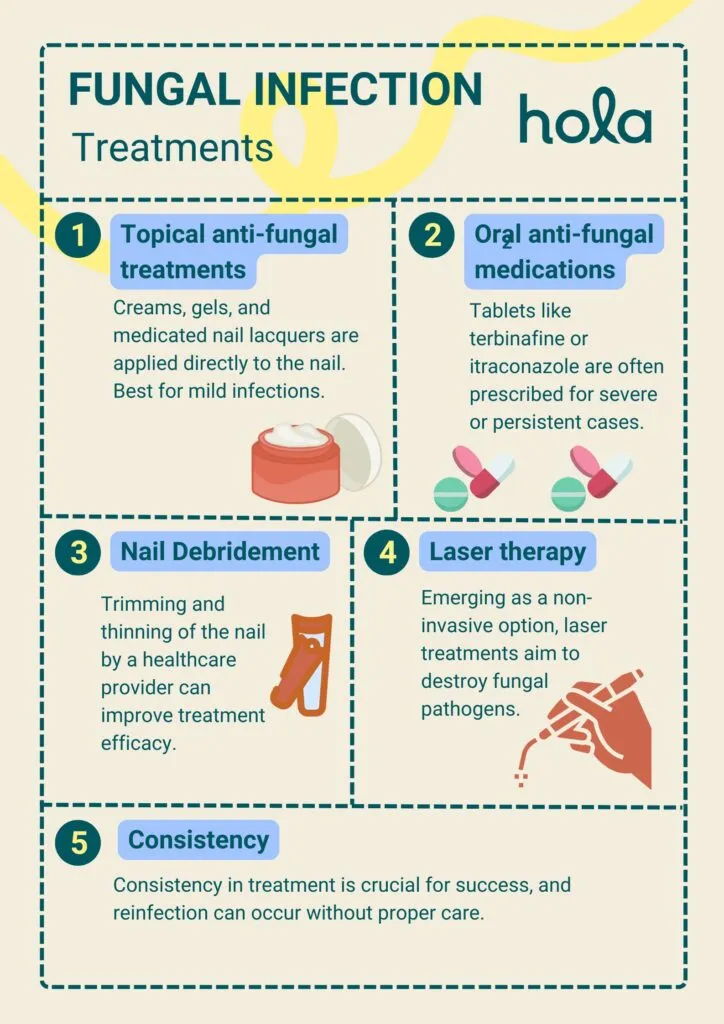
Treatment for fungal nail infections often requires patience, as results can take weeks to months. Common options include:
- Topical antifungal treatments: Creams, gels, and medicated nail lacquers are applied directly to the nail. These work best for mild infections.
- Oral antifungal medications: Tablets like terbinafine or itraconazole are often prescribed for severe or persistent cases.
- Nail debridement: Trimming and thinning of the nail by a healthcare provider can improve treatment efficacy.
- Laser therapy: Emerging as a non-invasive option, laser treatments aim to destroy fungal pathogens.
Consistency in treatment is crucial for success, and reinfection can occur without proper care.
When to consult a doctor?
You should seek medical advice if:
- The infection causes significant discomfort or pain.
- The nail is heavily damaged or discoloured.
- You have a pre-existing condition like a weakened immune system.
- Over-the-counter treatments have failed to improve the condition.
Can an online doctor help?
Yes, an online doctor can be a convenient first step in managing a fungal nail infection. Through telehealth, you can:
- Receive a preliminary diagnosis based on your symptoms and images of the affected nail.
- Obtain prescriptions for topical or oral antifungal treatments.
- Discuss preventative measures to reduce the risk of reinfection.
Consult for online scripts anytime, receive via SMS
24/7 across Australia
FAQ
Untreated fungal infections can worsen over time, leading to permanent nail damage, pain, and secondary bacterial infections.
No. Avoid removing the nail yourself as this can cause injury and increase the risk of secondary infection. Consult a healthcare provider for proper debridement if needed.
In some cases, fungal nail infections may signal underlying health issues, such as immune deficiencies.
Long-standing fungal infections can spread to other nails and surrounding skin, potentially causing athlete's foot or cellulitis.
Mild cases may resolve as the nail grows out, provided the infection is treated. Without intervention, the fungus can persist indefinitely.
Authors

Dr Gosagan Gopalakrishnan
BSc (Hons), MBChB, DRCOG, MRCGP, FRACGP
Medically reviewed by
Dr Gosagan Gopalakrishnan
BSc (Hons), MBChB, DRCOG, MRCGP, FRACGP
Dr Gos is a highly-skilled doctor with a profound commitment to combatting skin cancer. His expertise encompasses a comprehensive range of services, particularly excelling in intricate procedures like flaps and grafts, specifically tailored for delicate areas such as the nose, face, ears, scalp, and neck. He also performs cosmetic mole removal.
Disclaimer
This blog is for general informational purposes only and does not indicate that Hola Health provides all treatments or preventive measures mentioned. It is not intended to be a substitute for professional medical advice. Always seek the guidance of your doctor or other qualified health professional with any questions you may have regarding your health or a medical condition. For emergencies please immediately contact 000. Any medical topics discussed are intended to educate, not to imply availability through Hola Health.
Note: At Hola Health, we're committed to offering trustworthy, accurate and up-to-date health information. Our Editorial Process entails thorough research, fact- checking, and medical review by doctors in diverse health fields, including medical practitioners, doctors, and psychotherapists based in Australia. We take guidance from qualified Australian doctors. We prioritise primary sources and avoid tertiary references wherever possible.
See a Aussie GP online, available 24/7
Download the app today.