

How does heat impact mental health?


Contents
 ChatGpt
  Google AI Mode
  Perplexity
  Claude
 This blog is for educational purposes only and does not replace professional medical advice or diagnosis. If you have health concerns, consult an AHPRA-registered telehealth doctor or request a medical certificate online if clinically appropriate. Please note: Hola Health does not currently offer Mental Health Care Plans.
Overview
As temperatures increase, there is a corresponding rise in stress levels and emotional tension. Heat waves create conditions that extend beyond mere discomfort; they can adversely affect mental well-being by inducing anxiety, irritability, and significant mood alterations. The consequences manifest in various ways, such as sleepless nights, strained interpersonal relationships, and intensified emotional responses. This analysis will examine how elevated temperatures influence mental states and emotions and outline mitigation strategies.
How does heat impact mental health?
The influence of heat on mental health is significant; it manifests as irritability, fatigue, and disrupted sleep patterns, which may exacerbate conditions such as anxiety, depression, and mood disorders. Furthermore, heat negatively affects cognitive functions, diminishes decision-making capabilities, and heightens aggressive behaviours. While some studies link heat to increased aggression and impaired cognition, the effects can vary depending on individual and other environmental factors. The occurrence of social and economic challenges, including heatwaves, displacement, and increased workplace stress, further elevates levels of anxiety. Vulnerable populations, particularly individuals with pre-existing health issues or those experiencing social isolation, face heightened risk. Additionally, heat may contribute to mood changes through dehydration and physiological stress rather than directly disrupting neurotransmitters. Prolonged exposure to elevated temperatures may also lead to increased levels of climate-related anxiety.
Why does heat trigger my anxiety?
Heat can trigger anxiety for several reasons:
- Physiological similarity: Elevated temperatures lead to an increased heart rate, heightened sweating, and an accelerated breathing rate. These physiological responses can replicate the sensations associated with anxiety, increasing the likelihood that the body will interpret these sensations as stress.
- Dehydration: Exposure to high temperatures can result in dehydration, which adversely impacts mood, cognitive functioning, and overall well-being, intensifying symptoms of anxiety.
- Overstimulation: Extreme heat can overwhelm the body’s capacity to regulate comfort, resulting in irritability and a heightened sensitivity to stressors.
- Past experiences: Previous episodes of anxiety experienced in hot environments may lead the brain to develop an association between elevated temperatures and anxiety, establishing a conditioned response.
Cooling down – tips
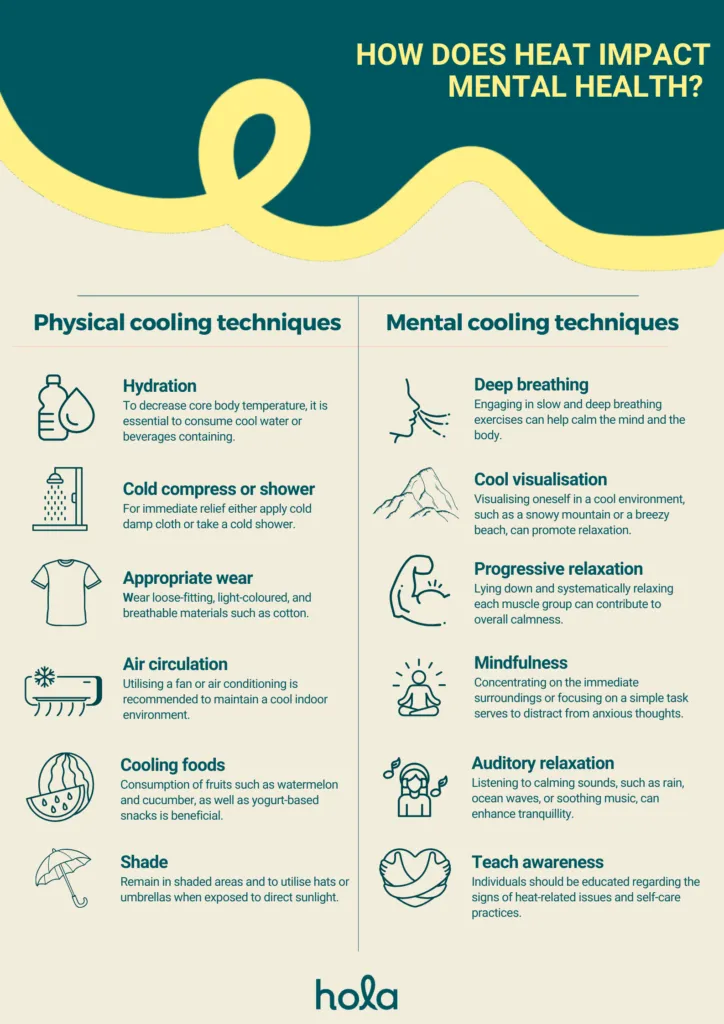
Here are some effective ways to cool down, both physically and mentally:
1. Physical cooling techniques
- Hydration: To decrease core body temperature, it is essential to consume cool water or beverages containing electrolytes. Caffeine and alcohol should be avoided, as they contribute to dehydration.
- Cold compress: For effective cooling, a cold, damp cloth should be applied to pulse points such as the wrists, neck, or forehead.
- Cool shower or bath: A lukewarm or cold shower can provide immediate relief by lowering body heat.
- Appropriate attire: It is advisable to wear loose-fitting, light-coloured, and breathable materials such as cotton to facilitate airflow.
- Air circulation: Utilising a fan or air conditioning is recommended to maintain a cool indoor environment.
- Cooling foods: Consumption of fruits such as watermelon and cucumber, as well as yogurt-based snacks, is beneficial. Heavy or spicy foods should be avoided.
- Shade: It is prudent to remain in shaded areas and to utilise hats or umbrellas when exposure to direct sunlight is unavoidable.
2. Mental cooling strategies
- Deep breathing: Engaging in slow and deep breathing exercises can help calm the mind and the body.
- Cool visualisation: Visualising oneself in a cool environment, such as a snowy mountain or a breezy beach, can promote relaxation.
- Progressive relaxation: Lying down and systematically relaxing each muscle group can contribute to overall calmness.
- Mindfulness: Concentrating on the immediate surroundings or focusing on a simple task serves to distract from anxious thoughts.
- Auditory relaxation: Listening to calming sounds, such as rain, ocean waves, or soothing music, can enhance tranquillity.
Protecting young ones
Protecting young ones, especially in the context of heat or other challenges, involves proactive care to ensure their physical and emotional well-being. Here are some essential tips:
- Hydration: It is essential to regularly provide regular access to water and beverages that are rich in electrolytes.
- Cooling measures: The use of fans, air conditioning units, or cold compresses is recommended. Additionally, encourage the practice of taking lukewarm baths.
- Clothing: It is advisable to select garments that are light, loose-fitting, and made from breathable materials.
- Outdoor safety: Exposure to the sun should be minimised during periods of peak heat, and individuals should be encouraged to remain in shaded areas.
- Sunscreen and hats: The application of child-safe sunscreen is necessary, and the use of protective headgear is recommended to shield against sun exposure.
- Rest breaks: It is important to promote regular breaks to prevent overexertion.
- Diet: Light meals and cooling foods, such as fruits and yogurt, should be offered.
- Teach awareness: Individuals should be educated regarding the signs of heat-related issues and self-care practices.
- Monitor signs: Vigilance is required to observe any symptoms indicating heat stress or dehydration.
- First aid ready: It is prudent to maintain essential items, such as oral rehydration solutions and cold packs, in an easily accessible location.
- Calm spaces: Designated quiet areas should be provided to facilitate rest.
- Model behaviour: Demonstrating appropriate methods to remain cool and composed is beneficial.
See an AHPRA-registered doctor online, anytime
24/7 across Australia
Authors

Editorial staff
Medically reviewed by

Amira Shah
Master’s in Counselling Psychology, Psychotherapist & Counsellor
8+ Years of Experience
Amira Shah is a trauma-informed psychotherapist with over a decade of experience in supporting women through complex mental health challenges. She holds a Master’s in Counselling Psychology and has worked extensively at a women’s centre, offering therapy to survivors of physical abuse, sexual assault, PTSD, and human trafficking. Amy owns her practice, Empathetic Counselling & Psychotherapy (ECP), and is committed to continuing her support for women.
Disclaimer
This blog is for general informational purposes only and does not indicate that Hola Health provides all treatments or preventive measures mentioned. It is not intended to be a substitute for professional medical advice. Always seek the guidance of your doctor or other qualified health professional with any questions you may have regarding your health or a medical condition. For emergencies please immediately contact 000. Any medical topics discussed are intended to educate, not to imply availability through Hola Health.
Note: At Hola Health, we're committed to offering trustworthy, accurate and up-to-date health information. Our Editorial Process entails thorough research, fact- checking, and medical review by doctors in diverse health fields, including medical practitioners, doctors, and psychotherapists based in Australia. We take guidance from qualified Australian doctors. We prioritise primary sources and avoid tertiary references wherever possible.
See a Aussie GP online, available 24/7
Download the app today.