
Contents
Stress symptoms in women: How to manage
 ChatGpt
  Google AI Mode
  Perplexity
  Claude
 This blog is for educational purposes only and does not replace professional medical advice or diagnosis. If you have health concerns, consult an AHPRA-registered telehealth doctor or request a medical certificate online if clinically appropriate. Please note: Hola Health does not currently offer Mental Health Care Plans.
Overview
Stress can feel like a never-ending list of tasks that keeps piling up, especially for women who often juggle work, family, and personal life. While stress is a normal part of life, it can swiftly become overpowering if not managed well. Identifying the symptoms and learning how to cope is crucial for maintaining mental and physical health. With the right strategies, women can control stress and thrive in the face of it, turning challenging moments into opportunities for growth and self-care.
What are the symptoms of stress in a woman?
Stress can manifest in several ways in women, affecting emotional, physical, and cognitive well-being. Here are some common symptoms of stress in women:
1. Emotional symptoms:
- Anxiety
- Irritability
- Depression
- Overwhelm
- Feelings of guilt and inadequacy
- Decreased sex drive
- Mood swings
2. Physical symptoms:
- Fatigue
- Low energy
- Sleep disturbances
- Headaches
- Digestive problems
- Muscle tension
- Changes in appetite
- Weakened immune system
- Skin problems
- Menstrual irregularities
3. Cognitive symptoms:
- Memory problems
- Poor decision-making
- Constant worrying
- Negative thinking patterns
- Racing thoughts
These symptoms may differ in intensity and duration, and if not properly addressed, chronic stress can lead to more serious mental and physical health conditions. Identifying these symptoms early is essential for managing stress in healthy ways.
Do men and women respond to stress differently?
Research indicates that men and women frequently exhibit different responses to stress, influenced by a combination of biological, psychological, and social factors. Women generally demonstrate a pronounced “tend-and-befriend” response, characterised by nurturing others and seeking social support during stressful situations. Furthermore, women may encounter elevated levels of anxiety and emotional distress. Conversely, men are more likely to display a “fight-or-flight” response, which emphasises active problem-solving and may lead to the internalisation of stress. The hormonal differences between genders, particularly the varying hormone levels, play a significant role in these divergent responses. Additionally, societal expectations and established gender roles further affect stress management strategies. It is essential to recognise that while these responses are frequently observed, individual reactions to stress can differ significantly. Many men and women may experience similar stress, depending on their unique temperament and specific life circumstances.
How does stress affect the female body?
Stress can have a significant impact on the female body, affecting both physical and mental health. Some of the key effects include:
- Hormonal disruption: Chronic stress initiates the secretion of cortisol, a hormone associated with stress, which may interfere with the equilibrium of other hormones, including estrogen and progesterone. This disturbance can result in irregular menstrual cycles, complications with fertility, or the exacerbation of pre-existing conditions such as polycystic ovary syndrome (PCOS). Additionally, stress may contribute to symptoms of menopause or worsen premenstrual syndrome (PMS) in women.
- Immunological vulnerability: Extended periods of stress can compromise the immune system, rendering women more vulnerable to various illnesses and infections.
- Gastrointestinal complications: Stress may exacerbate gastrointestinal disturbances, including bloating, nausea, and conditions like irritable bowel syndrome (IBS). It can also slow down digestion or, conversely, cause an increase in digestive transit, leading to diarrhea or constipation.
- Sleep impairments: Anxiety and stress frequently contribute to insomnia, difficulties in initiating sleep, or the experience of poor-quality rest, which can further aggravate stress levels.
- Muscular tension and cephalgia: Stress commonly leads to muscle tension, particularly in the neck, shoulders, and back regions, and may provoke tension headaches or migraines. Chronic muscle strain can even lead to long-term pain conditions, such as myofascial pain syndrome.
- Dermatological issues: Stress can deteriorate existing skin conditions such as acne, eczema, and psoriasis, primarily due to increased inflammation and hormonal fluctuations. Stress-induced habits like skin-picking or hair-pulling can further exacerbate dermatological issues.
- Psychological consequences: Chronic stress has the potential to give rise to anxiety, depression, and burnout, thereby significantly undermining emotional health.
What happens if your body is under stress for too long?
Chronic stress may produce significant and enduring effects on physical and mental health. This condition can lead to cardiovascular complications, including hypertension and an elevated risk of heart disease and strokes. Furthermore, stress compromises the immune system, rendering the body more susceptible to various illnesses. Chronic stress can also contribute to inflammation, which is a risk factor for conditions like arthritis, and other chronic diseases. Additionally, it may result in gastrointestinal problems, sleep disturbances, and mental health disorders such as anxiety and depression. Extended periods of stress are also associated with symptoms including muscle tension, headaches, and hormonal imbalances, which can disrupt menstrual cycles and impact fertility. Left unmanaged, prolonged stress can accelerate cellular aging and increase the risk of cognitive decline. It is imperative to manage stress through relaxation, physical activity, and social support to mitigate these health risks and promote overall wellness.
How can women better manage stress?
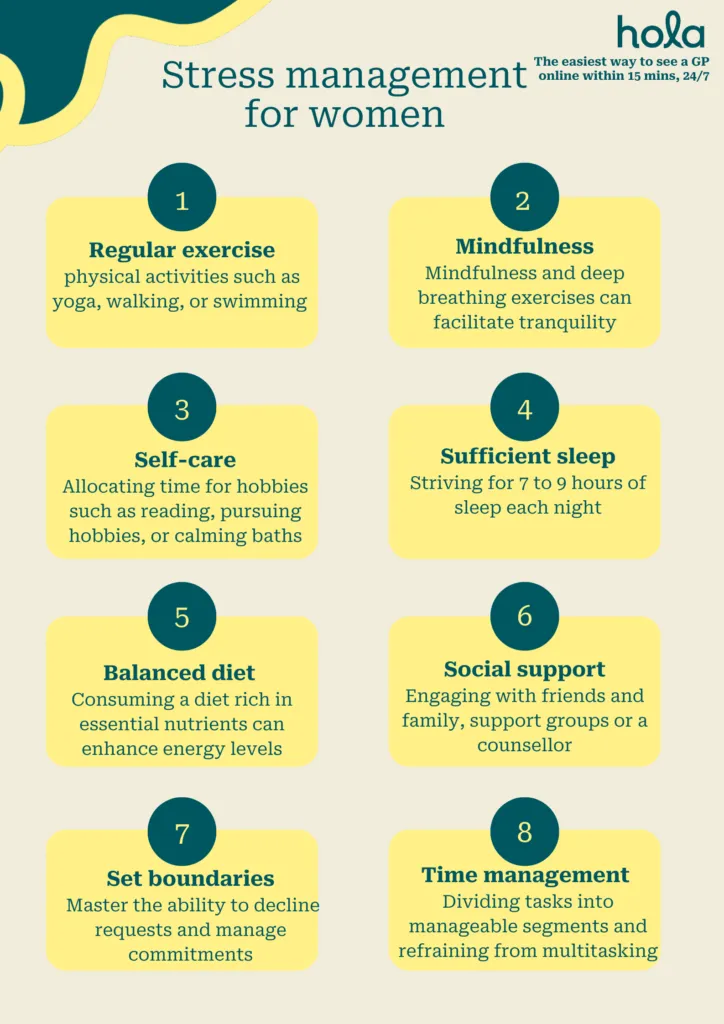
Women may enhance their ability to manage stress by implementing various lifestyle modifications, relaxation practices, and strategies for emotional support.
- Engage in regular exercise: Physical activities such as yoga, walking, or swimming contribute to a decrease in stress hormone levels and promote the release of endorphins, which improve mood.
- Utilise mindfulness and meditation techniques: Mindfulness and deep breathing exercises can effectively assist in mitigating anxiety and facilitating mental tranquillity.
- Emphasise self-care: Allocating time for enjoyable activities, such as reading, pursuing hobbies, or calming baths, is vital for restoring mental energy.
- Ensure sufficient sleep: Attaining adequate rest is essential for emotional and physical recuperation; therefore, striving for 7 to 9 hours of sleep each night is advisable.
- Maintain a balanced diet: Consuming a diet rich in essential nutrients can enhance energy levels and positively influence mood.
- Seek social support: Engaging with friends and family, participating in support groups, or consulting a counsellor can alleviate loneliness and isolation.
- Establish boundaries: Mastering the ability to decline requests and effectively managing commitments can prevent excessive burdens.
- Effective time management: Dividing tasks into manageable segments and refraining from multitasking can help minimise overwhelming feelings.
How can women prevent stress?
Preventing stress involves proactively changing daily habits, mindset, and lifestyle. Here are some strategies women can use to reduce the risk of stress:
Optimise time management: Deconstruct larger tasks into manageable segments and avoid overcommitting oneself to responsibilities.
Establish a healthy work-life balance: It is essential to define distinct boundaries between professional responsibilities and personal life to mitigate the risk of burnout. Allocate time dedicated to relaxation and family engagements.
Engage in consistent self-care practices: Participate in activities that replenish both physical and mental well-being, including regular breaks, personal care routines, and the pursuit of recreational interests.
Organisational structures: Implement organisational tools such as planners or digital applications to effectively manage tasks, reduce procrastination, and minimise feeling overwhelmed.
Foster robust support networks: Nurture meaningful relationships with family, friends, or community support groups to assist during challenging periods.
Cultivate effective coping mechanisms: Engage in stress-reduction techniques, including deep breathing exercises, mindfulness practices, or physical activity, to enhance resilience.
Set attainable goals: It is advisable to avoid the pursuit of unattainable perfection and allow for adaptability in personal and professional objectives.
Incorporate regular physical exercise: Exercise, including both aerobic and strength training, can alleviate stress, improve mood, and enhance overall energy levels.
See an AHPRA-registered doctor online, anytime
24/7 across Australia
Authors

Editorial staff
Medically reviewed by

Amira Shah
Master’s in Counselling Psychology, Psychotherapist & Counsellor
8+ Years of Experience
Amira Shah is a trauma-informed psychotherapist with over a decade of experience in supporting women through complex mental health challenges. She holds a Master’s in Counselling Psychology and has worked extensively at a women’s centre, offering therapy to survivors of physical abuse, sexual assault, PTSD, and human trafficking. Amy owns her practice, Empathetic Counselling & Psychotherapy (ECP), and is committed to continuing her support for women.
Disclaimer
This blog is for general informational purposes only and does not indicate that Hola Health provides all treatments or preventive measures mentioned. It is not intended to be a substitute for professional medical advice. Always seek the guidance of your doctor or other qualified health professional with any questions you may have regarding your health or a medical condition. For emergencies please immediately contact 000. Any medical topics discussed are intended to educate, not to imply availability through Hola Health.
Note: At Hola Health, we're committed to offering trustworthy, accurate and up-to-date health information. Our Editorial Process entails thorough research, fact- checking, and medical review by doctors in diverse health fields, including medical practitioners, doctors, and psychotherapists based in Australia. We take guidance from qualified Australian doctors. We prioritise primary sources and avoid tertiary references wherever possible.
See a Aussie GP online, available 24/7
Download the app today.