Nausea and Vomiting

Nausea is the uneasy feeling one gets when one might vomit but is not vomiting yet. Consult an AHPRA-registered doctor online about nausea and vomiting symptoms — available 24/7 across Australia. For emergencies, always call 000.

When to consult a doctor for nausea and vomiting?

If nausea or vomiting is severe or persistent

See a doctor if vomiting lasts more than 24 hours in children or more than 2 days in adults, or if it prevents you from keeping food or fluids down.

If signs of dehydration or sudden weight loss occur

Consult a GP if you feel weak, dizzy, have a dry mouth, dark urine, or unexplained weight loss, as these may indicate dehydration or an underlying condition.

If additional concerning symptoms appear

Seek medical advice if nausea or vomiting is accompanied by severe stomach or back pain, fever, stiff neck, diarrhoea, blood in vomit, or if it occurs during pregnancy.

This guide does not replace professional care. Consult a doctor to manage your symptoms. In emergencies, call 000. The content is research-backed & medically reviewed byDr. Ammar AL-ANI, MBChB, CCBST, AMC

Causes

Nausea and vomiting are symptoms of various underlying conditions. These conditions range from mild reactions to medication to more serious conditions such as migraines, pancreatitis, and more: 

  • Viral or bacterial infections such as gastro, food poisoning, and respiratory infections 
  • Certain medications 
  • Cancer treatments 
  • Motion sickness 
  • Ulcers in the stomach and other intestinal issues 
  • Migraine 
  • Stress, anxiety, or other mental health concerns 
  • Food intolerances, eating disorders 
  • Substance abuse and withdrawal 
  • Pregnancy 
  • Kidney stones, appendicitis 
  • More serious conditions such as head injuries

Note: If you or someone you know may be experiencing an eating disorder, please speak with your GP or contact the National Alliance for Eating Disorders helpline for support. Additionally, withdrawal from alcohol or certain substances can be medically serious. If you or someone else is experiencing withdrawal symptoms, seek medical attention promptly.

nausea-and-vomiting-in-pregnancy

Prevention

There are several home remedies and strategies to prevent nausea and vomiting: 

  • Eat small and frequent meals 
  • Stay hydrated by drinking sips of water 
  • Avoid triggers 
  • Get plenty of rest and try relaxation techniques such as meditation

These measures may help manage mild or common causes of nausea. If your nausea is related to an underlying medical condition, speak with your GP about appropriate management.

When does nausea and vomiting in pregnancy start?

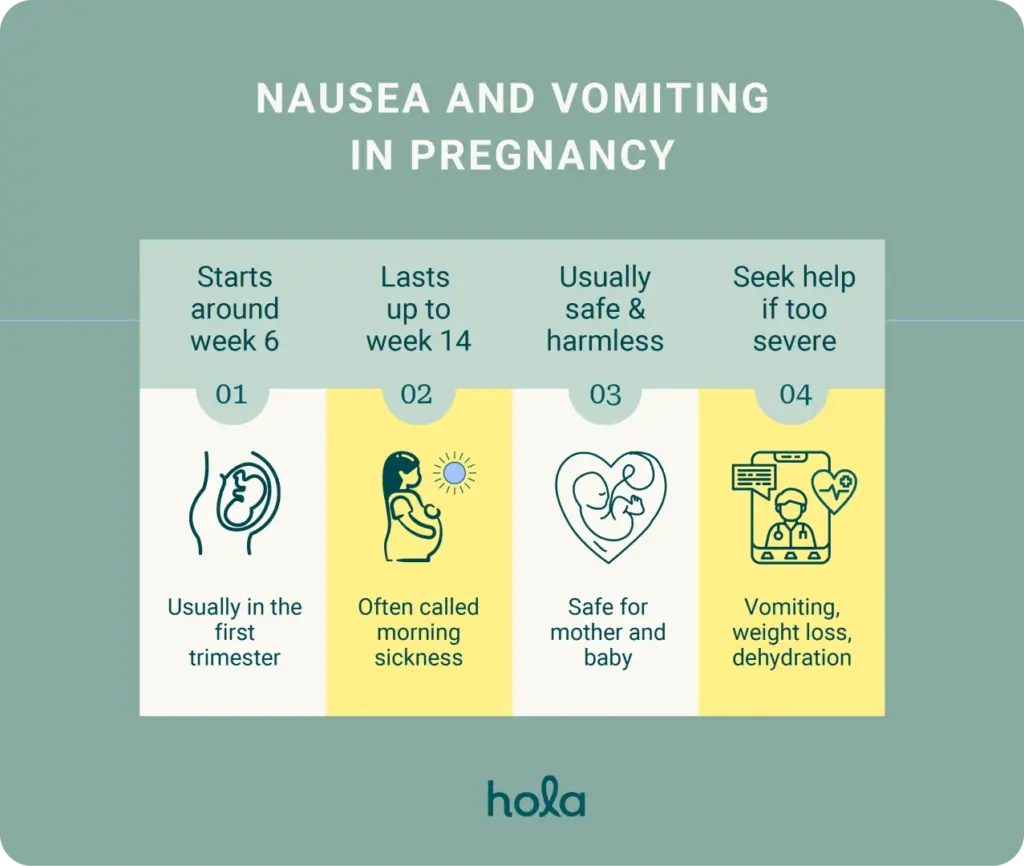
Morning sickness or nausea and vomiting in pregnancy starts around the 6th week of pregnancy and can continue until the end of the first trimester or 14 weeks. Morning sickness is usually harmless for both the mother and the child. Severe morning sickness which includes severe vomiting and nausea, weight loss and dehydration should get immediate medical attention. 

Hola Health provides a convenient way to consult an AHPRA-registered doctor online, 24/7 across Australia.

Clinical note: A telehealth assessment can help evaluate the likely cause of your nausea or vomiting and provide appropriate medical advice, including referrals or prescriptions if clinically indicated. Telehealth is a complementary service — conditions that may cause nausea and vomiting such as appendicitis, severe dehydration, head injuries, or kidney stones require urgent in-person assessment. If you experience severe abdominal pain, blood in vomit, confusion, stiff neck, or are unable to keep any fluids down, call 000 or attend an emergency department immediately. We recommend sharing your consult summaries with your regular GP to ensure continuity of care.

patient-seeking-virtual-care-with-online-doctor-from-home-resting

Frequently Asked Questions

Nausea and vomiting in pregnancy often start between the fourth and seventh week of pregnancy. Despite being described as “morning sickness,” symptoms can appear at any time of the day. For many, symptoms improve during the second trimester, although some may continue experiencing nausea. A healthcare practitioner should evaluate severe vomiting during pregnancy. 
Several conditions result in nausea and vomiting, including stomach infections, food poisoning, migraines, motion sickness, and some viral infections. Other potential causes include medication side effects, pregnancy, anxiety, and certain medical problems. If vomiting is severe, prolonged, or accompanied by alarming symptoms, seek medical attention.

To alleviate nausea and vomiting, you try:

  1. Drinking small amounts of fluid regularly
  2. Eating smaller and more frequent meals
  3. Avoiding foods and odours that trigger symptoms
  4. Get lots of rest
  5. Eating bland foods like crackers and toast


You may seek medical attention if you are struggling to keep fluids down, show signs of dehydration, or your symptoms are intensifying.

The duration of nausea and vomiting depends on the cause. Mild cases caused by infections may be resolved within a few days, although pregnancy-related nausea may continue longer. If symptoms persist, worsen, or interfere with everyday activities, a healthcare professional can diagnose the cause and recommend appropriate management. 
Yes, stress and worry can contribute to nausea and vomiting. This happens because the brain and the digestive system are closely connected, and emotional stress can alter how the body reacts. Managing stress via relaxation techniques, regular exercise, sleep, and medical management may help alleviate symptoms. 
Hola-Health-mobile-app,-showing-a-smartphone-with-the-app-interface.

Download our Mobile App for better performance

download-hola-app Scan the QR Code to download the Hola app.