

Contents
Positive self-talk: Examples & therapist-approved tips

 ChatGpt
  Google AI Mode
  Perplexity
  Claude
 This blog is for educational purposes only and does not replace professional medical advice or diagnosis. If you have health concerns, consult an AHPRA-registered telehealth doctor or request a medical certificate online if clinically appropriate. Please note: Hola Health does not currently offer Mental Health Care Plans.
Overview
Positive self-talk is about changing negative thinking into motivating, nurturing statements. For example, replace “I can’t do this” with “I can overcome this challenge.” Therapist-approved strategies for fostering positive self-talk include recognising negative patterns, using affirmations, showing self-compassion, and picturing success. These practices boost confidence, reduce anxiety, and enhance well-being.
Positive self-talk is like giving yourself a mental boost when times get tough. Instead of letting those negative thoughts take over, transform those thoughts into encouragement that drives you forward. It’s about training your mind to be your strongest supporter, empowering you to meet challenges with confidence and a can-do spirit!
What is positive self-talk?
Positive self-talk involves consciously replacing negative or self-critical thoughts with more supportive, constructive and optimistic ones. It is about communicating with yourself in a way that fosters self-compassion, confidence, and motivation. Rather than dwelling on flaws or failures, positive self-talk encourages focusing on your strengths, growth, and potential, enhancing mental health and resilience.
Positive self-talk means replacing negative thoughts with optimistic ones, emphasising strengths and growth. It promotes mental health, resilience, and motivation, creating a positive mindset.
What is the meaning of positive thinking?
Positive thinking is the practice of emphasising the positive elements of circumstances, individuals, and life in general, rather than dwelling on the negative. It involves keeping a hopeful perspective, even in tough situations, and believing in your capacity to overcome difficulties. Positive thinking isn’t about ignoring challenges, but about them with an optimistic approach, looking for answers, and expecting good outcomes. It can boost mental health, reduce anxiety, and foster greater happiness and success.
How to practice positive self-talk
To practice positive self-talk, follow these steps:
- Monitor your thoughts: Be mindful of negative or self-judgmental thoughts when they arise.
- Use affirmations: Say empowering phrases like “I am capable” or “I can overcome this.”
- Confront negativity: Turn negative thoughts into positive, realistic ones. Question yourself, “Is this thought true?”
- Practice self-compassion: Be gentle with yourself, especially during setbacks or difficult times.
- Focus on your skills: Reflect on your talents and previous achievements.
- Envision your success: Picture yourself succeeding to boost confidence.
- Build a nurturing environment: Surround yourself with supportive people and enriching content.
By consistently practising these steps, you can change your perspective and develop a more constructive inner voice.
How can I train my mind to think positively?
Training your mind to think positively is a gradual process that requires consistent effort and practice. To cultivate a positive mindset, it is essential to engage in daily practices of gratitude while transforming negative thoughts into constructive perspectives. Surround yourself with supportive individuals and consume uplifting content. Emphasis should be placed on identifying solutions rather than fixating on problems. Furthermore, incorporating mindfulness or meditation techniques can aid in maintaining present-moment awareness. Setting realistic goals and acknowledging minor achievements can foster a sense of progress while utilising affirmations, reinforcing a positive outlook. Additionally, practicing self-compassion, engaging in regular physical exercise, and prioritising sleep can further enhance emotional resilience.
Benefits of positive self-talk
Positive self-affirmations can significantly enhance mental health. They assist in alleviating stress, enhancing self-assurance, and fostering a more hopeful outlook.
- Decreases anxiety and tension: Supportive phrases can soothe concerns and alleviate negative feelings.
- Enhances self-worth: Comforting yourself boosts confidence in facing the challenges of life.
- Strengthens emotional resilience: Assists you in managing setbacks with a more stable viewpoint.
- Improves problem-solving abilities: An optimistic perspective facilitates clearer thinking and more effective decision-making.
- Promotes self-kindness: Reduces harsh self-judgment and nurtures compassion towards oneself.
Positive self-talk builds emotional resilience, making life’s challenges easier to navigate and more fulfilling.
Health benefits of positive thinking
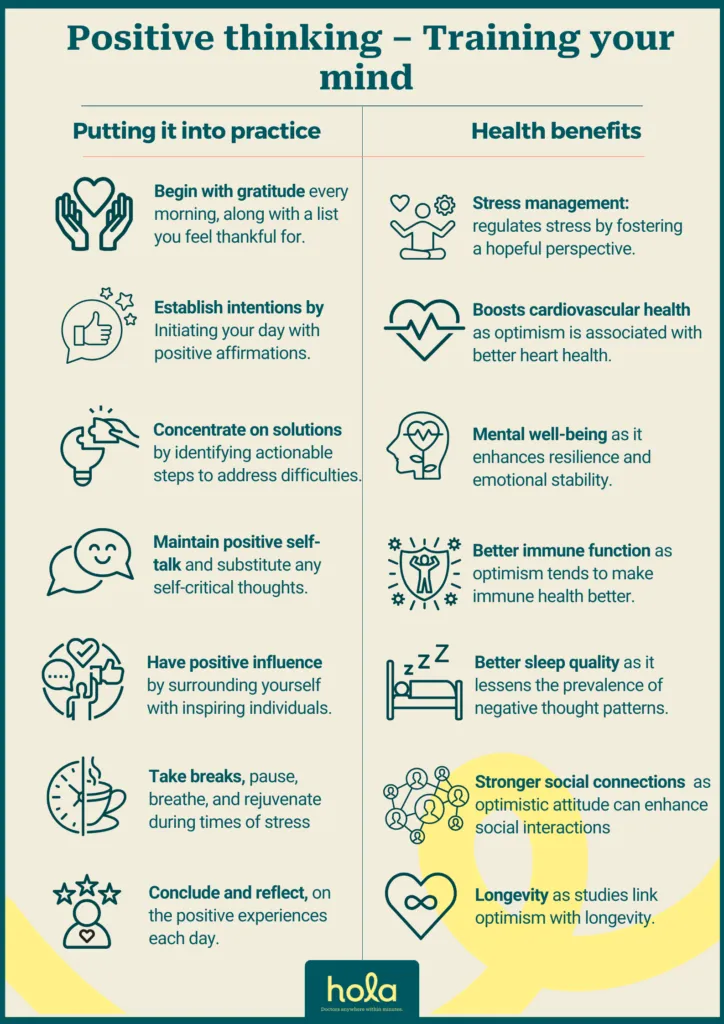
Positive thinking offers several health benefits, including:
- Stress management: The practice of positive thinking contributes to the regulation of stress by fostering a serene and hopeful perspective, mitigating the effects of stress-inducing factors.
- Cardiovascular health: Studies show that optimism is associated with better cardiovascular outcomes, though it doesn’t guarantee lower blood pressure in all individuals.
- Mental well-being: Engaging in positive thinking has the potential to diminish the likelihood of experiencing depression and anxiety, as it enhances resilience and emotional stability.
- Immune function: Evidence suggests a correlation between optimism and immune health, but the direct causality is not fully established.
- Sleep quality: Positive thinking may lessen the prevalence of negative thought patterns, facilitating a quicker onset of sleep and promoting deeper restorative sleep. While positive thinking can aid sleep quality, other factors like lifestyle and stress levels also play critical roles.
- Longevity: Studies link optimism with longevity, but results can vary based on genetics and environmental factors.
- Social connections: An optimistic attitude can enhance social interactions, contributing to the development of stronger and more supportive relationships.
What is an example of positive self-talk?
Amira, a registered psychotherapist from Canberra, ACT says a relatable example of positive self-affirmation is:
“I am doing my best, and that is enough. Mistakes don’t define me—they help me grow. I can face challenges and navigate this one step at a time.”
Positive self-talk enhances self-assurance, diminishes stress, and assists in tackling life’s obstacles with resilience and compassion.
How do you identify negative self-talk?
Identifying negative self-talk involves becoming aware of unproductive thoughts that erode confidence and elevate stress. Some common indicators include
- Self-judgment: “I’m not good enough” or “I constantly make mistakes.”
- Catastrophising: Envisioning the worst outcomes—“Everything is going wrong, and I can’t resolve it.”
- Personalisation: Blaming yourself for factors outside your control—“It’s my fault they’re upset.”
- All-or-nothing mindset: Perceiving situations in extremes—“If I fail at this, I’m a total failure.”
- Overgeneralisation: Extending one negative experience to all situations—“I never do things right.”
Acknowledging negative self-talk is the initial step towards transforming it. Substituting these thoughts with positive, realistic alternatives can enhance mental well-being.
How to make self-talk more positive and less negative
Transitioning from negative to positive self-talk requires awareness and practice. Here’s how you can reframe unhelpful thoughts into more beneficial ones:
| Negative self-talk | Positive self-talk |
| “I can’t handle this.” | “This is tough, but I can learn and improve.” |
| “I always make mistakes.” | “Everyone makes mistakes; I can learn from this.” |
| “I’m not worthy.” | “I am enough, and I contribute value in my unique way.” |
| “Nothing ever works out for me.” | “Some things are challenging, but I’ve overcome obstacles in the past.” |
| “I ought to be better at this.” | “I am giving my best effort, and growth takes time.” |
Positive thinking into practice every day
The following guidelines outline the process for incorporating positive thinking into daily practice:
- Begin with gratitude: Every morning, compile a list of three aspects of your life for which you feel gratitude.
- Establish intentions: Initiate your day by reciting positive affirmations, such as, “I will approach challenges with composure.”
- Concentrate on solutions: When confronted with difficulties, redirect your attention toward identifying actionable steps to address them.
- Employ positive self-talk: Substitute any self-critical thoughts with supportive statements, such as, “I am in the process of learning and developing.”
- Engage with positive influences: Surround yourself with individuals who inspire you and seek out content that uplifts your spirit.
- Take breaks: Allow yourself moments to pause, breathe, and rejuvenate during times of stress.
- Conclude with reflection: At the end of each day, contemplate the positive experiences and the accomplishments you achieved.
How to avoid negative thinking?
To mitigate negative thinking, it is essential to identify and confront negative thoughts through positive reframing. Regularly practicing gratitude, prioritising solutions over problems, and engaging in mindfulness techniques are effective strategies for maintaining present awareness. Furthermore, it is advisable to associate with positive influences while minimising exposure to negative environments. It is important to substitute self-criticism with self-compassion and to participate in activities that enhance mood, such as physical exercise or personal hobbies. The consistent application of these practices may facilitate a transformation in one’s mindset, steering it away from negativity.
Tips for incorporating positive self-talk
Positive self-talk can shape one’s mindset, boost confidence, and reduce stress. By consciously shifting one’s inner thoughts, one can build resilience and improve overall well-being.
- Cultivate self-awareness: Notice your thoughts and recognise negative patterns.
- Transform negative thoughts: Substitute self-criticism with constructive and realistic affirmations.
- Utilise affirmations: Recite positive statements such as “I am capable” or “I am doing my best.”
- Address yourself compassionately: Treat yourself as you would a friend—with care and support.
- Emphasise progress over perfection: Acknowledge small wins and recognise your development.
- Put it in writing: Journaling uplifting thoughts can strengthen a healthier mindset.
Developing the habit of positive self-talk can boost confidence, alleviate stress, and improve overall well-being.
When should I seek support?
It’s crucial to seek assistance when negative thoughts, stress, or anxiety begin to impact your daily life, relationships, or overall health. Consider reaching out if you face the following:
- Ongoing feelings of sadness, hopelessness, or being overwhelmed.
- Challenges in managing stress, work, or personal duties.
- Alterations in sleep patterns, appetite, or energy levels.
- Difficulties with concentration or making decisions.
- Isolation from friends and family or decreased interest in activities.
Where to get help?
Individuals seeking assistance in cultivating a positive mindset or enhancing their mental well-being have access to a variety of resources. Qualified therapists or counsellors can offer tailored guidance through methods such as cognitive-behavioural therapy. Support groups, available both in-person and online, foster a sense of community among participants. Mindfulness applications offer structured meditation sessions aimed at encouraging positive thought patterns. Moreover, if mental health issues continue to be a concern, it is advisable to consult a medical professional online doctor for expert advice and support. It is essential to seek assistance from reputable sources that align with individual needs and preferences.
Positive self-talk is your secret weapon for overcoming obstacles with confidence and a smile. By turning negative thoughts into positive affirmations, you will lift your mood, reinforce your resilience, and take on challenges like a champion. So, start supporting yourself—you’ve got this!
Authors

Editorial staff
Medically reviewed by

Amira Shah
Master’s in Counselling Psychology, Psychotherapist & Counsellor
8+ Years of Experience
Amira Shah is a trauma-informed psychotherapist with over a decade of experience in supporting women through complex mental health challenges. She holds a Master’s in Counselling Psychology and has worked extensively at a women’s centre, offering therapy to survivors of physical abuse, sexual assault, PTSD, and human trafficking. Amy owns her practice, Empathetic Counselling & Psychotherapy (ECP), and is committed to continuing her support for women.
Disclaimer
This blog is for general informational purposes only and does not indicate that Hola Health provides all treatments or preventive measures mentioned. It is not intended to be a substitute for professional medical advice. Always seek the guidance of your doctor or other qualified health professional with any questions you may have regarding your health or a medical condition. For emergencies please immediately contact 000. Any medical topics discussed are intended to educate, not to imply availability through Hola Health.
Note: At Hola Health, we're committed to offering trustworthy, accurate and up-to-date health information. Our Editorial Process entails thorough research, fact- checking, and medical review by doctors in diverse health fields, including medical practitioners, doctors, and psychotherapists based in Australia. We take guidance from qualified Australian doctors. We prioritise primary sources and avoid tertiary references wherever possible.
See a Aussie GP online, available 24/7
Download the app today.