

Contents
Causes of workplace stress & how to prevent its effects

 ChatGpt
  Google AI Mode
  Perplexity
  Claude
 This blog is for educational purposes only and does not replace professional medical advice or diagnosis. If you have health concerns, consult an AHPRA-registered telehealth doctor or request a medical certificate online if clinically appropriate. Please note: Hola Health does not currently offer Mental Health Care Plans.
Summary: Workplace stress is common and can affect mental and physical well-being. It often stems from heavy workloads, poor work-life balance, and unhealthy workplace dynamics. Mitigating its impact requires open communication, support, clear expectations, and encouraging a positive, balanced work culture for overall well-being and performance.
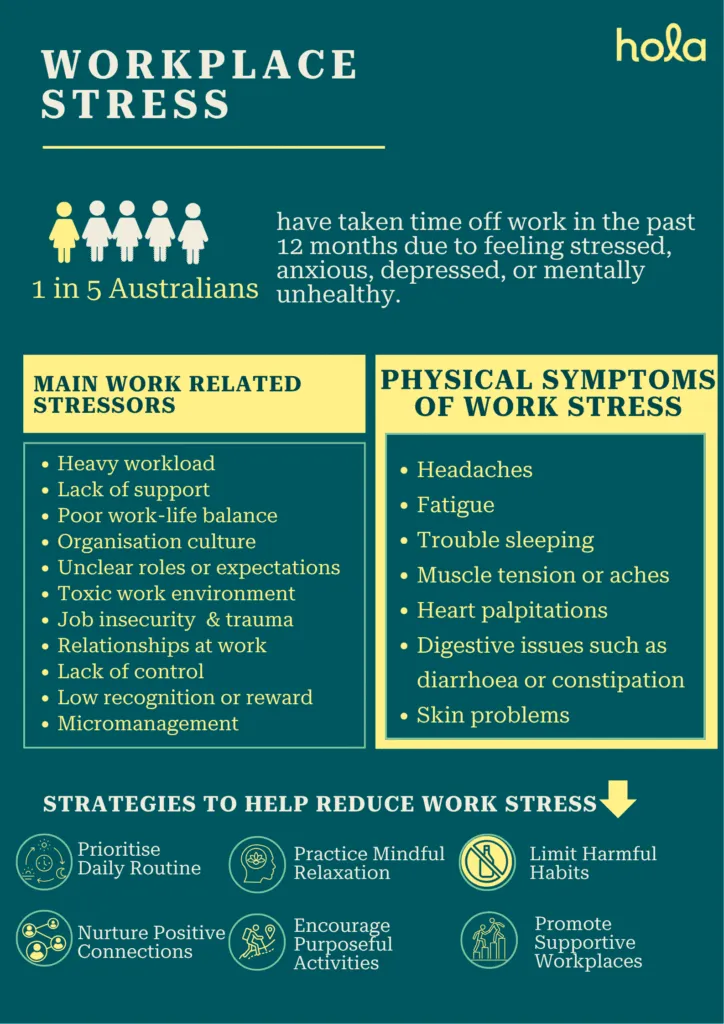
Work can be rewarding, fulfilling, and even exciting but it can also be a major contributor to stress. From demanding deadlines to extended work hours, workplace stress affects employees at every level and in nearly every profession. While some stress is normal and can enhance performance, chronic workplace stress can negatively impact emotional and physical health. In fact, 1 in 5 Australians (21%) have taken time off work in the past 12 months due to feeling stressed, anxious, depressed, or mentally unhealthy1. Recognising the sources of work-related stress and adopting healthy coping strategies can make work feel more manageable and enjoyable again.
Symptoms of work-related stress
Symptoms of work-related stress can manifest physically, emotionally, and behaviourally. Common symptoms include:
1. Physical symptoms:
- Headaches
- Fatigue
- Trouble sleeping
- Muscle tension or aches
- Heart palpitations
- Digestive issues such as diarrhoea or constipation
- Skin problems
2. Emotional symptoms:
- Irritability
- Depression
- Anxiety or constant worry
- Mood swings
- Feelings of overwhelm or helplessness
- Lack of motivation
- Difficulty concentrating or making decisions
- Pessimism
3. Behavioural symptoms:
- Increased absenteeism
- Reduced performance or productivity
- Social withdrawal or isolation
- Disinterest
- Aggression
- Diminished creativity
- Impatience
These symptoms typically appear after 3+ months of unmanaged stress and may mimic other health conditions.
What are the main work-related stressors?
Work-related stressors include:
- Heavy workload
- Lack of support
- Poor work-life balance
- Organisation culture
- Unclear roles or expectations
- Toxic work environment
- Job insecurity
- Trauma
- Relationships at work
- Lack of control
- Low recognition or reward
- Micromanagement
Causes of work-related stress
Work-related stress often stems from professional pressure, workplace dynamics, and personal circumstances. Common causes include:
- Excessive workload
- Unclear job roles
- Tight deadlines
- Extended work hours
- Poor management or leadership
- Lack of autonomy
- Work-life imbalance
- Organisational changes
- Unrealistic expectations
- Inadequate working environment
- Job insecurity
- Harassment
- Discrimination
- Lack of equipment
- Lack of proper resources
- Workplace conflict
- Poor relationships with coworkers or bosses
Left unaddressed, these factors can lead to burnout within6-12 months in 25% of affected workers.
Self-help for the individual
Taking care of your mental health through self-help techniques can give you a stronger sense of control over your well-being. Begin by establishing a daily routine that incorporates consistent sleep, nutritious meals, and physical exercise, all of which contribute to emotional balance. Engage in mindfulness or relaxation practices such as deep breathing, journaling, or meditation to better handle stress. Reducing alcohol, caffeine, and screen time, particularly in the evening, can also lead to significant improvements.
Participating in activities that bring you happiness or fulfil a sense of purpose, whether it’s a hobby, community service, or acquiring new skills, is essential. Maintaining connections with friends or supportive groups is equally crucial. Remember that self-help focuses on progress rather than perfection, and small, steady efforts can result in meaningful advancements in mental health.
Benefits of preventing stress in the workplace
Mitigating stress in the workplace offers numerous advantages for both employees and employers. When stress is effectively managed, employees tend to be more productive, attentive, and driven. This reduces absenteeism and prevents burnout, enhancing both mental and physical health. A low-stress atmosphere also improves job satisfaction and fosters team spirit and collaboration. For employers, this results in reduced staff turnover and increased retention rates. Moreover, a nurturing workplace culture can enhance creativity, resilience, and employee engagement. Preventing stress through clear communication, manageable workloads, and access to mental health resources cultivates a healthier and more positive work environment. Ultimately, lowering workplace stress enhances performance, promotes wellbeing, and contributes to a more successful organisation.
Work-related stress is a management issue
Work-related stress is not merely an individual issue; it’s a major management challenge that directly affects workplace productivity, morale, and employee retention. When employees encounter persistent stress due to overwhelming workloads, inadequate support, or ineffective communication, it falls upon management to step in and implement solutions. Effective leaders understand the significance of mental health and take proactive measures to identify and mitigate stressors within the work environment. This may involve encouraging work-life balance, ensuring sufficient resources, enhancing communication, and providing access to mental health assistance or Employee Assistance Programs (EAPs).
By recognising stress as a management concern, organisations can cultivate a healthier and more supportive workplace, ultimately leading to greater employee satisfaction and improved overall performance.
Where to get help
If you are dealing with work-related stress, seeking help is vital before it impacts your health and productivity. Begin by discussing your concerns with your manager or HR department, they may be able to modify your workload or offer access to mental health resources, such as an Employee Assistance Program (EAP). Additionally, consulting GP can help assess your mental health and provide referrals to a psychologist or counsellor. Online platforms like Hola Health offer easy access to licensed therapists, GPs, and mental health support from the comfort of your home. Don’t hesitate to reach out; accessing support is an essential part of the recovery process.
Workplace stress is common, but it doesn’t have to be overwhelming. Recognising the causes of workplace issues and taking proactive steps like improving communication, prioritising mental health, and encouraging work-life balance can help us build a healthier, happier work environment. Small changes can go a long way.
See an AHPRA-registered doctor online, anytime
24/7 across Australia
Authors

Editorial staff
Medically reviewed by

Amira Shah
Master’s in Counselling Psychology, Psychotherapist & Counsellor
8+ Years of Experience
Amira Shah is a trauma-informed psychotherapist with over a decade of experience in supporting women through complex mental health challenges. She holds a Master’s in Counselling Psychology and has worked extensively at a women’s centre, offering therapy to survivors of physical abuse, sexual assault, PTSD, and human trafficking. Amy owns her practice, Empathetic Counselling & Psychotherapy (ECP), and is committed to continuing her support for women.
Disclaimer
This blog is for general informational purposes only and does not indicate that Hola Health provides all treatments or preventive measures mentioned. It is not intended to be a substitute for professional medical advice. Always seek the guidance of your doctor or other qualified health professional with any questions you may have regarding your health or a medical condition. For emergencies please immediately contact 000. Any medical topics discussed are intended to educate, not to imply availability through Hola Health.
Note: At Hola Health, we're committed to offering trustworthy, accurate and up-to-date health information. Our Editorial Process entails thorough research, fact- checking, and medical review by doctors in diverse health fields, including medical practitioners, doctors, and psychotherapists based in Australia. We take guidance from qualified Australian doctors. We prioritise primary sources and avoid tertiary references wherever possible.
See a Aussie GP online, available 24/7
Download the app today.