

Contents
How can I recognise progress in my physical and mental health?

 ChatGpt
  Google AI Mode
  Perplexity
  Claude
 This blog is for educational purposes only and does not replace professional medical advice or diagnosis. If you have health concerns, consult an AHPRA-registered telehealth doctor or request a medical certificate online if clinically appropriate. Please note: Hola Health does not currently offer Mental Health Care Plans.
Overview
Recognising progress in both physical and mental health often comes down to small but meaningful changes better sleep, increased energy, improved mood, and stronger coping skills. Mental and physical well-being are deeply connected, with factors like hydration, exercise, and lifestyle choices playing a crucial role in overall health.
Tracking progress through journaling, goal-setting, and professional feedback can provide insight into improvements. Physical signs of better mental health include reduced stress-related aches, clearer skin, and a stronger immune system. If mental health challenges persist or impact daily life, seeking support from a online GP or mental health professional is essential. With the right care and self-awareness, even the smallest steps forward contribute to long-term well-being.
Recognising progress in hysical and mental health can feel like spotting a small plant growing in your garden—-you may not notice it instantly, but over time, the little changes become noticeable and meaningful. Whether it’s feeling stronger after a workout or realising you’re dealing with stress more healthily, progress in physical and mental health shows up in the small wins along the way. The key is knowing what to look for, so you can celebrate every bit of progress, no matter how insignificant it may seem!
How is your mental and physical health connected?
Mental and physical health are deeply interconnected, as both influence each other in various ways. Here’s a breakdown of how they interact:
1. Hydration plays a vital role in physical and mental health
Proper hydration is essential for physical and emotional well-being. Dehydration can result in fatigue trouble focusing, and even mood swings. On a physical level, staying hydrated helps regulate body temperature, support joint function, and facilitate digestion. For mental well-being, drinking enough water can boost brain performance, improve concentration, and stabilise emotions, alleviating stress or irritability.
2. Physical exercise triggers brain chemicals that improve health
Engaging in physical activity is one of the most efficient ways to enhance physical and mental well-being. Exercise activates the release of endorphins, often called ‘“mood-lifting” hormones, which help reduce stress and encourage a sense of happiness. Additionally, exercise promotes the production of neurotransmitters like serotonin and dopamine, which are essential for maintaining mental stability and managing issues like anxiety and depression.
3. Leisure physical activity boosts mental well-being at any age
Activities such as walking, swimming, dancing, or playing sports can notably improve mental, regardless of age. These activities offer a sense of accomplishment, relieve stress, and boost self-confidence. They also provide opportunities for socialising, which helps to reduce feelings of isolation or detachment, often linked to mental health struggles.
4. Mental well-being impacts physical health
Mental health struggles such as anxiety, depression, or stress can negatively affect physical health. Chronic stress can increase susceptibility to hypertension, heart disease, and other conditions. Mental health disorders can also disrupt sleep, appetite, and energy levels, resulting in weakness, weight fluctuations, and a compromised immune system.
5. Lifestyle choices link mental and physical well-being
Lifestyle choices such as diet, exercise, and rest play a crucial role in emotional and physical health. For example, regular exercise strengthens the body, boosts mood and reduces stress. Similarly, poor lifestyle habits like smoking, excessive alcohol, or lack of rest can worsen both physical and mental health. Maintaining a balance between physical and mental health is crucial, as both affect each other. Practices like staying active, managing stress, and eating properly can enhance both dimensions of health simultaneously.
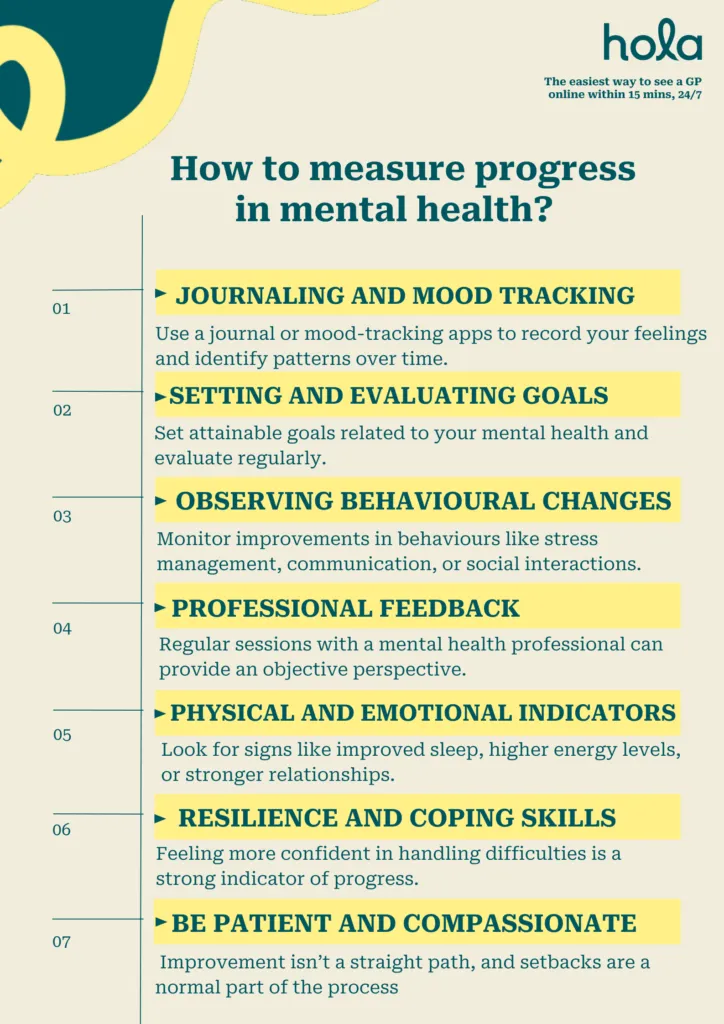
How to measure progress in mental health?
Measuring progress in mental health requires a blend of self-reflection, observing emotional and behavioural changes, and seeking professional feedback. You can start by journaling your feelings and using mood-tracking applications to identify patterns over time.
1. Journaling and mood tracking:
- Use a journal or mood-tracking apps to record your feelings and identify patterns over time.
- Note any changes in your emotional state, such as reduced anxiety or improved mood.
2. Setting and evaluating goals:
- Set attainable goals related to your mental health (e.g., practicing mindfulness daily or improving sleep habits).
- Regularly evaluate how well you’re meeting these goals.
3. Observing behavioural changes:
- Monitor improvements in behaviours like stress management, communication, or social interactions.
- Celebrate small wins, such as handling a stressful situation more effectively.
4. Professional feedback:
- Regular sessions with a mental health professional can provide an objective perspective on your progress.
- Discuss any changes or challenges you’ve noticed during therapy.
5. Physical and emotional indicators:
- Look for signs like improved sleep, higher energy levels, or stronger relationships.
- Notice physical changes such as better appetite, reduced fatigue, or fewer stress-related symptoms.
6. Resilience and coping skills:
- Feeling more confident in handling difficulties is a strong indicator of progress.
- Recognise when you’re using healthier coping mechanisms instead of resorting to old, unhelpful habits.
Remember, improvement isn’t a straight path, and setbacks are a normal part of the process. Be patient and compassionate with yourself as you navigate your mental health journey.
How do you know your mental health is improving? 9 signs
Tracking your progress can help you see how far you’ve come on your mental health journey. Here are some key signs of improvement:
- Enhanced emotional stability: You encounter fewer fluctuations in your mood and feel more in in control of your emotions.
- Better sleep quality: You find it easier to fall and stay asleep, waking up feeling more revitalised.
- Higher energy levels: You experience less fatigue and feel more driven to participate in daily activities.
- More optimistic mindset: Negative self-talk diminishes, and you feel more positive about the future.
- Improved coping mechanisms: Stressful situations become more manageable, allowing you to utilise healthier coping strategies.
- Strengthened relationships: You reconnect with family and friends, feeling more involved in social interactions.
- Enhanced focus: Your ability to concentrate and make decisions improves, facilitating work or study.
- Reduced dependence on negative habits: You cut back on behaviours such as emotional eating, substance use, or avoidance.
- Increased sense of control: You acknowledge your progress and take active steps to support your well-being.
What physical changes can be seen with improved mental health
Experiencing better mental health frequently results in visible physical changes. Here are some important indicators:
- Improved sleep quality: You find it easier to fall asleep, wake up refreshed, and have fewer interruptions during the night.
- Enhanced energy levels: Fatigue diminishes, and you feel more inspired to participate in daily activities.
- Healthier complexion: Less stress can decrease inflammation, resulting in clearer skin and a brighter appearance.
- Better posture: With reduced anxiety and tension, you might stand straighter and feel a greater sense of relaxation.
- More stable appetite: Emotional eating or lack of hunger becomes less common, leading to a healthier and more consistent eating routine.
- Reduced aches and pains: Tension from stress, along with headaches and muscle discomfort, occurs less often.
- Boosted immune system: Decreased stress levels can improve immunity, leading to fewer illnesses.
- Relaxed facial expressions: You may notice that you’re smiling more often and showing fewer signs of stress, like frowning or tight jaws.
When to consult a GP
You should consult a general practitioner if your mental well-being is impacting everyday life. A continuing low mood, feelings of despair, or overwhelming anxiety lasting more than two weeks may suggest the need for assistance. Symptoms such as anxiety, panic episodes, or trouble managing stress are also indicators to ask for help.
Sleep issues, a loss of enjoyment in activities, unexplained physical ailments like headaches or digestive problems, as well as changes in appetite or weight may be associated with mental health challenges. If you notice increased dependence on alcohol or drugs for relief or have thoughts of self-harm or suicide, it’s crucial to seek urgent medical help. A general practitioner can evaluate your symptoms, provide treatment alternatives, and connect you with appropriate professional resources.
Where to get help
If you are seeking mental health assistance, visiting your general practitioner is a great place to begin. They can evaluate your circumstances and create a management plan, which allows 100% bulk-billed therapy sessions through Medicare.
There are also various low-cost services available, such as Beyond Blue, Lifeline (13 11 14), Headspace (targeted at young individuals), and community health centres. If you’re experiencing a crisis, it’s important to contact Lifeline or the Suicide Callback Service (1300 659 467). Many services provide telehealth options, enabling you to receive support from the comfort of your home. Asking for help is a courageous and vital step towards enhancing your mental health.Lifeline (13 11 14), Headspace (targeted at young individuals), and community health centres. If you’re experiencing a crisis, it’s important to contact Lifeline or the Suicide Callback Service (1300 659 467).
Many services provide telehealth options, enabling you to receive support from the comfort of your home. Asking for help is a courageous and vital step towards enhancing your mental health. In conclusion, progress in physical and mental health isn’t always about grand achievements—it’s about celebrating small wins and appreciating every little step forward. Whether it’s lifting heavy weights at the gym or handling stress with ease, these little wins show you are on the right track. Keep an eye out for signs of growth and remember, every step matters!
See an AHPRA-registered doctor online, anytime
24/7 across Australia
Authors

Editorial staff
Medically reviewed by

Amira Shah
Master’s in Counselling Psychology, Psychotherapist & Counsellor
8+ Years of Experience
Amira Shah is a trauma-informed psychotherapist with over a decade of experience in supporting women through complex mental health challenges. She holds a Master’s in Counselling Psychology and has worked extensively at a women’s centre, offering therapy to survivors of physical abuse, sexual assault, PTSD, and human trafficking. Amy owns her practice, Empathetic Counselling & Psychotherapy (ECP), and is committed to continuing her support for women.
Disclaimer
This blog is for general informational purposes only and does not indicate that Hola Health provides all treatments or preventive measures mentioned. It is not intended to be a substitute for professional medical advice. Always seek the guidance of your doctor or other qualified health professional with any questions you may have regarding your health or a medical condition. For emergencies please immediately contact 000. Any medical topics discussed are intended to educate, not to imply availability through Hola Health.
Note: At Hola Health, we're committed to offering trustworthy, accurate and up-to-date health information. Our Editorial Process entails thorough research, fact- checking, and medical review by doctors in diverse health fields, including medical practitioners, doctors, and psychotherapists based in Australia. We take guidance from qualified Australian doctors. We prioritise primary sources and avoid tertiary references wherever possible.
See a Aussie GP online, available 24/7
Download the app today.