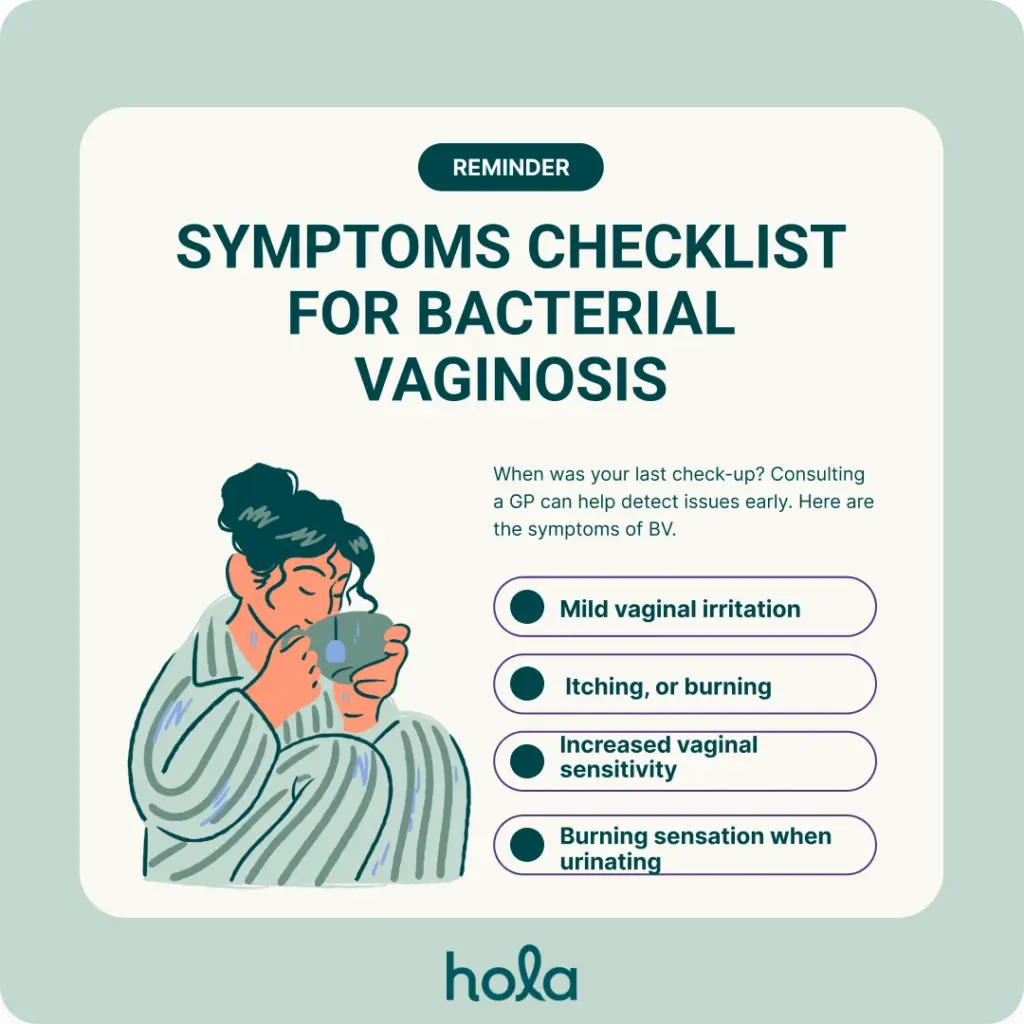
Bacterial vaginosis (BV) is a common vaginal condition. It happens when the normal balance of bacteria in your vagina changes. It may cause changes in vaginal discharge or smell, or lead to discomfort, although many women have no symptoms.
If you experience unusual vaginal discharge, odour, itching or discomfort that does not improve on its own or worsens over time, seek medical attention and get the right treatment for bacterial vaginosis.
If it is recurrent or causes discomfort
If the bacterial vaginosis symptoms keep coming back or cause discomfort, pain and interfere with your daily life, speak to a doctor to identify the underlying causes and provide long-term management.
If you have health risks or are pregnant
If BV develops during pregnancy, or if you have a weakened immune system or underlying conditions, consult a doctor promptly. Untreated BV in such cases can increase the risk of complications.
This guide does not replace professional care. See a doctor to manage acne symptoms. In emergencies, call 000 or visit a hospital immediately. The content is research-backed & medically reviewed by Dr Vishnu Gopalan, MBBS, FRACGP, Co-Founder and Chief Medical Officer, Hola Health& Dr. Ammar AL-ANI, MBChB, CCBST, AMC. Last updated on 7 Oct 2026
Good vaginal cleanliness and safe sexual practices can lower the risk of BV.
Avoid douching: Washing inside the vagina might disrupt the normal bacterial balance.
Use water to clean the vagina: Avoid applying fragrant items, vaginal deodorants, and talcum powders around the vagina.
Use condoms: Barrier contraception can lower the risk of BV.
Avoid smoking: Stopping smoking may help reduce your risk.
Follow your treatment: If you are prescribed medications, complete the full course even if your symptoms improve.
Management for Bacterial Vaginosis
BV treatment often consists of doctor-prescribed medications.
Meds: Medication may be used to manage certain infections and may be available as tablets, vaginal creams, or gels, depending on the infection and treatment prescribed.
Complete the course: Take the medication for the full duration.
Avoid sexual activity during treatment: It is best to avoid sex until the treatment is finished and the symptoms have subsided.
Follow-up Care: Consult your doctor if your symptoms worsen or do not improve.
Note: The content on this page is for general informational purposes only. Hola Health provides online doctor consultations and management where clinically appropriate but does not provide treatment for bacterial vaginosis. In case of an emergency, such as severe pelvic pain, high fever, or signs of a serious pelvic infection, call 000 or visit a hospital immediately.
It depends. Mild or simple symptoms can occasionally be evaluated online, but some patients may still require an in-person examination or swab testing for a proper diagnosis. Telehealth does not substitute physical examinations when they are therapeutically essential.
Yes, in some circumstances, minor BV symptoms might improve without management. However, any continuous or recurring symptoms should be evaluated by a doctor to prevent the risk of complications.
BV is not often categorised as a sexually transmitted infection, although sexual activity can alter the balance of vaginal bacteria and cause symptoms in certain people.
To significantly lower the recurrence of bacterial vaginosis, ongoing male sexual partner may need to be managed as well.
Yes. If clinically indicated, a Hola Health doctor may refer to gynaecologist. If you are experiencing severe pelvic pain, fever, heavy bleeding, or other serious medical problems, contact 000 or go to your local Emergency Department right away.







 Scan the QR Code to download the Hola app.