

- Home
- /
- Health Conditions
- /
- Dry Cough
Dry cough
A dry cough is an irritating cough that doesn’t produce mucus. It often feels like a tickle in the throat and can be caused by viral infections, allergies, asthma, smoke, or acid reflux. Common with colds, flu, or COVID-19, it can linger for weeks and may worsen at night or in dry, dusty environments. Get medical advice from an AHPRA-registered practitioner online within minutes for a dry cough, available 24/7 across Australia.
When to consult a doctor for dry cough?
If your cough is ongoing or getting worse
Consult a doctor if your dry cough lasts longer than 3–4 weeks, becomes severe or persistent, or keeps worsening instead of improving.
If you have concerning symptoms along with the cough
Seek medical advice if your cough is accompanied by wheezing, fever, night sweats, unexplained weight loss, or unusual mucus.
If dry cough affects your daily life
Consult a doctor if the cough is disturbing your sleep or daily activities, or if you have a history of asthma, heart disease, or chronic lung conditions that may be contributing to your symptoms.
This guide does not replace professional care. Consult a doctor to manage your symptoms. In emergencies, call 000. The content is research-backed & medically reviewed by Dr. Ammar AL-ANI, MBChB, CCBST, AMC
Causes
A dry cough can have many triggers, and understanding common dry cough causes helps identify what’s irritating the airways and when medical care may be needed.
- Viral infections (such as colds or flu)
- Allergies
- Asthma
- Acid reflux (GERD)
- Post-nasal drip
- Environmental irritants (smoke, dust, pollution, strong smells)
- Certain medications (such as some blood pressure medicines)
- Whooping cough (pertussis)
- Chronic or underlying lung conditions
Types
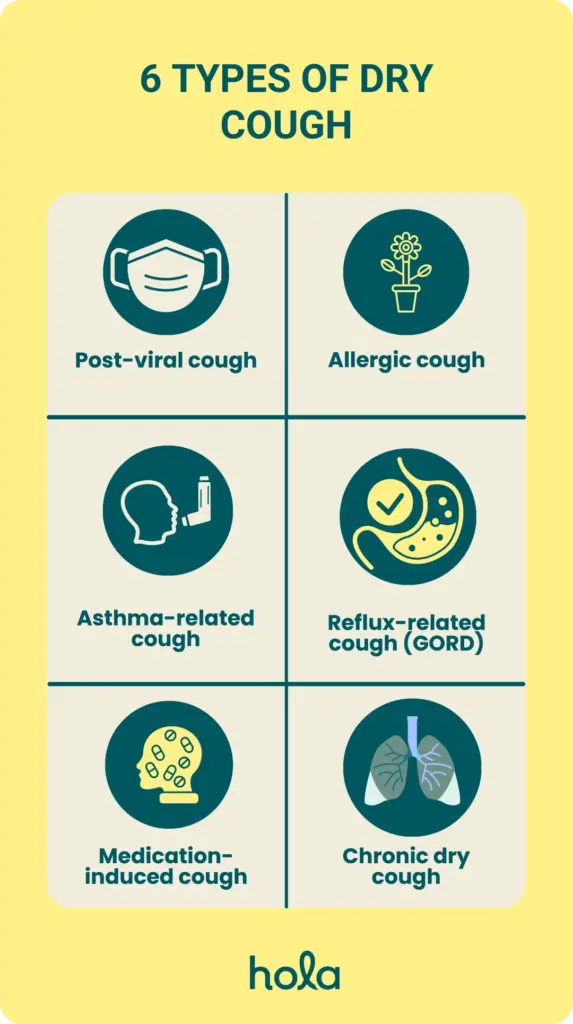
Dry cough can have several underlying causes, and identifying the specific type can help guide appropriate treatment
- Post-viral cough: Lingers for weeks after a cold, flu, or COVID-19 infection.
- Allergic cough: Triggered by allergens like pollen, dust, pet dander, or mould, usually worse in certain environments.
- Asthma-related cough: Often comes with wheezing, chest tightness, and breathlessness.
- Reflux-related cough (GORD): Caused by stomach acid irritating the throat, often worse after meals or lying down.
- Medication-induced cough: Common with certain medications, like the ones for blood pressure.
- Chronic dry cough: Lasts more than 8 weeks, often linked to underlying conditions like asthma, post-nasal drip, or lung disease.
Self care at home
- Warm saltwater gargle: Soothes throat irritation and reduces coughing.
- Honey in warm water or herbal tea: may help soothe a cough (not for children under 12 months).
- Steam inhalation: Loosens airway irritation and soothes dry throat.
- Turmeric milk: Warm milk with turmeric can help reduce throat inflammation.
- Ginger tea: Anti-inflammatory and antimicrobial properties may calm coughing.
- Throat lozenges or herbal candies: Keep the throat moist and reduce tickling.
- Elevating your head while sleeping: Reduces night-time coughing, especially with GORD.
- Avoiding irritants: Keep away from smoke, dust, strong scents, and cold, dry air.
- Stay well-hydrated: Warm fluids like broths, teas, and soups help soothe the throat.
Speak to a doctor before applying any selfcare method.
Hola Health provides a convenient way to consult an AHPRA-registered doctor online, 24/7 across Australia.
Clinical note: A telehealth assessment can help evaluate dry cough symptoms, recommend appropriate management, and issue prescriptions or referrals if clinically indicated. Telehealth is a complementary service — a persistent cough or one accompanied by chest signs (wheeze, reduced air entry) requires physical chest examination (auscultation) and may require chest X-ray or further investigation. Coughing up blood, unexplained weight loss, or night sweats alongside a chronic cough should be assessed in person promptly. After-hours bulk billing is available for eligible patients during Medicare-defined periods; otherwise, private fees apply. If you are experiencing severe difficulty breathing, coughing up significant blood, or blue-tinged lips, call 000 immediately — do not use telehealth for these presentations. We recommend sharing your consult summaries with your regular GP to ensure continuity of care.

Frequently Asked Questions
When to seek emergency care for dry cough instead of a telehealth consultation?
- Coughing up significant blood — particularly with sudden onset or large amounts
- Severe difficulty breathing or breathlessness at rest
- Blue or grey lips, fingertips, or face (cyanosis) — indicates dangerously low oxygen levels
- Sudden severe chest pain — may indicate pulmonary embolism, pneumothorax, or cardiac event
- High fever with confusion or extreme weakness — may indicate serious respiratory infection or sepsis
How can I get rid of a dry cough?
Drinking plenty of fluids, finding ways to relax, avoiding irritants, and addressing underlying causes like allergies, viral infections, or reflux can help manage a dry cough. It’s important to consult a healthcare professional if the cough persists.
Can a dry cough be a sign of COVID-19?
Yes. COVID-19 can cause a dry cough; however, symptoms can vary from person to person. Testing and medical advice may be given based on the symptoms and exposure history.
Why does a dry cough get worse at night?
A dry cough may worsen at night due to postnasal drip, acid reflux, dry air, asthma, or sleeping flat.
Can allergies cause a dry cough?
Yes. Allergic reactions can irritate the airways and cause chronic dry coughing in certain persons.
Can acid reflux cause a dry cough?
Yes. Acid reflux can irritate the throat and airways, triggering a chronic dry cough.
Can I consult with Hola Health doctors after hours?
Yes. Hola Health offers after-hours telehealth consultations for certain urgent medical issues.
Note: Hola Health bulk-billing* after-hours doctor consults are for urgent care and are available to Medicare cardholders during these hours only:11pm to 6:45am, 7 days a week
Can a Hola Health doctor assess a dry cough online?
Yes. Doctors can use telehealth consultation to analyse dry cough symptoms, and, if clinically appropriate, issue online prescriptions and send referrals as needed. Some symptoms may necessitate an in-person evaluation.
Can a dry cough develop into a productive cough (phlegm)?
Yes. Some respiratory infections may start with a dry cough and then develop mucus or phlegm.
Speak to our doctors 24/7
Providing consults for
Helpful resources




Download our Mobile App for better performance
- Consult a GP anytime you need to.
- Stay connected wherever you are.
- Experience healthcare, uninterrupted.
 Scan the QR Code to download the Hola app.