

Contents
9 foods that cause gout and the best foods to eat

 ChatGpt
  Google AI Mode
  Perplexity
  Claude
 This blog is for educational purposes only and does not replace professional medical advice or diagnosis. If you have health concerns, consult an AHPRA-registered telehealth doctor or request a medical certificate online if clinically appropriate. Please note: Hola Health does not currently offer Mental Health Care Plans.
Overview
Gout is triggered by high-purine foods like seafood, red meat, sugary beverages and alcohol. It’s essential to avoid these triggers and embrace foods like low-fat dairy, cherries, and vegetables to help manage gout. A balanced, anti-inflammatory diet can help lower uric acid levels, prevent flare-ups, and promote joint health.
If gout symptoms are persistent, severe or affecting your daily activities, speaking with a doctor can help you understand your symptoms and treatment options. A telehealth doctor consultation may provide a convenient way to discuss your concerns with a doctor from home when your condition is suitable for online care.
Introduction
Gout may not be the most thrilling topic, but managing it doesn’t have to be overwhelming. Since food plays a vital role in triggering or preventing gout flares, knowing what to eat and what to avoid can make a significant impact. A mindful approach to your diet can help regulate uric acid levels and keep painful attacks at bay. In 2022, around 224,000 (0.9%) people in Australia were estimated to be living with gout, highlighting the importance of understanding how diet impacts this condition.
9 foods and drinks that trigger gout and should be avoided
Here’s a handy guide to foods to avoid for effective gout management and to prevent flare-ups:
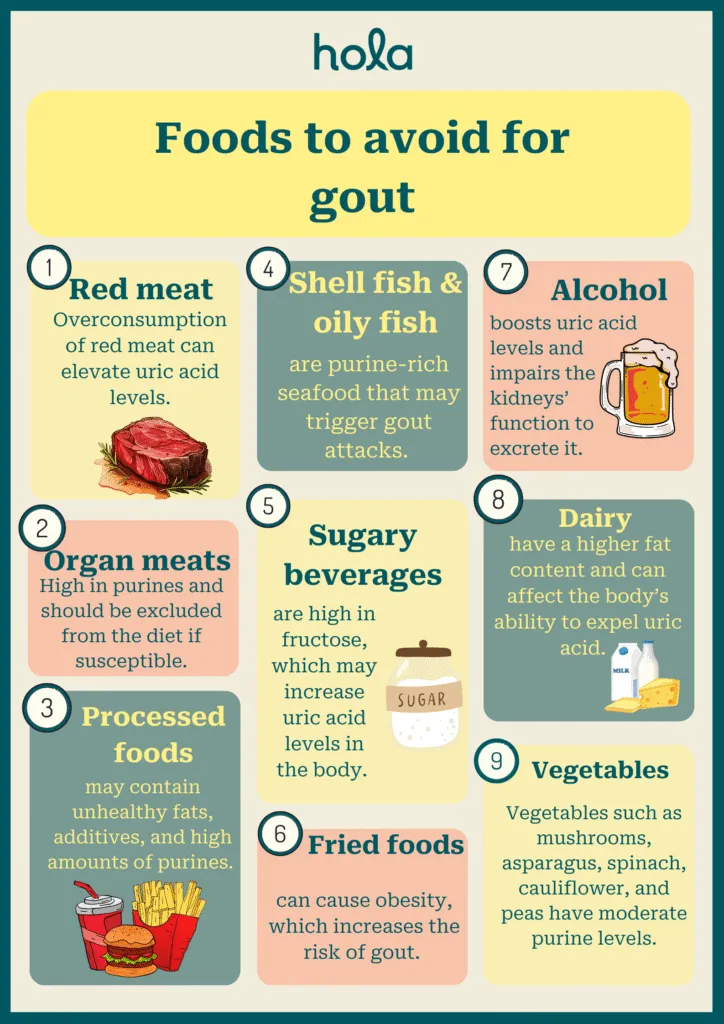
- Red meat: Beef, lamb, and pork are rich in purines, which the body breaks down into uric acid. Overconsumption of red meat can elevate uric acid levels and lead to gout flare-ups.
- Organ meats: Organ meats such as kidneys, liver, and sweetbreads are especially high in purines and should be excluded from the diet of those susceptible to gout.
- Shellfish and oily fish: Shrimp, crabs, lobsters, anchovies, and mackerel are purine-rich seafood that may trigger gout attacks.
- Alcohol: Alcohol, including beer, wine, and liquor, boosts uric acid levels and impairs the kidneys’ function to excrete it. Beer is notably high in purines.
- Sugary beverages: Soft drinks, fruit juices with added sugars, and sweetened energy drinks are high in fructose, which may increase uric acid levels in the body.
- High-fat dairy products: Dairy products like whole milk, rich cheese, and cream have a higher fat content and can affect the body’s ability to expel uric acid.
- Processed foods: Processed foods, including junk food, fast food, and instant meals, may contain unhealthy fats, additives, and high amounts of purines.
- Some vegetables: Vegetables such as mushrooms, asparagus, spinach, cauliflower, and peas have moderate purine levels. However, they are less likely to trigger gout than high-purine meats or seafood.
- Fried foods: Foods rich in unhealthy fats, like fried foods and greasy snacks, can cause obesity, which increases the risk of gout. These foods also intensify inflammation.
To manage gout effectively, avoid foods and drinks high in purines and those that increase uric acid, such as red meat, organ meats, seafood, sugary beverages, and processed foods. Limit high-fat dairy and focus on a diet rich in low-fat dairy, whole grains, fruits, vegetables, and water to help reduce flare-ups. Speaking to a GP either face-to-face or via a telehealth appointment online about your symptoms, advice on steps, and home remedies will help manage gout.
Foods that may be better choices
For managing gout, consider including these foods that are generally lower in purines and may help decrease inflammation:
- Fruits: Apples, berries, cherries, bananas, and oranges may help lower uric acid levels.
- Vegetables: Bell peppers, carrots, and tomatoes are rich in nutrients and low in purines.
- Whole grains: Oats, quinoa, brown rice, and whole wheat bread contain fibre and aid in maintaining a healthy weight.
- Low-fat dairy: Skim milk, yoghurt, and low-fat cheese may help decrease uric acid levels.
- Water: Drinking plenty of water helps flush out excess uric acid from the body.
- Nuts and seeds: Walnuts, almonds, chia seeds, and flaxseeds are excellent sources of healthy fats and protein.
- Legumes: Beans, lentils, and chickpeas are low in purines and high in protein.
For gout management, select fruits like cherries, vegetables like carrots, whole grains, low-fat dairy, nuts and seeds, and legumes. Stay hydrated with plenty of water. These foods are low in purines, help lower uric acid levels, and promote overall health, potentially preventing gout attacks.
See an AHPRA-registered doctor online, anytime
24/7 across Australia
Gout diet: what it is and its benefits
A gout diet is a nutritional plan designed to manage gout by lowering uric acid levels in the body. Gout occurs when excess uric acid forms crystals in the joints, causing pain and swelling. This diet focuses on limiting foods high in purines, which increase uric acid, while encouraging foods that support kidney function and reduce inflammation.
Benefits of a gout diet:
- Lowers uric acid levels: A gout-friendly diet helps reduce uric acid production and supports its elimination, preventing the formation of crystals in the joints.
- Prevents gout flare-ups: By eliminating trigger foods like red meat and alcohol, the diet lessens the frequency and intensity of flare-ups.
- Encourages healthy weight: A well-balanced diet helps with weight management, which is important for reducing joint stress and preventing gout complications.
- Boosts joint health: Anti-inflammatory foods, like fruits and vegetables, help alleviate inflammation and pain in the affected joints.
- Improves overall health: Consuming foods rich in nutrients, such as whole grains, low-fat dairy, and healthy fats, promotes overall well-being and reduces the risk of other long-term conditions.
A gout diet aids in managing gout by lowering uric acid levels, preventing flare-ups, and reducing joint swelling. It emphasises limiting purine-rich foods such as red meat and alcohol, while prioritising fruits, vegetables, whole grains, and low-fat dairy. The benefits include fewer gout attacks, improved joint function, weight management, and overall health support.
Important considerations
While following a gout diet, there are several important considerations to keep in mind:
- Hydration: Ensure sufficient water intake to help remove excess uric acid and reduce the risk of kidney stones.
- Maintain a healthy weight: Extra weight can raise the risk of gout attacks.
- Limit alcohol: Alcohol, especially beer and liquor, may elevate uric acid levels
- Portion control: Even foods low in purines should be consumed in moderation to ensure a balanced diet and avoid overindulgence.
- Monitor purine intake: While some purine-rich foods are acceptable in limited amounts, it’s best to avoid high-purine foods like shellfish and organ meats.
- Consult a healthcare provider: Consult with a doctor or nutritionist to customise the diet to fit specific needs, especially if taking gout medication.
- Consistency: Follow the diet consistently for effective control and prevention of gout attacks.
To manage gout, focus on hydration, portion control, and weight management. Limit alcohol, especially beer and liquor, and track your purine intake. Avoid purine-rich foods consult a healthcare provider, and maintain consistency with the diet for better gout management and fewer flare-ups.
How can you flush out uric acid?
Eliminating uric acid from the body is crucial for avoiding gout attacks and preserving kidney health. Simple alterations in lifestyle and diet can assist in effectively ridding the body of excess uric acid.
- Stay well-hydrated: Drinking enough water aids the kidneys in flushing out uric acid. Strive for at least 8-12 cups of water each day.
- Incorporate lemon water: Lemon juice may assist in neutralising uric acid. Squeeze half a lemon into a glass of water and consume it one to two times daily.
- Increase your intake of low-fat dairy: Milk and yoghurt can enhance uric acid excretion and help reduce the likelihood of gout episodes.
- Add more fruits and vegetables to your diet: Fruits like cherries and berries, as well as cucumbers and leafy greens, can lower uric acid levels due to their anti-inflammatory effects.
- Reduce consumption of high-purine foods: Steer clear of red meat, organ meats, shellfish, and processed products, which can lead to a build-up of uric acid.
- Minimise alcohol and sugary beverages: Beer, spirits, and high-fructose drinks hinder uric acid removal and should be limited.
- Engage in regular physical activity and maintain a healthy weight: Being overweight can elevate uric acid levels, so staying active helps manage metabolism and prevent flare-ups.
- Consider using apple cider vinegar: Some individuals suggest that mixing one to two tablespoons of apple cider vinegar with a glass of water may aid in balancing uric acid levels.
- Use baking soda with care: Consuming half a teaspoon of baking soda dissolved in a glass of water might help neutralise uric acid, but it is advisable to consult a doctor first, especially if you have high blood pressure.
By ensuring proper hydration, following a nutritious diet, and avoiding triggers, you can assist your body in eliminating excess uric acid and lessen the chances of gout.
What triggers gout the most?
Gout is primarily triggered by high-purine foods that elevate uric acid levels. These foods include red meats, organ meats, shellfish, and fatty fish, such as sardines. Alcohol, particularly beer and spirits, is a significant trigger since it hampers uric acid elimination. Sugary beverages and foods high in fructose can also raise uric acid levels. Factors like dehydration, obesity, and kidney problems diminish the body’s ability to expel uric acid, heightening the risk. Certain medications, including diuretics and aspirin, can also prompt gout by influencing uric acid metabolism. Stress, illness, or rapid dietary changes can also trigger flare-ups. Controlling these triggers through dietary choices, staying hydrated, and making lifestyle changes can help avert gout attacks.
Are eggs bad for gout?
Eggs are not harmful to those with gout and are a beneficial source of protein for managing the condition. Unlike red meat, seafood, and organ meats, eggs are low in purines, meaning they do not significantly elevate uric acid levels. They can be a suitable substitute for high-purine protein sources like beef or shellfish.
However, individuals with heart disease or high cholesterol should consume eggs in moderation. It is recommended to choose boiled, poached, or scrambled eggs rather than fried to keep your diet friendly for gout. Combining them with vegetables and whole grains can further enhance overall health.
Do tomatoes cause gout?
Tomatoes are not a direct cause of gout, but some individuals may find that they trigger flare-ups. Although tomatoes have low purine content, they may slightly elevate uric acid levels by influencing their metabolism in certain people. However, limited scientific studies exist on this association.
If you experience gout symptoms after consuming tomatoes, consider removing them from your diet temporarily and observe how your body reacts. Otherwise, they are generally safe and rich in antioxidants that can promote overall health.
What aggravates gout the most?
Gout flare-ups are frequently instigated by diet, lifestyle, and particular health issues. Recognising the main aggravators of gout can aid in preventing painful attacks and effectively managing the condition.
- High-purine foods: Consuming red meats, organ meats, shellfish, and oily fish like sardines and anchovies can raise uric acid levels, leading to flare-ups.
- Alcohol consumption: Beer and spirits disrupt the removal of uric acid, increasing the likelihood and severity of gout attacks.
- Sugary beverages and high-fructose foods: Sodas, fruit juices with additional sugars, and processed sweets contribute to elevated uric acid production.
- Dehydration: Inadequate water intake hampers kidney functionality, making it more challenging to eliminate excess uric acid.
- Obesity and metabolic concerns: Excess weight boosts uric acid production and limits the body’s ability to expel it.
- Rapid weight loss or fasting: Sudden weight loss can lead the body to release more uric acid, provoking a flare-up.
- Certain medications: Diuretics, aspirin, and some blood pressure treatments can elevate uric acid levels.
- Stress and illness: Emotional or physical stress, infections, and other ailments can trigger gout attacks.
By avoiding these common triggers and maintaining a balanced diet, proper hydration, and a healthy lifestyle, effective management of gout is possible. If flare-ups continue, it is advisable to consult a doctor for medical guidance and treatment alternatives.
It is important to note that gout attacks often reach peak intensity during the night or in the early hours of the morning. Because the pain can be debilitating, you may need to consult an after-hours doctor or authorised health practitioner to access urgent pain relief or anti-inflammatory medication without waiting for a morning appointment.
How to lower uric acid immediately?
To quickly lower uric acid, a blend of increased hydration, dietary adjustments, and home remedies can help the body eliminate extra uric acid promptly.
- Stay hydrated: Drinking sufficient water enables the kidneys to expel uric acid more rapidly. Aim for 12-16 cups of water during a flare-up.
- Drink lemon water: Lemon juice can help alkalise the body and reduce uric acid levels. Squeeze half a lemon into a glass of water and drink it twice a day.
- Consume cherries or cherry juice: Cherries are rich in antioxidants that help decrease uric acid and inflammation. Eating a handful or sipping cherry juice may prove beneficial.
- Eliminate high-purine foods: Immediately refrain from consuming red meats, organ meats, shellfish, and processed foods, as these can increase uric acid levels.
- Cut out alcohol and sugary beverages: Beer, spirits, and high-fructose sodas exacerbate uric acid build-up and should be eliminated.
- Consider baking soda (with caution): Mixing half a teaspoon of baking soda in a glass of water might help neutralise uric acid, but seek medical advice if you have high blood pressure.
- Increase your intake of alkaline foods: Foods like cucumbers, leafy greens, and whole grains can aid in balancing uric acid levels.
While these measures can deliver swift relief, consistently managing diet and lifestyle is vital for preventing further flare-ups.
Are bananas bad for gout?
Bananas are not detrimental to gout and may even offer advantages. Being low in purines, they don’t contribute to elevated uric acid levels. Bananas also provide vitamin C, which may aid in lowering uric acid and mitigating inflammation. Furthermore, their high potassium content supports kidney function, enhancing the body’s ability to eliminate excess uric acid efficiently. Because bananas are naturally alkalising, they can help balance acidity levels in the body, thus lowering the risk of flare-ups.
Does fructose cause gout?
Fructose can lead to gout by elevating uric acid levels in the body. When fructose is metabolised, it generates purines, which subsequently increase uric acid production. Unlike other sugars, fructose distinctly amplifies uric acid levels by speeding up its production instead of promoting its excretion. Foods and beverages high in fructose, such as sodas, fruit juices, candies, and processed sweets, are associated with a higher risk of developing gout. Even some natural sources like honey and specific fruits (for instance, apples, grapes, and pears) possess significant amounts of fructose, which means they should be consumed cautiously. To help prevent gout flare-ups, it’s advisable to limit added sugars and sugary drinks while prioritising whole, nutrient-dense foods.
Can I drink alcohol?
If you suffer from gout, it’s wise to limit or avoid alcohol since it elevates uric acid levels and may trigger flare-ups. Beer and hard liquor (like whiskey, vodka, and rum) are particularly problematic because they hinder uric acid elimination. Additionally, beer contains purines, which can further increase uric acid levels.
Moderation might make wine a preferable choice, although even small quantities could still provoke gout attacks in some people. If you decide to drink, restrict it to occasional, small servings and ensure you stay well-hydrated to assist in flushing out uric acid. For individuals experiencing frequent gout attacks, completely abstaining from alcohol is the safest option for individuals experiencing frequent gout attacks.
Where can I get medical advice?
You can obtain gout-related medical advice from several trustworthy sources:
- Your primary care doctor: A registered GP or authorised health practitioner can assess gout symptoms, prescribe medications where clinically appropriate, and recommend lifestyle changes.
- A rheumatologist: If you have frequent or severe gout episodes, a rheumatologist specialising in joint disorders can offer advanced treatment choices.
- Online telehealth services: Many platforms provide virtual consultations where you can communicate with a registered doctor, GP, or nurse practitioner from the comfort of your home. Hola Health enables quick access to licensed health practitioners who can assess your symptoms and, if clinically appropriate, provide online prescriptions, sick certificate online, referrals, and medical advice.
- Local urgent care facilities: If you require immediate assistance, a nearby urgent care centre can prescribe medications to alleviate pain and inflammation.
If your symptoms are severe, persistent, or worsening, seek medical attention promptly.
While some foods can trigger a gout flare, others are like your body’s allies in keeping uric acid levels in check. Embrace a diet rich in low-fat dairy, vibrant fruits, and vegetables to manage your gout and prevent painful attacks—without sacrificing taste!
Get medical certificate sent via SMS, if approved
24/7 across Australia
- ✓ Stats
- ✓ Gout is more common in men. Around 75% of people living with gout in Australia are male.
- ✓ Risk increases with age. General practice data shows gout prevalence reaching 11% in men and 4.6% in women aged 85 and over.
- ✓ Men are hospitalised for gout at higher rates than women. In 2021–22, the gout hospitalisation rate was 3.7 times higher for men, at 43 per 100,000 compared with 12 per 100,000 for women.
- ✓ Gout places a substantial burden on the health system. In 2021–22, there were 7,100 hospitalisations where gout was the principal diagnosis, and gout contributed to 573 deaths.
- ✓ Diet can play an important role in gout management. Dietary choices can influence uric acid levels and may help reduce exposure to some dietary triggers, alongside appropriate medical treatment.
- ✓ High uric acid levels are more common than diagnosed gout. Hyperuricaemia has been estimated at 10.5%–16.6% in Australian/Caucasian populations, although having high uric acid does not necessarily mean a person will develop gout.
Sources & references
Authors

Editorial staff
Medically reviewed by

Dr Ammar Al-Ani
General Practitioner - MBChB, CCBST, AMC
28+ Years of Experience
Dr Ammar Al-Ani is an experienced GP with over 28 years of clinical practice, including a strong background in surgery and primary care. He delivers evidence-based telehealth consultations, offering comprehensive and patient-focused care across a wide range of conditions.
Disclaimer
This blog is for general informational purposes only and does not indicate that Hola Health provides all treatments or preventive measures mentioned. It is not intended to be a substitute for professional medical advice. Always seek the guidance of your doctor or other qualified health professional with any questions you may have regarding your health or a medical condition. For emergencies please immediately contact 000. Any medical topics discussed are intended to educate, not to imply availability through Hola Health.
Note: At Hola Health, we're committed to offering trustworthy, accurate and up-to-date health information. Our Editorial Process entails thorough research, fact- checking, and medical review by doctors in diverse health fields, including medical practitioners, doctors, and psychotherapists based in Australia. We take guidance from qualified Australian doctors. We prioritise primary sources and avoid tertiary references wherever possible.
See a Aussie GP online, available 24/7
Download the app today.