
Contents
How to breathe easier with COPD: Effective strategies
 ChatGpt
  Google AI Mode
  Perplexity
  Claude
 This blog is for educational purposes only and does not replace professional medical advice or diagnosis. If you have health concerns, consult an AHPRA-registered telehealth doctor or request a medical certificate online if clinically appropriate. Please note: Hola Health does not currently offer Mental Health Care Plans.
Summary: Chronic Obstructive Pulmonary Disease (COPD) is a long-term lung condition that makes breathing difficult, but various effective strategies can help manage symptoms. Key strategies include quitting smoking, avoiding airborne irritants, and correctly following prescribed treatment plans. Breathing exercises such as pursed-lip and diaphragmatic breathing can improve airflow. Regular exercise, a balanced diet, and maintaining a healthy body weight also support better lung function. Preventing infections through vaccinations and hygiene, along with addressing stress and emotional well-being, further assists in easing respiratory difficulties. According to Dr Lau, a registered GP in Australia, with appropriate medical care and lifestyle changes, people with COPD can often experience improved symptom control and enhanced daily functioning.
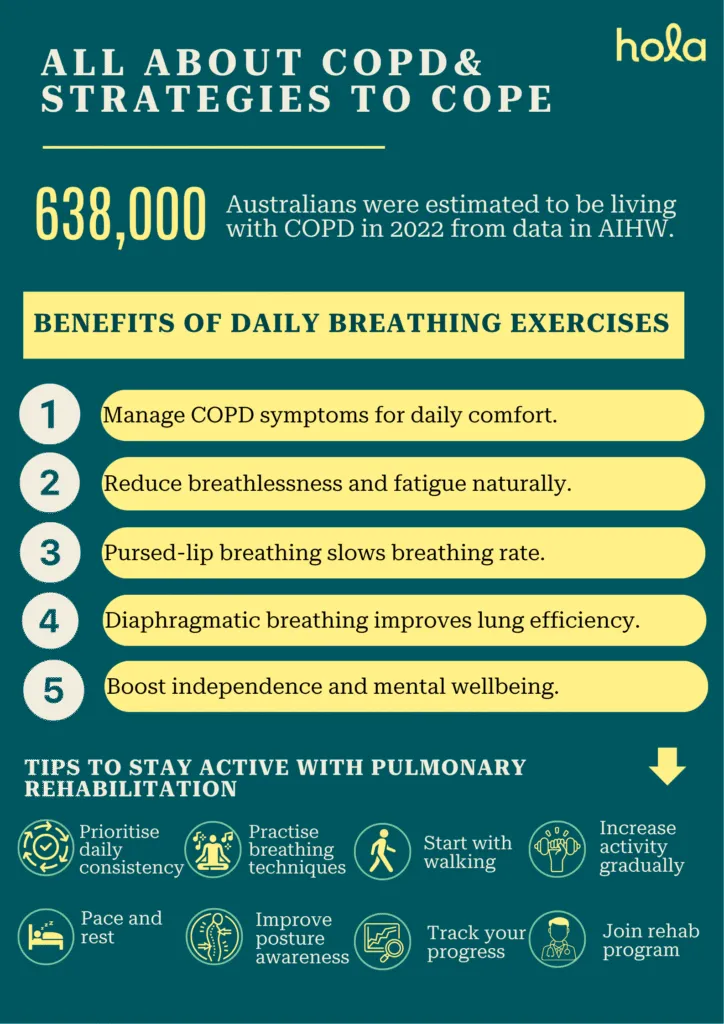
Chronic Obstructive Pulmonary Disease (COPD) is a chronic respiratory disorder that makes breathing difficult due to restricted airflow and lung tissue damage. In Australia, around 638,000 people, about 2.5% of the population, were estimated to be living with COPD in 2022. Although it can significantly affect everyday life, there are many effective strategies to manage symptoms and improve breathing, allowing those impacted to lead more active and comfortable lives.
About COPD
Why does breathing become difficult with COPD?
Breathing becomes difficult with COPD because the bronchial tubes and alveoli in the lungs are damaged and constricted. This causes airflow obstruction, making it difficult to completely exhale air, leading to trapped air, inefficient gas exchange, and the sensation of breathlessness. Inflammation and excess mucus also worsen breathing difficulties by clogging the airways.
Importance of symptom management for quality of life
Effectively managing symptoms in COPD is essential for enhancing quality of life, as it helps alleviate breathlessness, fatigue, and the frequency of exacerbations. Managing symptoms effectively helps individuals remain more active, achieve better rest, and maintain their independence, ultimately enhancing their overall well-being and mental health.
See an AHPRA-registered doctor online, anytime
24/7 across Australia
Create a COPD-friendly home environment
Managing COPD involves establishing a home environment that facilitates easier breathing and minimises contact with irritants. Here are some methods to make your living space more suitable for those with COPD:
- Minimise triggers: Ensure your home is free from typical irritants such as dust, smoke, and strong odours. Avoid using scented candles, air fresheners, or harsh cleaning substances. Make sure to ventilate the area properly when preparing food.
- Utilise air purifiers or humidifiers: An air purifier equipped with a HEPA filter can eliminate allergens and pollutants from the air. A humidifier helps maintain moisture in the air, particularly during dry periods, making breathing easier; however, humidifiers should also be used with caution, ensuring they’re regularly cleaned, and humidity levels are maintained between 30-50% to prevent mould growth, which itself can be a respiratory irritant.
- Keep medications and emergency plans accessible: Store inhalers and medications in convenient locations. Place a written emergency plan in a prominent spot, like the refrigerator or a bulletin board, so that everyone in the house knows the procedure during a flare-up.
Benefits of daily breathing exercises
Breathing techniques can help individuals with COPD or other respiratory issues breathe more comfortably. Two effective methods are pursed-lip breathing and diaphragmatic breathing:
- Pursed-lip breathing consists of inhaling slowly through your nose and gently exhaling through pursed lips (similar to blowing out a candle). This method helps slow down your breathing, keeps the airways open for a longer duration, and helps in releasing trapped air from the lungs.
- Diaphragmatic breathing (also known as belly breathing) emphasises using your diaphragm instead of your chest to take deeper breaths. You should place one hand on your chest and the other on your abdomen, and inhale so that your belly rises more than your chest.
These techniques enhance airflow, lessen feelings of breathlessness, and promote relaxation. They are particularly beneficial during physical exertion, stressful situations, or when experiencing mild asthma symptoms.
How to stay active with pulmonary rehabilitation
Maintaining an active lifestyle is crucial for managing chronic lung conditions, and pulmonary rehabilitation provides a safe and structured way to achieve this. Here are key tips to help you stay active throughout the program:
- Begin with gentle, guided exercises such as walking, cycling, or stretching.
- Incorporate breathing techniques (such as pursed-lip or diaphragmatic breathing) during physical activity.
- Adhere to a structured pulmonary rehabilitation program supervised by healthcare professionals.
- Gradually increase your level of activity based on comfort and medical recommendations.
- Learn to pace yourself and take breaks to prevent overexertion.
- Emphasise consistency over intensity.
- Maintain proper posture to facilitate better breathing.
- Include basic strength training exercises to enhance endurance.
- Monitor your progress to stay encouraged.
Importance of light exercise in improving lung function
According to our medical expert, Dr Lau, while exercise does not reverse lung damage in COPD, it strengthens respiratory muscles and improves cardiovascular fitness, helping to reduce the sensation of breathlessness.
Gentle exercise is vital for enhancing lung health, particularly for individuals with chronic respiratory conditions like asthma or COPD. Activities like walking, gentle cycling, and stretching help to strengthen the muscles involved in respiration. When these muscles are stronger, your lungs work less hard, which alleviates feelings of breathlessness and fatigue. Moreover, regular physical activity improves circulation, increases oxygen distribution throughout the body, and enhances energy levels. It also promotes better breath control and boosts overall stamina, making routine tasks, such as climbing stairs or running errands, much less exhausting and easier to perform. Starting with light, regular exercise is generally more effective and sustainable than engaging in intense workouts for those managing lung issues.
What is pulmonary rehab?
Pulmonary rehabilitation is a medically guided program designed to help individuals with chronic lung diseases improve their breathing and engage in more active lifestyles. It generally involves a team of healthcare specialists, including doctors, respiratory therapists, and physiotherapists, who develop a personalised treatment plan.
The program includes supervised exercise sessions to enhance physical fitness, breathing techniques like diaphragmatic or pursed-lip breathing to alleviate breathlessness, and education on lung health, nutrition, and symptom management. Emotional support and counselling are also provided to help reduce anxiety or depression that often accompany chronic illnesses.
Pulmonary rehabilitation is structured to gradually increase your strength and endurance in a safe, monitored environment. Over time, it can help decrease hospital admissions, enhance quality of life, and restore confidence in managing everyday activities.
Warning signs
For individuals with COPD, identifying early warning signs of deteriorating symptoms is essential to prevent serious complications. Look out for these changes:
- Heightened shortness of breath, even at rest or with minimal activity
- Increased coughing or alterations in cough sound
- Wheezing or chest tightness that is new or worsening
- Alterations in mucus, such as increased production, a thicker consistency, or a change in colour (yellow, green, or bloody)
- Experiencing difficulty breathing while sleeping
- Lower energy levels or unusual fatigue
- Swelling in the ankles, feet, or legs, which may indicate fluid retention
- Fever or chills, which could signal an infection
When to consult a GP
You should reach out to a GP if you observe any changes in your COPD symptoms, such as worsening breathlessness, intensified coughing, changes in mucus, or chest tightness. It’s also crucial to seek medical guidance if your inhalers are not functioning as effectively as they usually do or if you find daily activities more challenging than before.
Other indicators that necessitate a GP visit include frequent flare-ups, fatigue that remains despite rest, or any symptoms of infection, such as fever or chills. Swelling in the legs or experiencing sleep disturbances due to breathing issues are additional reasons to seek medical attention. It’s advisable to have a COPD action plan prepared with your GP to guide you in responding to symptom changes.
If you are uncertain about the severity of your symptoms, it’s wise to be cautious; seeking early medical guidance can prevent complications. Book a telehealth appointment for asthma and breathing issues offer a quick and convenient way of obtaining support without leaving your home.
The benefit of regular check-ups and telehealth sessions
Regular check-ups and instant consultation with a doctor are vital for managing chronic illnesses like COPD. Regular check-ups often include spirometry to monitor disease progression and adjust your treatment plan accordingly, identifying issues early before they escalate. These appointments enable your doctor to assess lung function, review medications, and confirm that you are adhering to a care plan that is effective for you.
Through telehealth, you can book a telehealth appointment to obtain medical support from the comfort of your home, which saves time and minimises the risk of exposure to potential triggers such as pollution or infections. This method also simplifies maintaining consistency with follow-ups, asking questions, and receiving prompt assistance during flare-ups, including instant consultation with a doctor when needed. You can also request medical certificates online in Australia for COPD-related sick days if required. Together, both in-person and online appointments contribute to improved long-term health and help you manage your condition effectively.
How Hola Health may be able to help
Hola Health is an Australian telehealth platform that connects you with registered doctors and nurse practitioners — from the comfort of your home, at a time that suits you. Depending on your situation, a Hola Health clinician may be able to help with:
- 24/7 General medical advice via telehealth doctor consult — talk through symptoms or health concerns with a registered doctor or medical practitioner
- Online sick certificate — for work or personal leave, when clinically appropriate
- Referrals to specialists – or in-person services when needed
- Get Instant scripts online (if clinically appropriate)
- Pathology or imaging requests — when assessed as appropriate by your treating clinician
Hola Health clinicians are AHPRA-registered Doctors and medical practitioners in Australia. They will always recommend an in-person consultation, specialist referral, or emergency care if that is in your best interest.
Note: Telehealth is not suitable for all conditions. Hola Health does not replace your regular GP, specialist, or emergency services. If you are unsure whether telehealth is right for your situation, we recommend speaking with your usual healthcare provider. In emergencies, call 000.
Consult for online scripts anytime, receive via SMS
24/7 across Australia
Conclusion:
With the right treatments and healthy lifestyle adjustments, individuals with COPD can breathe easier and improve their quality of life. Small steps and strong support can have a meaningful impact.
FAQ
The medical abbreviation COPD stands for Chronic Obstructive Pulmonary Disease.
COPD, or Chronic Obstructive Pulmonary Disease, is a lung disease that causes airflow blockage and breathing difficulties. It includes illnesses such as chronic bronchitis and emphysema, leading to symptoms such as shortness of breath, coughing, and wheezing. COPD is usually triggered by prolonged exposure to harmful airborne irritants, especially smoking.
COPD is diagnosed through a combination of medical history, clinical examination, and lung function tests. The key test is spirometry, which evaluates the amount and speed of air you can exhale. Healthcare professionals assess symptoms such as persistent cough and breathing difficulties, ask about smoking history or exposure to lung irritants, and may use chest X-rays or other advanced imaging techniques to rule out alternative conditions. Early diagnosis can help manage COPD more effectively.
The main causes of COPD include:
- Long-term exposure to irritants like air pollution, dust, or chemical fumes.
- Smoking
- Genetics
- Frequent respiratory infections
Yes, breathing exercises can help people with COPD. Techniques such as pursed-lip breathing improve airflow and, ease breathlessness. These exercises improve your breathing efficiency, alleviate anxiety when experiencing breathlessness, and strengthen your respiratory muscles. While not a cure, regular practice of these exercises can make breathing easier and improve overall well-being.
Yes, it is usually safe to travel with COPD, but it requires careful planning. It’s important to consult your healthcare provider before travelling to ensure your condition is stable and to receive personalised recommendations. Be sure to pack all the necessary medications, including inhalers or supplemental oxygen if prescribed and schedule time for rest during your trip. Avoid exposure to extreme weather, pollution, or infections, and know how to access medical care at your destination. With proper preparation, you can enjoy safe and comfortable travel.
The frequency with which you should use your inhaler depends on its type and your doctor’s advice. Reliever inhalers are used only when needed for quick symptom relief, whereas preventer or combination inhalers are used daily to help manage symptoms and reduce the risk of exacerbations.
While you can manage many aspects of COPD at home, like taking prescribed medications, practising breathing techniques, avoiding irritants, and maintaining a healthy lifestyle, regular medical support is still important. COPD is a chronic and progressive condition, and regular check-ups with your doctor are important to monitor lung function, adjust treatment plans, and reduce the risk of severe exacerbations. Although daily care happens at home, ongoing medical supervision is essential for successful long-term management.
Yes, there are many online general practitioners (GPs) and telehealth services in Australia that can help with COPD management. These providers can:
- Monitor symptoms and flare-ups
- Adjust medications
- Provide action plans for exacerbations
- Offer lifestyle advice
- Provide medical certificate online for work
- Provide specialist referrals for further checks
Authors

Editorial staff
Medically reviewed by

Dr Nelson Lau
MBBS FRACGP, General Practitioner
30+ Years of Experience
Dr Nelson Lau is a highly experienced Doctors in Australia and digital health innovator with over 30 years of clinical practice. He is a graduate of the University of Western Australia and a Fellow of the Royal Australian College of General Practitioners (FRACGP).
Disclaimer
This blog is for general informational purposes only and does not indicate that Hola Health provides all treatments or preventive measures mentioned. It is not intended to be a substitute for professional medical advice. Always seek the guidance of your doctor or other qualified health professional with any questions you may have regarding your health or a medical condition. For emergencies please immediately contact 000. Any medical topics discussed are intended to educate, not to imply availability through Hola Health.
Note: At Hola Health, we're committed to offering trustworthy, accurate and up-to-date health information. Our Editorial Process entails thorough research, fact- checking, and medical review by doctors in diverse health fields, including medical practitioners, doctors, and psychotherapists based in Australia. We take guidance from qualified Australian doctors. We prioritise primary sources and avoid tertiary references wherever possible.
See a Aussie GP online, available 24/7
Download the app today.