

Contents
Healthy habits for men in 30s: GP-approved tips

 ChatGpt
  Google AI Mode
  Perplexity
  Claude
 This blog is for educational purposes only and does not replace professional medical advice or diagnosis. If you have health concerns, consult an AHPRA-registered telehealth doctor or request a medical certificate online if clinically appropriate. Please note: Hola Health does not currently offer Mental Health Care Plans.
Overview
In your 30s, incorporating healthy habits such as balanced nutrition, regular physical activity, stress management, and frequent health checkups is essential for long-term health. Prioritise sleep, hydration, and mental well-being while reducing alcohol intake and avoiding or quitting smoking. These choices will enhance energy and self-esteem while laying the groundwork for a healthy, active future.
Turning 30 is like hitting a reset button on your health—your body is no longer the same as in your 20s, and it’s time to focus on your well-being. While youthful energy may be waning, it’s a perfect time to adopt habits that lay the foundation for a healthy, vibrant future. By making a few thoughtful decisions now, men in their 30s can feel their best and avoid common health challenges in the years to come.
What happens to a man’s body in his 30s?
In a man’s 30s, the body undergoes several changes, including shifts in metabolism, muscle mass, and hormone levels. Here’s what usually happens:
- Slower metabolism: Metabolism tends to slow down, making weight gain easy and shedding pounds more difficult. The body may burn fewer calories while at rest, highlighting the need for a healthy diet and regular exercise.
- Hormonal changes: Testosterone levels gradually decline, though they generally remain within a healthy range. This may cause a drop in energy, muscle mass, libido, and occasional mood swings.
- Joint and bone health: Bones may lose density, and joint health may worsen without regular exercise and proper nutrition. This increases the chances of injury or discomfort in daily life.
- Decrease in muscle mass: Muscle mass naturally starts decreasing around age 30, especially if strength training is neglected. This can impact overall strength, endurance, and metabolism.
- Heart health: Cholesterol and blood pressure levels may gradually rise, especially with unhealthy eating habits or insufficient exercise, making it vital to track heart health.
- Mental health: Stress from work or family responsibilities may influence well-being. The strain may result in burnout, anxiety, or sleep issues if not managed.
- Recovery time: Healing from physical exertion, exercise, or insufficient sleep may take longer than in younger years.
A balanced routine that includes regular exercise, proper nutrition, stress management, and routine medical checkups can help mitigate these changes and foster long-term wellness.
During a man’s 30s, metabolism slows, muscle mass reduces, and testosterone levels drop, affecting energy and muscle power. Bone density and joint health may also weaken. Recovery time increases after exercise, illness, or poor sleep, and stress may affect mental health. Maintaining a healthy lifestyle is crucial for managing these changes.
See an AHPRA-registered doctor online, anytime
24/7 across Australia
Health habits for men in 30s
Establishing healthy routines at this stage can aid in preventing chronic illnesses, improving mental and emotional health, and enhancing overall life quality.
- Engage in consistent physical activity: Aim for a minimum of 150 minutes of moderate aerobic exercise or 75 minutes of vigorous activity weekly, along with two days of strength training.
- Proper sleep: Strive for 7-9 hours of restorative sleep each night to facilitate recovery, mental clarity, and overall well-being.
- Adopt a nutritious diet: Concentrate on lean proteins, healthy fats, fibre-packed foods, and complex carbohydrates for sustained energy and lasting health.
- Stay well-hydrated: Consume at least 2-3 litres of water daily to support metabolism, digestion, and energy levels.
- Limit alcohol consumption and eliminate smoking: Cut down on alcohol and refrain from smoking to decrease the risk of chronic diseases like heart disease.
- Monitor your health consistently: Schedule regular medical check-ups to monitor blood pressure, cholesterol, and blood sugar levels for early detection of potential health issues.
- Effectively manage stress: Utilise mindfulness, meditation, or engaging activities to alleviate stress and maintain emotional equilibrium.
- Foster social connections: Cultivate and preserve valuable relationships to enhance mental and emotional well-being.
- Support bone health: Ensure adequate intake of calcium and vitamin D to maintain robust bones and lower the risk of osteoporosis.
- Plan for financial and lifestyle security: Begin saving, investing, and establishing long-term financial and personal development goals to ensure a healthy future.
- Mental Health: Consider mental health check-ins by consulting a therapist or doctors or medical practitioner if struggling emotionally.
By concentrating on regular physical activity, proper nutrition, mental well-being, and preventive healthcare, you can diminish the risk of chronic diseases and sustain peak performance in all aspects of life. Implementing these lifestyle adjustments today will pave the way for a stronger, more energetic tomorrow.
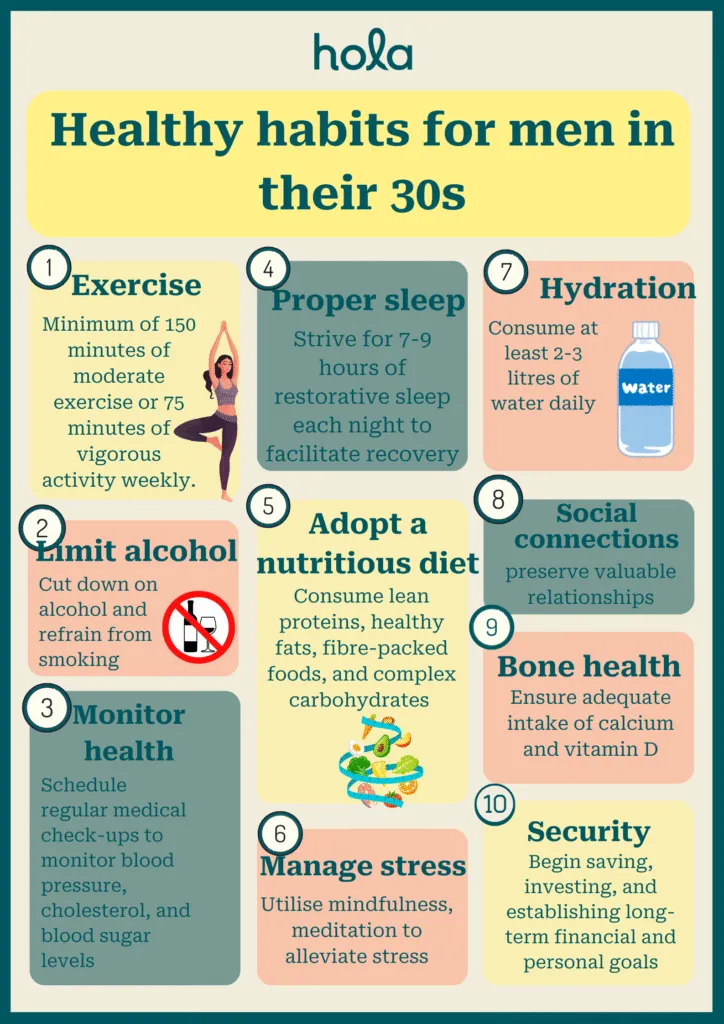
How to take care of health after 35 men?
By taking proactive measures to maintain physical, mental, and emotional health, individuals can enhance their longevity and overall well-being.
10 key health practices for men over 35
- Remain physically active: Incorporate strength training, cardiovascular workouts, and flexibility exercises to preserve muscle mass, joint health, and cardiovascular fitness.
- Adopt a balanced diet: Focus on consuming lean proteins, whole grains, healthy fats, and fibre-rich foods while minimising processed foods, sugar, and unhealthy fats.
- Keep track of weight and metabolism: As metabolism slows down after 35, practicing portion control and mindful eating is crucial to avoid weight gain.
- Focus on heart health: Limit sodium and saturated fat intake, keep track of cholesterol and blood pressure levels, and include heart-healthy foods like fish, nuts, and leafy greens in your diet.
- Schedule regular health check-ups: Arrange annual screenings for blood pressure, cholesterol, blood sugar, prostate health, and other fundamental health markers.
- Promote bone and joint health: Make sure you get enough calcium and vitamin D and engage in weight-bearing exercises to prevent osteoporosis and joint problems.
- Effectively manage stress: Engage in mindfulness, meditation, deep breathing, or hobbies that help alleviate stress and prevent burnout.
To maintain good health after the age of 35, it is essential to combine physical activity, proper nutrition, stress management, and preventative healthcare. By implementing these lifestyle changes, men can boost their energy levels, prevent chronic diseases, and improve their overall quality of life as they age. You can also discuss with your doctors or medical practitioner whether screening for prostate health or bone density is appropriate for you.
What is the biggest health issue for men?
The primary health concern for men is heart disease. It continues to be the leading cause of death among men globally, largely due to elements such as high blood pressure, high cholesterol, smoking, obesity, poor nutrition, insufficient physical activity, and excessive stress. Fortunately, most of these risk factors can be addressed through lifestyle changed.
Additional major health concerns for men:
- Heart disease: Elevated risk stems from unhealthy lifestyle choices, genetics, and stress.
- Mental health challenges: Rates of depression, anxiety, and suicide are higher in men, often due to societal expectations to hide emotions.
- High blood pressure: If uncontrolled, it can result in stroke, heart attack, and kidney damage.
- Obesity: Raises the likelihood of numerous chronic conditions, including heart disease, joint issues.
- Liver disease: Frequently caused by heavy alcohol use, fatty liver disease, or hepatitis infections.
- Erectile dysfunction: Can be an early warning sign of underlying health problems.
- Osteoporosis and joint issues: Often neglected in men but essential for long-term mobility and strength.
- Respiratory conditions: Chronic obstructive pulmonary disease (COPD) and lung infections, especially in smokers, are significant concerns.
By proactively tackling these issues through lifestyle changes and regular health screenings, men can greatly lower their health risks and enhance their overall well-being. Men over 35 should speak with their doctor about regular screening for blood pressure, cholesterol.
How Hola Health may be able to help
Hola Health is an Australian telehealth platform that connects you with registered doctors and nurse practitioners — from the comfort of your home, at a time that suits you. Depending on your situation, a Hola Health clinician may be able to help with:
- 24/7 General medical advice via telehealth doctor consult — talk through symptoms or health concerns with a registered doctor or medical practitioner
- Sick leave certificate online — for work or personal leave, when clinically appropriate
- Referrals to specialists – or in-person services when needed
- Get Instant scripts online (if clinically appropriate)
- Pathology or imaging requests — when assessed as appropriate by your treating clinician
Hola Health clinicians are AHPRA-registered Doctors and medical practitioners in Australia. They will always recommend an in-person consultation, specialist referral, or emergency care if that is in your best interest.
Note: Telehealth is not suitable for all conditions. Hola Health does not replace your regular GP, specialist, or emergency services. If you are unsure whether telehealth is right for your situation, we recommend speaking with your usual healthcare provider. In emergencies, call 000.
Get medical certificate sent via SMS, if approved
24/7 across Australia
Authors

Editorial staff
Medically reviewed by

Dr Nelson Lau
MBBS FRACGP, General Practitioner
30+ Years of Experience
Dr Nelson Lau is a highly experienced Doctors in Australia and digital health innovator with over 30 years of clinical practice. He is a graduate of the University of Western Australia and a Fellow of the Royal Australian College of General Practitioners (FRACGP).
Disclaimer
This blog is for general informational purposes only and does not indicate that Hola Health provides all treatments or preventive measures mentioned. It is not intended to be a substitute for professional medical advice. Always seek the guidance of your doctor or other qualified health professional with any questions you may have regarding your health or a medical condition. For emergencies please immediately contact 000. Any medical topics discussed are intended to educate, not to imply availability through Hola Health.
Note: At Hola Health, we're committed to offering trustworthy, accurate and up-to-date health information. Our Editorial Process entails thorough research, fact- checking, and medical review by doctors in diverse health fields, including medical practitioners, doctors, and psychotherapists based in Australia. We take guidance from qualified Australian doctors. We prioritise primary sources and avoid tertiary references wherever possible.
See a Aussie GP online, available 24/7
Download the app today.