

Contents
Why do I feel like crying for no reason: Therapists guide

 ChatGpt
  Google AI Mode
  Perplexity
  Claude
 This blog is for educational purposes only and does not replace professional medical advice or diagnosis. If you have health concerns, consult an AHPRA-registered telehealth doctor or request a medical certificate online if clinically appropriate. Please note: Hola Health does not currently offer Mental Health Care Plans.
Summary: Tears that seem to come out of nowhere often point to hidden emotions, stress, hormonal changes, or unresolved memories. It’s your body’s way of releasing what words can’t convey. Instead of brushing the tears aside, acknowledging them with compassion can lead to better emotional clarity and healing.
Have you ever found yourself crying at your desk, in a shower, or while watching a commercial, and wondered, what’s going on with me? Don’t worry, you’re not losing it. Sometimes, those out-of-the-blue tears are a quiet response to deeper, unspoken feelings. Crying for no reason often means there’s something deeper that needs your attention. Let’s explore what might be behind these hidden waves of emotion.
Why do we cry even when we can’t pinpoint a reason?
Sometimes we find ourselves crying without being able to identify a specific reason, as emotions can accumulate and express themselves through tears without an obvious cause. This may stem from factors like emotional overwhelm, unresolved stress, hormonal fluctuations, fatigue or underlying mental health issues such as anxiety or depression. Our minds and bodies frequently process emotions beneath our conscious awareness, which means that crying can act as a way to release feelings we may not have fully acknowledged yet. It’s a normal response for the body to handle emotional strain, even if we don’t entirely grasp the reason behind it.
Explain the connection between emotions and crying
Crying is closely linked to our feelings because it’s an instinctive way the body reacts to intense emotions. When we undergo strong emotions like sadness, frustration, joy, or stress, the brain activates the tear glands via the nervous system. These emotional tears frequently contain stress hormones and natural pain relievers, aiding the body in releasing tension and achieving a sense of relief. Crying also indicates to others that we seek comfort or assistance, which is crucial for emotional expression and social connection. In summary, crying assists us in processing and communicating emotions, both physically and emotionally.
What are the causes of crying for no reason
Crying without a clear cause can arise from various underlying emotional, mental, or physical issues. Some typical causes include:
- Depression: A key symptom can be crying without any identifiable triggers.
- Anxiety: Ongoing worry or internal tension may lead to sudden emotional releases through tears.
- Hormonal fluctuations: Hormonal variations during menstruation, pregnancy, or menopause can modify mood and result in greater tearfulness.
- Fatigue or stress: Physical weariness and chronic stress may overwhelm the body, triggering emotional outbursts.
- Grief or unresolved trauma: Past experiences might emerge unexpectedly, resulting in emotional reactions.
- Neurological or mood disorders: Conditions such as bipolar disorder can also cause erratic crying.
How suppressed emotions can lead to unexpected crying
Repressed emotions can result in unexpected tears since unprocessed feelings do not simply vanish; they reside within the body and mind. When we disregard or suppress emotions such as sadness, anger, or fear, they can accumulate over time. Eventually, a minor or non-existent trigger may release that emotional buildup, leading to sudden tears. This is the body’s method of coping and alleviating emotional stress. Unexpected crying often signals that it’s time to confront and address those hidden feelings.
How the body’s natural response to stress can trigger tears
The body’s natural reaction to stress involves activating the fight-or-flight system, which releases stress hormones like cortisol and adrenaline. These hormones prepare the body to respond, but when stress becomes too much or lasts too long, the emotional centre of the brain, the amygdala, can provoke a tearful reaction. In this context, crying acts as a natural release mechanism, helping to decrease stress levels by calming the nervous system. Emotional tears may even contain chemicals related to stress, which is why crying can leave a person feeling more at ease afterwards. It’s the body’s way of restoring balance during emotional overload.
How chronic stress can lead to increased crying episodes
Chronic stress can lead to more frequent crying because it keeps both the body and mind in a constant state of tension. Over time, this can drain our emotional and physical energy, making it increasingly difficult to manage everyday demands. The nervous system becomes overstimulated, and even minor triggers can be overwhelming, which results in tearfulness. Extended stress can also disrupt hormone levels and brain chemistry, reducing emotional resilience. Consequently, the brain may react with frequent tears as a method of relieving pressure and indicating emotional fatigue.
The link between anxiety, depression, and unexplained crying
Anxiety and depression are interrelated and can lead to unexplained crying due to their impact on the brain’s emotional management. In cases of depression, emotions such as sadness, hopelessness, and emptiness can accumulate, often resulting in tears for no apparent reason. Meanwhile, anxiety can create a state of continuous worry and tension, which may overwhelm the nervous system, leading to emotional outbursts like crying. Both conditions diminish one’s capacity to handle stress and feelings of being overwhelmed, amplifying minor problems, and sometimes triggering crying spells. In some instances, crying may be among the first visible indicators of underlying mental health issues.
Impact of unresolved grief, trauma, and emotional pain on crying behaviour
Unresolved grief, trauma, and emotional suffering can significantly influence crying behaviour, often causing spontaneous or frequent crying episodes. When these feelings are not completely dealt with, they remain lodged in the mind and body. Consequently, even minor stimuli such as memories, sounds, or feelings can evoke intense sadness or fear, precipitating tears. This type of crying serves as the body’s mechanism for releasing deeply ingrained pain. Over time, if grief or trauma is neglected, emotional responses like crying may intensify or occur seemingly without reason, reflecting inner turmoil.
How the subconscious mind can influence our emotions and crying
The subconscious mind greatly influences our emotions and can markedly affect crying behaviour. It retains memories, past experiences, and unresolved feelings, even those we might not be consciously aware of. When contemporary events subtly trigger a reminder of a past emotional experience, the subconscious may evoke a crying response, even if the individual does not understand the rationale behind it. This explains why some people cry “for no reason”; their subconscious is responding to emotional patterns or past anguish that have not been fully processed by their conscious mind.
The role of hormones, such as during PMS, pregnancy, or menopause
Hormones play a critical role in regulating emotions and can directly affect crying. During periods of hormonal transitions, such as those experienced with PMS, pregnancy, or menopause, fluctuations in estrogen and progesterone levels influence neurotransmitters such as serotonin that regulate mood. These hormonal variations can lead to heightened sensitivity, irritability, and a reduced ability to cope with stress or emotional triggers, increasing the likelihood of crying. For instance, many individuals notice mood swings or heightened tearfulness before their menstrual cycle or during pregnancy. Although these hormonal changes are a natural aspect of the body’s rhythms, they can substantially affect emotional experiences and expressions.
Understanding when frequent crying becomes problematic
Frequent crying becomes concerning when it begins to disrupt daily life, relationships, or overall well-being. If crying episodes occur regularly without clear reasons, last for extended periods, or coincide with feelings of hopelessness, sadness, or anxiety, this may indicate an underlying mental health condition such as depression or anxiety. When crying interferes with one’s ability to function normally, such as fulfilling work obligations, maintaining social relationships, or enjoying pleasurable activities, it is vital to seek professional assistance. Recognising the transition from crying as a natural emotional release to a sign of distress is crucial for receiving appropriate support.
Self-care techniques to help with emotional regulation
Self-care strategies to aid emotional regulation include practising mindfulness and deep breathing to maintain calm and focused. Engaging in regular physical exercise, such as walking or yoga, can alleviate stress and enhance mood. Ensuring adequate sleep and maintaining a nutritious diet also fosters emotional health. Keeping a journal of thoughts and feelings assists in processing emotions more transparently. Establishing healthy boundaries and taking breaks when feeling overwhelmed can prevent emotional overload. Lastly, immersing oneself in hobbies or enjoyable activities provides positive diversion and relaxation, promoting improved emotional management.
Conclusion:
So, the next time unexpected tears show up, don’t panic, think of them as your inner self whispering: “Something inside needs attention.” Whether it’s stress, buried emotions, or just life itself, those tears have a reason. Be kind to yourself, stay curious, and remember—sometimes a good cry is just emotional spring cleaning!
See an AHPRA-registered doctor online, anytime
24/7 across Australia
FAQ
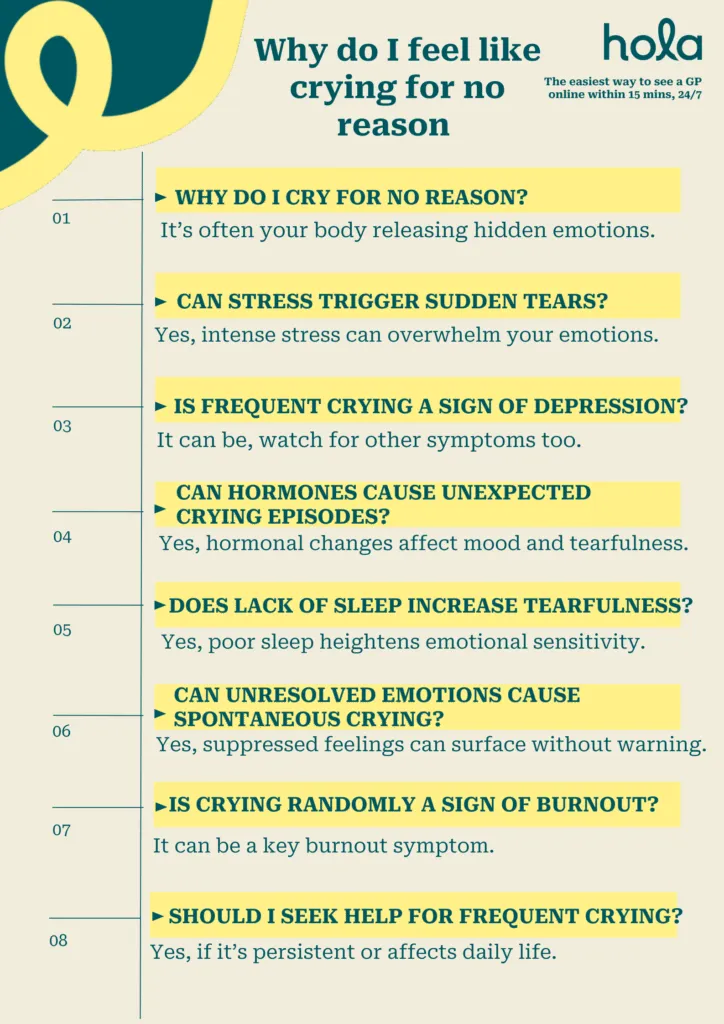
Crying for no reason usually means your mind and body are releasing stress, deep fatigue, or hidden emotions. It can also be linked to hormonal shifts or emotional wounds. These tears may not make sense logically, but they are a natural way to express what’s within, and they are perfectly normal.
It can be. Frequent unexplained crying is a common sign of depression, along with persistent sadness, low energy, and a lack of motivation or interest. If these emotions are interfering with your life, don’t hesitate to ask for help.
Yes, intense stress can overwhelm your emotions and trigger unexpected tears. It’s your body’s way of releasing inner strain and unspoken feelings.
Look into potential triggers like stress, fatigue, or emotional overwhelm. Prioritise self-care, practice mindfulness, and talking to someone you trust can help. If crying continues or becomes too much, consider reaching out to a therapist for support and guidance.
Yes, hormonal shifts, such as those during periods, pregnancy, menopause, or thyroid imbalances, can affect mood and trigger unexpected crying. These biological changes can alter brain chemistry and emotional sensitivity, making you more sensitive and or tearful at times.
Yes, suppressed emotions such as sorrow, frustration, or grief can build up over time and burst out through spontaneous tears. Crying helps the heart let go of unspoken feelings.
If frequent or uncontrollable crying becomes overwhelming or begins to disrupt your everyday life, it’s a sign to connect with someone who can help. A healthcare provider or mental health expert can help identify underlying causes and offer strategies or treatment to help you manage your emotions.
Yes, lack of adequate sleep can impair your ability to manage emotions and increase sensitivity, leading to unexpected crying. Sleep is essential for emotional stability, so better sleep habits can reduce those surprise crying spells.
Yes, persistent crying without an obvious cause can be a sign of burnout. When you’re emotionally and physically exhausted, your body might react with sudden tears as a way to release built-up pressure. Acknowledging this and taking time to rest and seeking support is key to recovery.
Authors

Editorial staff
Medically reviewed by

Amira Shah
Master’s in Counselling Psychology, Psychotherapist & Counsellor
8+ Years of Experience
Amira Shah is a trauma-informed psychotherapist with over a decade of experience in supporting women through complex mental health challenges. She holds a Master’s in Counselling Psychology and has worked extensively at a women’s centre, offering therapy to survivors of physical abuse, sexual assault, PTSD, and human trafficking. Amy owns her practice, Empathetic Counselling & Psychotherapy (ECP), and is committed to continuing her support for women.
Disclaimer
This blog is for general informational purposes only and does not indicate that Hola Health provides all treatments or preventive measures mentioned. It is not intended to be a substitute for professional medical advice. Always seek the guidance of your doctor or other qualified health professional with any questions you may have regarding your health or a medical condition. For emergencies please immediately contact 000. Any medical topics discussed are intended to educate, not to imply availability through Hola Health.
Note: At Hola Health, we're committed to offering trustworthy, accurate and up-to-date health information. Our Editorial Process entails thorough research, fact- checking, and medical review by doctors in diverse health fields, including medical practitioners, doctors, and psychotherapists based in Australia. We take guidance from qualified Australian doctors. We prioritise primary sources and avoid tertiary references wherever possible.
See a Aussie GP online, available 24/7
Download the app today.