

Emotional Exhaustion - What is it & treatment options


Contents
 ChatGpt
  Google AI Mode
  Perplexity
  Claude
 This blog is for educational purposes only and does not replace professional medical advice or diagnosis. If you have health concerns, consult an AHPRA-registered telehealth doctor or request a medical certificate online if clinically appropriate. Please note: Hola Health does not currently offer Mental Health Care Plans.
Emotional exhaustion is like running a marathon in your mind except, instead of crossing the finish line, you keep running until you’re completely wiped out. It’s that overwhelming feeling when life’s stress piles up so high that you feel mentally, physically, and emotionally drained. Unlike the usual kind of tiredness that comes after a long day, emotional exhaustion makes you feel like you’ve been running on empty for way too long. It can manifest as fatigue, grumpiness, or even a lack of enthusiasm for things you once enjoyed. If left unchecked, it can spread into every part of your life, impacting your relationships, work, and overall health. But don’t worry just like any marathon, there are ways to bounce back and recharge your energy!
What does emotional exhaustion look like – Symptoms
Emotional exhaustion can manifest in several physical, emotional, and behavioural symptoms. Here are the most common symptoms:
- Fatigue
- Irritability
- Lack of motivation
- Difficulty concentrating
- Sleep disturbances
- Social withdrawal
- Emotional numbness
- Overwhelming sense of stress
- Absentmindedness
- Changes in appetite
- Irrational anger
- Avoidance
- Headache
- Low productivity
- Negative thinking
- Nervousness
These symptoms can differ from person to person, but when they persist, they may indicate emotional exhaustion. It’s essential to address these signs early to prevent further burnout and other mental health problems.
Who is at risk for emotional exhaustion?
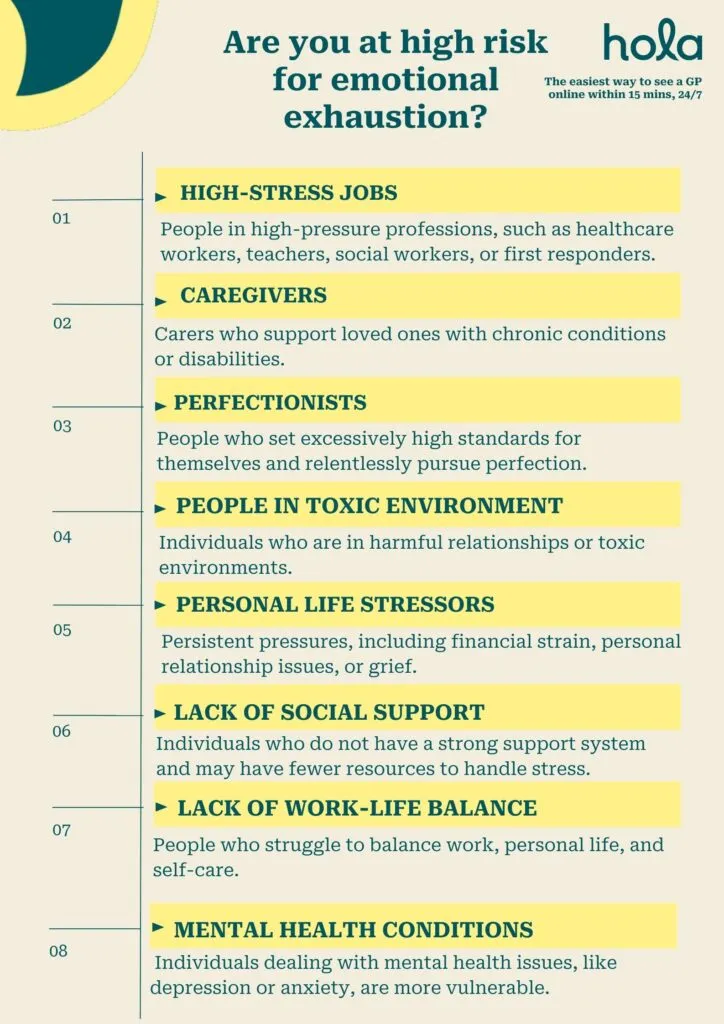
Several factors can heighten the risk of emotional exhaustion, and certain groups of people are more susceptible than others. Here are some common risk factors:
- High-stress jobs: People in high-pressure professions, such as healthcare workers, teachers, social workers, or first responders, are at a higher risk due to ongoing emotional and physical stress.
- Caregivers: People who support loved ones with chronic conditions or disabilities, are often prone to emotional fatigue from the emotional and physical demands of caregiving.
- Perfectionists: People who set excessively high standards for themselves and relentlessly pursue perfection are more likely to experience burnout, as they may push themselves beyond their limits.
- People in toxic environment: Individuals who are in or exposed to harmful relationships or toxic environments, such as high-conflict workplaces or abusive relationships, are at higher risk.
- Personal life stressors: Persistent pressures, including financial strain, personal relationship issues, or grief can lead to emotional burnout, especially when these challenges pile up over time.
- Lack of social support: Individuals who do not have a strong support system are more susceptible to emotional burnout as they may have fewer resources to handle stress.
- Lack of work-life balance: People who struggle to balance work, personal life, and self-care are more prone to emotional exhaustion from overburdening themselves.
- Individuals with mental health conditions: Individuals dealing with mental health issues, like depression or anxiety, are more vulnerable to emotional burnout because of the extra emotional strain they face.
Being mindful of these risk factors and taking proactive actions like engaging in self-care, setting limits, and seeking help, can reduce the chances of emotional burnout.
What causes emotional exhaustion?
Emotional exhaustion is triggered by prolonged or intense stress, often stemming from factors that drain a person’s emotional and mental energy. Some common causes include:
- Living with a long-term illness or injury
- Caregiving responsibilities
- High-pressure jobs like healthcare, teaching, or social work
- Financial stress
- Homelessness
- Traumatic events such as abuse or accidents
- Raising children
- Having a baby
- Death of a loved one
- Working long hours
- Perfectionism
Emotional exhaustion occurs when the body and mind are overstretched for too long without proper rest. Understanding the underlying triggers and tackling them through self-care, support, and lifestyle adjustments is important for preventing and managing emotional fatigue.
Mental exhaustion vs emotional exhaustion
Mental and emotional exhaustion are common responses to prolonged stress, impacting both cognitive and emotional well-being. While they often overlap, each has distinct symptoms and causes that contribute to overall burnout.
Mental exhaustion:
- Definition: Mental exhaustion refers to a profound sense of fatigue that arises from extended periods of mental strain or stress.
- Symptoms: Individuals experiencing mental exhaustion may face challenges with concentration, increased forgetfulness, diminished motivation, and an overall sense of mental fatigue.
- Causes: This condition may stem from excessive workloads, decision-making fatigue, and persistent multitasking.
Emotional exhaustion:
- Definition: Emotional exhaustion is a state of emotional depletion that results from prolonged emotional stress or overextension.
- Symptoms: Those affected may experience feelings of detachment, overwhelm, irritability, or numbness.
- Causes: Common sources of emotional exhaustion include stress within personal relationships, the demands of caregiving, or unresolved personal challenges.
| Aspect | Mental exhaustion | Emotional exhaustion |
|---|---|---|
| Definition | A profound sense of fatigue due to prolonged mental strain or stress. | A state of emotional depletion resulting from prolonged emotional stress or overextension. |
| Symptoms | Difficulty concentrating, increased forgetfulness, lack of motivation, overall mental fatigue. | Feelings of detachment, overwhelm, irritability, or emotional numbness. |
| Causes | Excessive workloads, decision-making fatigue, persistent multitasking. | Stress in personal relationships, caregiving demands, unresolved personal challenges. |
Key difference:
The primary distinction between mental exhaustion and emotional exhaustion lies in their respective impacts; mental exhaustion primarily affects cognitive abilities, whereas emotional exhaustion influences one’s feelings and emotional resilience. It is important to note that these two forms of exhaustion often intersect and may collectively contribute to the phenomenon of burnout.
Where to get further help?
Individuals experiencing mental or emotional exhaustion should consider seeking professional assistance as an essential step towards recovery. It is advisable to contact a licensed mental health professional, such as a psychologist, psychiatrist, or counsellor, who can offer tailored support and coping strategies to address individual needs.
In addition, individuals may explore local community support groups, employee assistance programs (EAPs), or helplines for immediate support. Integration of self-care practices, including mindfulness, regular physical exercise, and adequate rest, can complement professional treatment. Furthermore, sharing feelings with trusted friends or family members can have a substantial positive impact. It is important to recognise that assistance is available, and taking proactive steps today represents the initial move towards recovery.
Prevention
Preventing mental and emotional exhaustion involves proactive measures to maintain balance and resilience:
- Establish boundaries: It is essential to assertively decline excessive workloads and prioritise personal well-being.
- Self-care: Actively participate in activities that foster relaxation, including mindfulness practices, yoga, or engaging in hobbies that bring joy.
- Promote a healthy lifestyle: It is important to ensure sufficient sleep, consume nutritious meals, and incorporate regular physical activity into daily routines.
- Schedule breaks: Regular intervals away from work or stressors are necessary to allow for mental and physical rejuvenation.
- Implement stress management strategies: It is beneficial to cultivate effective techniques for managing stress, such as deep breathing exercises, journaling, or confiding in a trusted individual.
- Enhance organisation: Breaking larger tasks into smaller, more manageable components can mitigate feelings of being overwhelmed.
- Cultivate a support network: A robust system of support composed of friends, family, or professional resources is vital for sharing responsibilities and addressing challenges.
- Minimise multitasking: Concentrating on a single task at a time is advisable to alleviate cognitive and emotional strain.
Emotional exhaustion might feel like you’ve reached your limit, but it’s totally possible to bounce back. By taking time to rest, manage stress, set healthy boundaries, and rely on your support system, you can reignite your spark! It’s all about finding balance, working hard but also taking time to unwind and relax. After all, you can’t pour from an empty vessel!
See an AHPRA-registered doctor online, anytime
24/7 across Australia
Authors

Editorial staff
Medically reviewed by

Amira Shah
Master’s in Counselling Psychology, Psychotherapist & Counsellor
8+ Years of Experience
Amira Shah is a trauma-informed psychotherapist with over a decade of experience in supporting women through complex mental health challenges. She holds a Master’s in Counselling Psychology and has worked extensively at a women’s centre, offering therapy to survivors of physical abuse, sexual assault, PTSD, and human trafficking. Amy owns her practice, Empathetic Counselling & Psychotherapy (ECP), and is committed to continuing her support for women.
Disclaimer
This blog is for general informational purposes only and does not indicate that Hola Health provides all treatments or preventive measures mentioned. It is not intended to be a substitute for professional medical advice. Always seek the guidance of your doctor or other qualified health professional with any questions you may have regarding your health or a medical condition. For emergencies please immediately contact 000. Any medical topics discussed are intended to educate, not to imply availability through Hola Health.
Note: At Hola Health, we're committed to offering trustworthy, accurate and up-to-date health information. Our Editorial Process entails thorough research, fact- checking, and medical review by doctors in diverse health fields, including medical practitioners, doctors, and psychotherapists based in Australia. We take guidance from qualified Australian doctors. We prioritise primary sources and avoid tertiary references wherever possible.
See a Aussie GP online, available 24/7
Download the app today.