

Contents
Perinatal anxiety & perinatal depression in men: Therapist’s guide

 ChatGpt
  Google AI Mode
  Perplexity
  Claude
 This blog is for educational purposes only and does not replace professional medical advice or diagnosis. If you have health concerns, consult an AHPRA-registered telehealth doctor or request a medical certificate online if clinically appropriate. Please note: Hola Health does not currently offer Mental Health Care Plans.
Summary: Perinatal depression and anxiety aren’t exclusive to mothers; fathers can also experience these struggles. Therapists play a key role in understanding symptoms and providing assistance. By recognising the unique challenges fathers face during the perinatal phase, we can help guide men through this transition, promoting better mental health and stronger family dynamics.
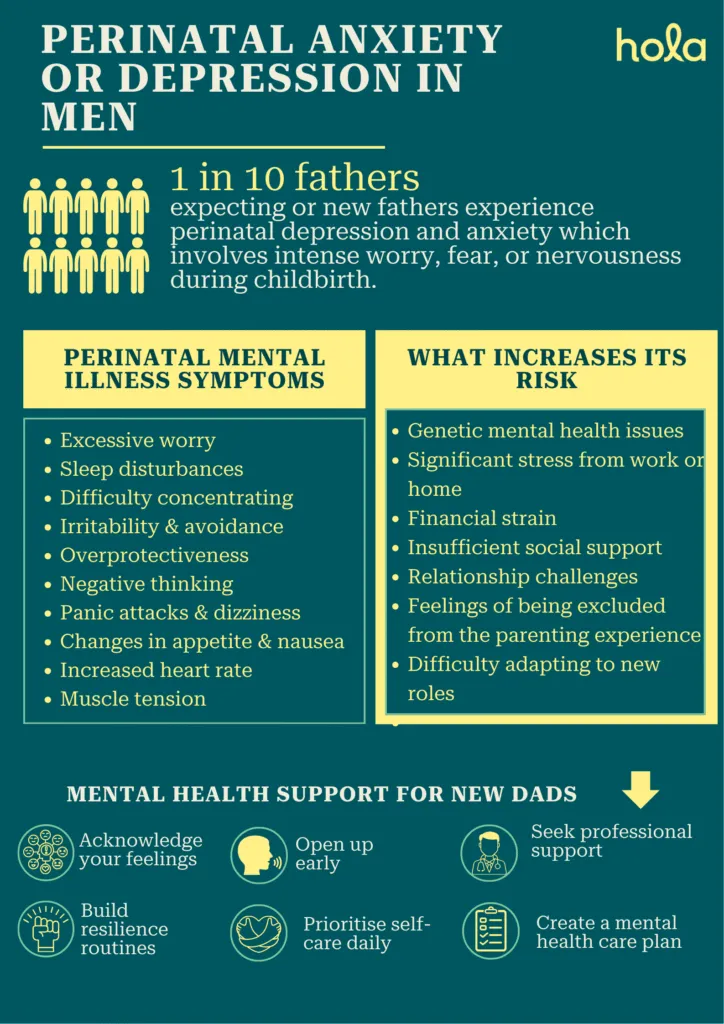
Becoming a parent is a life-changing experience, and while much attention is often given to the mother’s mental health during pregnancy and the postpartum period, let’s not forget the dads! Reseach suggests Around 1 in 10 expecting or new fathers experience perinatal depression and anxiety1.
Perinatal anxiety and depression not only impact women; men can also find themselves navigating emotional highs and lows during this thrilling (and sometimes overwhelming) period. But here’s the catch: these conditions in men are often overlooked because they might not manifest in the “typical” manner. Men need to recognise, understand, and address their mental health issues. Let’s explore what’s happening in the minds of expectant or new fathers
What is perinatal anxiety?
Perinatal anxiety involves intense worry, fear, or nervousness during pregnancy or the first year after childbirth. It may appear as constant worry about the baby’s health, anxiety about shifting responsibilities, or relationships. Symptoms may include trouble sleeping, restlessness, irritability, and difficulty concentrating. While it is common to feel some level of stress during this time, perinatal anxiety becomes concerning when it disrupts daily life and overall well-being.
Symptoms of perinatal anxiety
Symptoms of perinatal anxiety include:
- Excessive worry
- Sleep disturbances
- Restlessness
- Difficulty concentrating
- Irritability
- Avoidance behaviours
- Overprotectiveness
- Negative thinking
- Panic attacks
- Changes in appetite
- Increased heart rate
- Dizziness
- Muscle tension
- Nausea
- Stomach problems
- Tightness in the chest
If these symptoms disrupt everyday life or cause distress, it may he helpful to seek support from a online doctor or therapist.
What is perinatal depression?
Perinatal depression refers to depression that occurs during pregnancy or within the first year after childbirth. It involves persistent sadness, despair, or loss of interest. Symptoms may include irritability, fatigue, difficulty bonding with the baby, changes in appetite or sleep patterns, and feelings of guilt or lack of self-esteem. It may affect both mothers and fathers, though it is more commonly linked to women. Seeking help and professional care is vital for managing perinatal depression.
Symptoms of perinatal depression
Symptoms of perinatal depression include:
- Excessive worry
- Irritability
- Anger
- Unexplained aches
- Digestive issues
- Fatigue or low energy
- Changes in appetite
- Sleep disturbances
- Feelings of guilt or worthlessness
- Trouble concentrating
- Thoughts of self-harm
- Persistent sadness
- Difficulty bonding with the baby
- Feeling lonely
- Changes in sex drive
If these symptoms persist or interfere with daily life, it’s important to consult with a healthcare professional or therapist.
What can increase a dad’s risk of developing perinatal depression?
While discussions about perinatal mental health frequently centre around mothers, fathers can also face emotional difficulties during this period. Numerous factors may elevate a father’s likelihood of experiencing perinatal depression, such as:
- A personal or family history of mental health conditions (originally “issues”)
- Significant stress from work or home
- Financial strain
- Insufficient social support
- Relationship challenges
- Feelings of being excluded from the parenting experience
- Difficulty adapting to new roles
Factors affecting paternal perinatal mental health
Although much attention during the perinatal phase is on mothers, fathers also undergo notable emotional and psychological changes. Grasping the factors that affect paternal mental health is crucial for delivering early assistance and nurturing healthy family dynamics.
- Emotional transition to fatherhood: The transition to parenthood can bring about excitement but also anxiety, self-doubt, and a sense of inadequacy. Managing the emotional demands of caring for a newborn can influence mental well-being.
- Changes in relationships: Stress or diminished intimacy with a partner, particularly when both are fatigued or overwhelmed, can amplify emotional strain. Additionally, if the mother is dealing with perinatal mental health challenges, it may further increase the father’s vulnerability.
- Financial and occupational stress: Concerns regarding finances, job stability, or balancing work with parenting can create significant stress for new fathers, potentially leading to feelings of pressure and burnout.
- Lack of social support: Many fathers may feel excluded from postnatal support systems or unsupported by health professionals. Insufficient social or professional backing can intensify mental health struggles related to feelings of isolation.
- Personal or family mental health background: A previous experience of depression, anxiety, or trauma may emerge or worsen during the perinatal period. Early recognition and early intervention can help prevent further deterioration.
Factors that shape paternal perinatal mental health encompass emotional, relational, and environmental elements. Acknowledging and addressing these challenges can have a significant positive impact on a father’s well-being and the overall health of the family unit.
Risk factors for paternal perinatal stress, anxiety and depression
Like mothers, fathers can face considerable psychological challenges during the perinatal phase. Though often overlooked, paternal stress, anxiety, and depression are valid experiences that can influence the family dynamic. Understanding the risk factors is crucial for early detection and support.
- Individual mental health background: A previous experience of depression, anxiety, or trauma raises the probability of encountering mental health challenges during the perinatal period.
- Sleep deprivation: Persistent lack of sleep due to nighttime parenting responsibilities can significantly affect mood and cognitive abilities, potentially leading to heightened stress and emotional exhaustion.
- Relationship struggles: Disagreements, ineffective communication, or feeling detached from a partner, especially during or following pregnancy, can elevate stress levels and the risk of depression.
- Financial strain: New financial obligations or concerns about job security can contribute to feelings of inadequacy, anxiety, and helplessness.
- Insufficient social support: Experiencing isolation or lacking close relationships with friends, family, or peers can worsen symptoms and make coping with stress more challenging.
- Partner’s mental health challenges: If a partner is dealing with perinatal anxiety or depression, it increases the emotional load on the father and raises his own risk of developing similar issues.
Identifying these risk factors is essential for addressing paternal perinatal mental health. Early intervention, open dialogue, and access to suitable support can create a significant difference for both fathers and their families.
Authors

Editorial staff
Medically reviewed by

Amira Shah
Master’s in Counselling Psychology, Psychotherapist & Counsellor
8+ Years of Experience
Amira Shah is a trauma-informed psychotherapist with over a decade of experience in supporting women through complex mental health challenges. She holds a Master’s in Counselling Psychology and has worked extensively at a women’s centre, offering therapy to survivors of physical abuse, sexual assault, PTSD, and human trafficking. Amy owns her practice, Empathetic Counselling & Psychotherapy (ECP), and is committed to continuing her support for women.
Disclaimer
This blog is for general informational purposes only and does not indicate that Hola Health provides all treatments or preventive measures mentioned. It is not intended to be a substitute for professional medical advice. Always seek the guidance of your doctor or other qualified health professional with any questions you may have regarding your health or a medical condition. For emergencies please immediately contact 000. Any medical topics discussed are intended to educate, not to imply availability through Hola Health.
Note: At Hola Health, we're committed to offering trustworthy, accurate and up-to-date health information. Our Editorial Process entails thorough research, fact- checking, and medical review by doctors in diverse health fields, including medical practitioners, doctors, and psychotherapists based in Australia. We take guidance from qualified Australian doctors. We prioritise primary sources and avoid tertiary references wherever possible.
See a Aussie GP online, available 24/7
Download the app today.