Eczema is a common skin condition affecting both children and adults. Manage eczema with our registered online doctors in Australia via telehealth, available 24/7, typically within 15 minutes (Based on typical wait times; may vary by demand and practitioner availability).
When to consult a doctor for eczema ?
If symptoms are frequent or worsening
Consult a doctor if eczema flare-ups become more frequent or if symptoms do not improve with prescribed or over-the-counter treatments.
If signs of infection appear
Seek medical advice if you notice increased redness, warmth, pus, crusting, or swelling, as this may indicate a skin infection requiring treatment.
If eczema affects daily life or spreads
See a doctor if eczema disrupts sleep, work, or quality of life, or if it spreads to large or sensitive areas of the body.
This guide does not replace professional care. Consult a doctor to manage your symptoms. In emergencies, call 000. The content is research-backed & medically reviewed byDr. Ammar AL-ANI, MBChB, CCBST, AMC
Causes
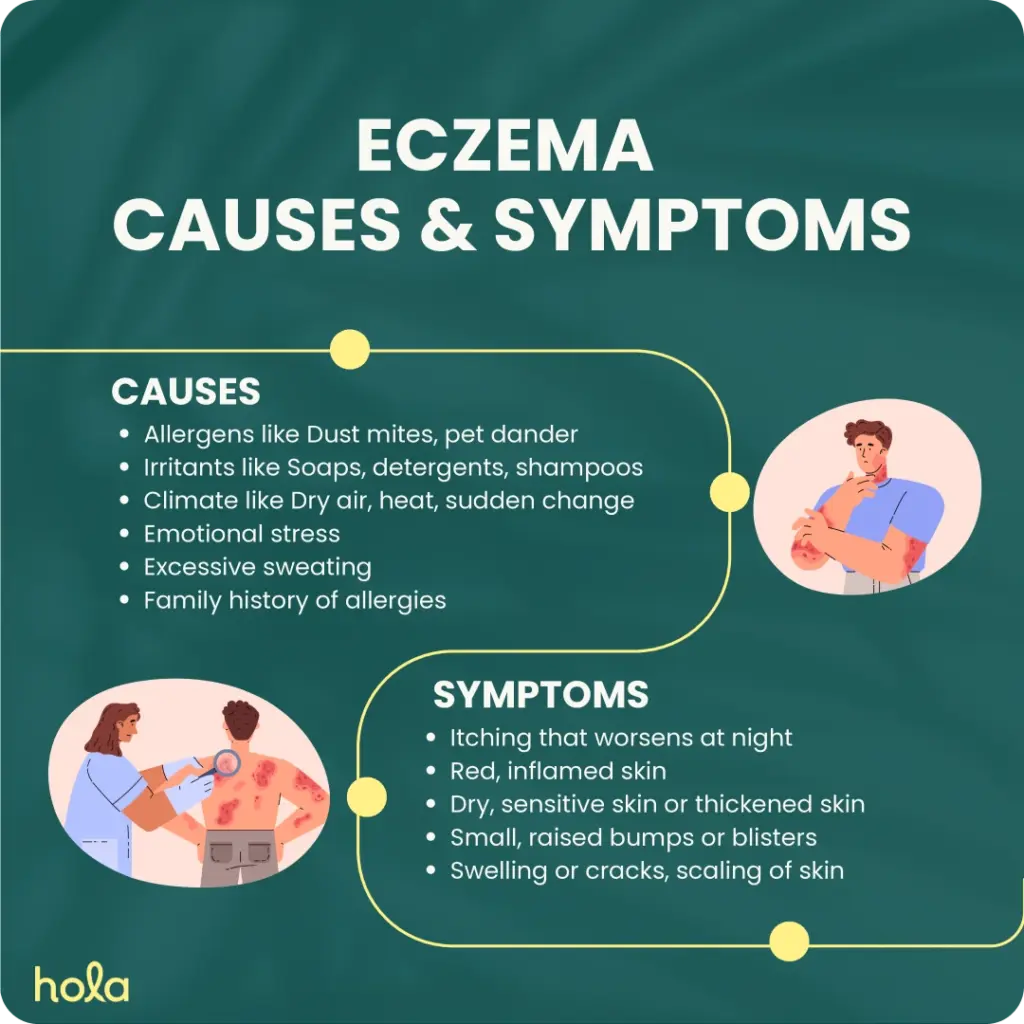
Eczema could be caused by a combination of genetic and environmental factors such as:
Allergens: Dust mites, pet dander, pollen, and certain foods can trigger flare-ups.
Irritants: Soaps, detergents, shampoos, and some fabrics can irritate sensitive skin.
Climate: Dry air, heat, or sudden temperature changes can cause flare-ups.
Stress: Emotional stress can worsen eczema symptoms.
Sweating: Excessive sweating can irritate the skin and trigger flare-ups.
Family history of allergies
Symptoms
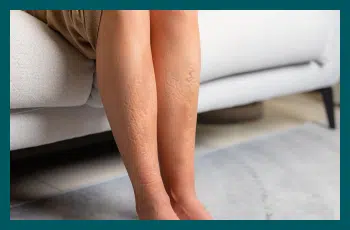
Eczema typically affects areas like the face, neck, hands, feet, and the inside of elbows and knees, but it can appear anywhere on the body. The extent of flare-ups and symptoms of eczema can vary from person to person. The symptoms can worsen due to triggers like allergens, stress, or climate change. Some of the common symptoms include:
Itching which worsens at night
Red, inflamed skin
Dry, sensitive skin
Thickened skin
Small, raised bumps or blisters which may ooze fluid
Swelling
Cracks or scaling of skin in the affected areas
Hola Health provides a convenient way to consult an AHPRA-registered doctor online, 24/7 across Australia.
Clinical note: A telehealth assessment can help evaluate eczema symptoms — visual assessment via video or high-resolution photos can assist in assessing most presentations. Online GPs can provide prescriptions for topical treatments, referrals to dermatologists, or other management support if clinically indicated. Telehealth is a complementary service; atypical presentations, suspected contact dermatitis requiring patch testing, or skin biopsy for diagnosis may require in-person assessment. We recommend sharing your consult summaries with your regular GP to ensure continuity of care.



 Scan the QR Code to download the Hola app.