

Contents
Heat related illness: Prevention and tips

 ChatGpt
  Google AI Mode
  Perplexity
  Claude
 This blog is for educational purposes only and does not replace professional medical advice or diagnosis. If you have health concerns, consult an AHPRA-registered telehealth doctor or request a medical certificate online if clinically appropriate. Please note: Hola Health does not currently offer Mental Health Care Plans.
As temperatures around the world rise due to climate change, heat-related illnesses are emerging as a growing concern. A recent report from the Australian Institute of Health and Welfare indicated that extreme heat accounted for 7,104 injury hospitalisations and 293 deaths in Australia over the 10 years from July 2012 to June 2022.
These health problems, ranging from mild issues like heat exhaustion to life-threatening situations such as heat stroke, can affect anyone but are especially dangerous for vulnerable groups such as children, the elderly, and individuals with chronic health problems.
Understanding the signs, preventive measures, and key strategies for coping with heat-related illnesses is essential for staying healthy in hot weather. It is important to understand when to consult a doctor, as related health conditions can be at risk.
How does heat affect the body?
When a person is exposed to high temperatures, the body regulates its internal temperature and avoids excessive heat buildup. In response, the body produces more sweat to eliminate heat by evaporating moisture from the skin and redirecting blood to the skin for cooling purposes.
Health issues can occur when:
- The body’s system fails to maintain temperature within the normal range.
- The fluids lost through heavy sweating are not sufficiently replenished.
- The body’s response creates undue pressure on the heart as it pumps more blood to aid cooling.
Behaviours can contribute to factors that cause heat-related health problems. For example-
- Engaging in physical activity in extreme heat can overwhelm the body’s ability to regulate its temperature.
- Wearing heavy, thick clothing can interfere with the cooling process of sweat evaporation from the skin.
- Insufficient water intake to replenish fluids lost through perspiration can cause dehydration.
Infants and young children have a limited ability to manage their body temperature. Age-related physiological changes in people over 65 may also elevate the risk of heat-related health concerns.
When to consult a doctor?
Individuals experiencing severe symptoms associated with heat-related illnesses, such as confusion, dizziness, an elevated heart rate, fainting, or breathing difficulties, should seek immediate medical attention, as these may signal a medical emergency such as heat stroke. Consult a GP, online or in-clinic if –
- Should one encounter signs of heat exhaustion, including nausea, excessive sweating, and dizziness, that do not improve despite rest, hydration, and cooling measures.
- For those with pre-existing medical conditions, including heart disease, or respiratory complications, it is critical to consult a doctor if any heat-related symptoms escalate or fail to improve.
In the event of a medical emergency, prompt assistance can be obtained by dialling triple zero (000). While waiting for help, attempt to cool the individual rapidly by moving them to a shaded area, applying cold water to the skin, and using fans to increase evaporation. It is prudent to act with caution if there is any uncertainty regarding the severity of the symptoms.
Can consulting a GP online from home help?
Consulting a general practitioner through an online platform from the comfort of one’s home presents a practical approach to addressing health-related issues, particularly in instances of heat-induced illnesses. Telehealth doctor appointments facilitate the communication of symptoms, including dizziness, nausea, and shortness of breath, enabling the general practitioner to provide prompt guidance. Doctors are equipped to offer advice on managing discomfort at home, strategies for preventing recurrence, and the safe use of over-the-counter medications.
Hola Health offers a comprehensive range of telehealth services designed to enhance healthcare accessibility in Australia. Their services include:
- Instant consult: Patients can consult with Australian registered medical practitioners 24/7 via video calls, often typically within 15 minutes (Based on typical wait times; may vary by demand and practitioner availability).
- Medical Certificates and scripts: Users can get a valid medical certificate for work, school, or carer responsibilities online, with certificates issued by accredited practitioners typically within 15 minutes (Based on typical wait times; may vary by demand and practitioner availability) where clinically appropriate. Whether it is for a same-day or multi-day medical certificate, an AHPRA-registered health practitioner can help you with quick doctor’s notes. Patients can instascript (if clinically appropriate) and have medications delivered directly to their homes, often within two hours.
Get medical certificate sent via SMS, if approved
24/7 across Australia
Types of heat illness
Heat illnesses occur when the body is exposed to extreme temperatures and struggles to regulate its temperature. They range from mild conditions like heat rash to severe emergencies like heat stroke, all requiring timely intervention.
Heat stroke
- Symptoms: Individuals may exhibit a high body temperature exceeding 40°C, confusion, dizziness, nausea, a rapid pulse, and skin that appears hot, dry, and red. In severe cases, unconsciousness may occur.
- Causes: Heat stroke typically results from prolonged exposure to elevated temperatures, particularly when this exposure is coupled with physical exertion, dehydration, or high humidity levels.
- Prevention: To mitigate the risk, it is essential to maintain proper hydration, refrain from engaging in outdoor activities during periods of extreme heat, wear lightweight and loose-fitting clothing, and take breaks in shaded or cooler environments.
- Treatment: Immediate medical assistance is imperative. One should relocate the affected individual to a cooler area, remove excess clothing, and apply water or ice packs to cool the body. If the individual is conscious, fluids should be administered.
Heat cramps
- Symptoms: This condition is characterised by painful muscle cramps, particularly in the legs or abdomen, accompanied by heavy sweating and a sense of weakness.
- Causes: Heat cramps are caused by the loss of salt and fluids due to excessive sweating, dehydration, and overexertion in high-temperature conditions.
- Prevention: To prevent heat cramps, individuals should ensure adequate hydration, consume foods rich in electrolytes, such as bananas, and take regular breaks during physical exertion in hot environments.
- Treatment: Individuals experiencing heat cramps should cease exercise, rest in a cool location, hydrate with electrolyte-containing fluids (such as sports drinks), and gently stretch and massage the affected muscles.
Heat exhaustion
- Symptoms: This condition may present with heavy sweating, weakness, dizziness, nausea, headaches, fainting, muscle cramps, and skin that feels cool, pale, and clammy. Cool, clammy skin may transition to hot, dry skin if the condition progresses to heat stroke.
- Causes: Heat exhaustion arises from extended exposure to high temperatures, excessive physical activity in hot atmospheres, and dehydration.
- Prevention: Adequate hydration is essential, and individuals should avoid excessive exposure to heat, wear loose-fitting clothing, and take regular breaks.
- Treatment: To address heat exhaustion, one should move to a cooler environment, rest, hydrate with cool water or electrolyte-based drinks, and loosen clothing. Should symptoms worsen, it is critical to seek medical assistance.
Heat rash
- Symptoms: Heat rash is characterised by the appearance of a red, bumpy rash, typically located on areas of the body that are covered by clothing, or in areas where sweat may accumulate, like under the breasts or in skin folds, and it may cause itching or discomfort.
- Causes: This condition results from the blockage of sweat ducts, which frequently occurs in hot and humid environments and results in sweat becoming trapped beneath the skin.
- Prevention: To prevent heat rash, it is advisable to remain cool, wear lightweight and breathable clothing, and avoid overheating.
- Treatment: Cooling the skin with a cold compress, avoiding tight clothing, and applying soothing lotions such as calamine or hydrocortisone may provide relief. If symptoms persist, an individual should consult a medical professional.
Heat-related risks
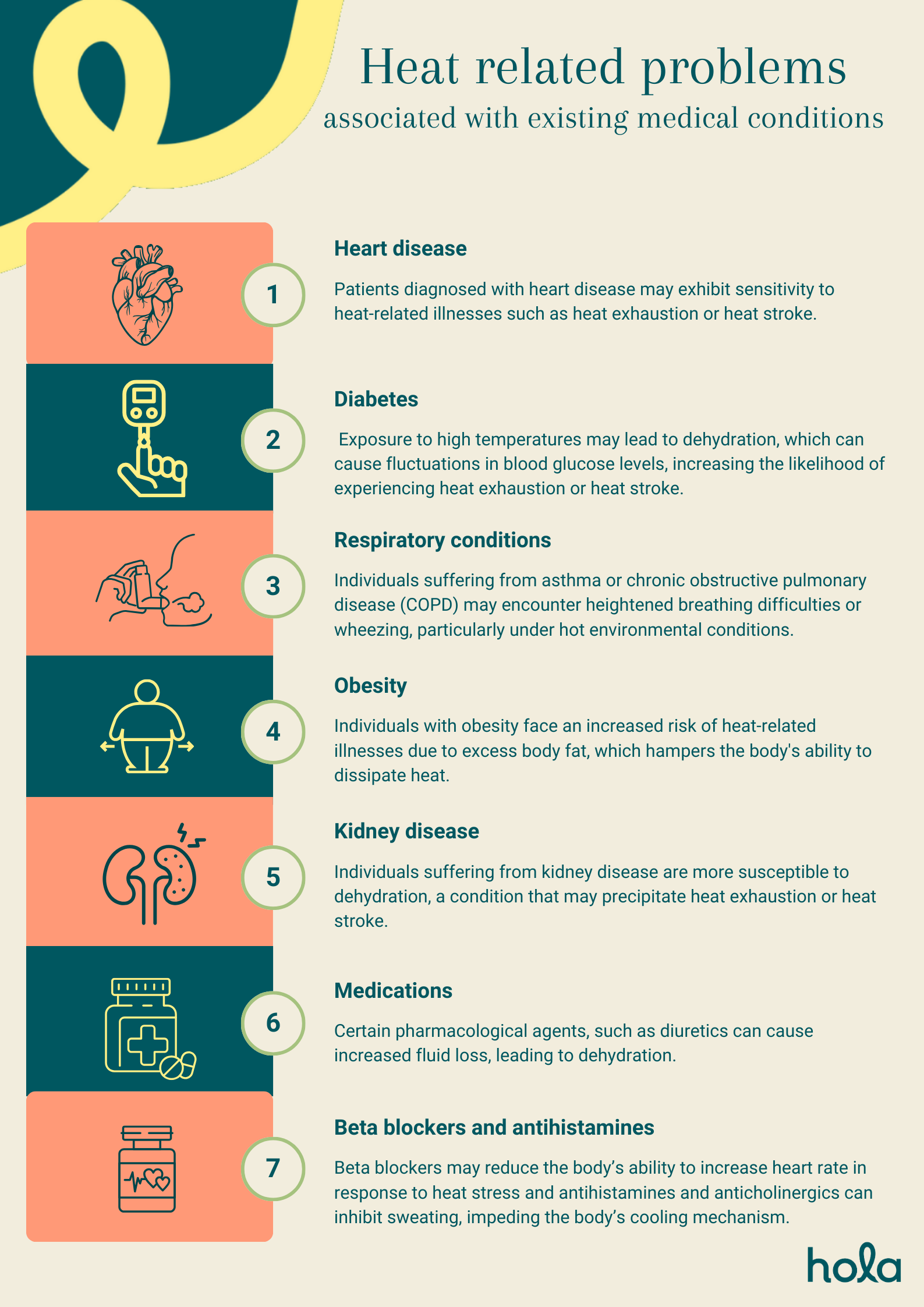
Heat-related problems can be more severe for individuals with existing medical conditions, as these conditions may affect the body’s ability to regulate temperature or respond to heat stress. Some common heat-related risks include:
- Heart disease: Individuals diagnosed with heart disease may exhibit heightened sensitivity to heat-related illnesses such as heat exhaustion or heat stroke. The demands placed on the cardiovascular system by elevated temperatures can amplify the workload of the heart, potentially resulting in complications such as dehydration, fainting, or other cardiovascular events.
- Blood Sugar: Blood Sugar influences the body’s capacity to sweat and effectively regulate temperature. Exposure to high temperatures may lead to dehydration, which can cause fluctuations in blood glucose levels, increasing the likelihood of experiencing heat exhaustion or heat stroke.
- Respiratory conditions: Elevated temperatures and humidity can aggravate respiratory conditions, complicating the process of breathing. Individuals suffering from asthma or chronic obstructive pulmonary disease (COPD) may encounter heightened breathing difficulties or wheezing, particularly under hot environmental conditions.
- Obesity: Individuals with obesity face an increased risk of heat-related illnesses due to excess body fat, which hampers the body’s ability to dissipate heat. Such individuals may experience challenges in cooling their bodies in hot surroundings, elevating the risk of heat exhaustion or heat stroke.
- Kidney disease: Individuals suffering from kidney disease are more susceptible to dehydration, a condition that may precipitate heat exhaustion or heat stroke. The kidneys’ impaired ability to maintain fluid balance exacerbates the adverse effects of extreme heat.
- Medications: Certain pharmacological agents, such as diuretics, can cause increased fluid loss, leading to dehydration. Beta blockers may reduce the body’s ability to increase heart rate in response to heat stress and antihistamines and anticholinergics can inhibit sweating, impeding the body’s cooling mechanism.
In conclusion, heat-related illnesses can be avoided by taking necessary precautions, like maintaining hydration, wearing the right clothing, and steering clear of excessive heat. Identifying early warning signs and acting swiftly can avert serious problems. By following these easy steps, we can protect ourselves and others from the hazards of extreme temperatures, promoting a safer, healthier environment during hot weather.
How Hola Health may be able to help
Hola Health is an Australian telehealth platform that connects you with registered doctors and nurse practitioners — from the comfort of your home, at a time that suits you. Depending on your situation, a Hola Health clinician may be able to help with:
- 24/7 General medical advice via telehealth doctor consult – talk through symptoms or health concerns with a registered doctor or medical practitioner
- Medical certificate online – for work or personal leave, when clinically appropriate
- Referrals to specialists – or in-person services when needed
- Online prescriptions – at a clinician’s discretion and where clinically suitable
- Pathology or imaging requests – when assessed as appropriate by your treating clinician
Hola Health clinicians are AHPRA-registered Doctors and medical practitioners in Australia. They will always recommend an in-person consultation, specialist referral, or emergency care if that is in your best interest.
Note: Telehealth is not suitable for all conditions. Hola Health does not replace your regular GP, specialist, or emergency services. If you are unsure whether telehealth is right for your situation, we recommend speaking with your usual healthcare provider. In emergencies, call 000.
See an AHPRA-registered doctor online, anytime
24/7 across Australia
Authors

Editorial staff
Medically reviewed by

Dr Nelson Lau
MBBS FRACGP, General Practitioner
30+ Years of Experience
Dr Nelson Lau is a highly experienced Doctors in Australia and digital health innovator with over 30 years of clinical practice. He is a graduate of the University of Western Australia and a Fellow of the Royal Australian College of General Practitioners (FRACGP).
Disclaimer
This blog is for general informational purposes only and does not indicate that Hola Health provides all treatments or preventive measures mentioned. It is not intended to be a substitute for professional medical advice. Always seek the guidance of your doctor or other qualified health professional with any questions you may have regarding your health or a medical condition. For emergencies please immediately contact 000. Any medical topics discussed are intended to educate, not to imply availability through Hola Health.
Note: At Hola Health, we're committed to offering trustworthy, accurate and up-to-date health information. Our Editorial Process entails thorough research, fact- checking, and medical review by doctors in diverse health fields, including medical practitioners, doctors, and psychotherapists based in Australia. We take guidance from qualified Australian doctors. We prioritise primary sources and avoid tertiary references wherever possible.
See a Aussie GP online, available 24/7
Download the app today.