Contents
White spots on skin: Possible causes and next steps

 ChatGpt
 Google AI Mode
 Perplexity
 Claude
This blog is for educational purposes only and does not replace professional medical advice or diagnosis. If you have health concerns, consult an AHPRA-registered telehealth doctor or request a medical certificate online if clinically appropriate. Please note: Hola Health does not currently offer Mental Health Care Plans.
Overview
White patches on the skin can emerge unexpectedly and cause anxiety, particularly when they persist. While most cases are harmless, some may suggest underlying conditions such as fungal infections, vitiligo, or nutritional deficits. It’s important to know the causes of these patches, how to recognise them, and when to seek medical advice for appropriate treatment and peace of mind.
Common causes
White patches on the skin can stem from a variety of factors. Identifying the cause can help you select the appropriate treatment and avoid further spread. Let’s explore some typical causes and their usual appearances:
- Vitiligo: This autoimmune disorder occurs when pigment-producing cells are destroyed, resulting in smooth white patches that may gradually expand.
- Pityriasis alba: Generally observed in children or young adults, this condition results in dry, scaly, and light-colored patches on the face, arms, or neck.
- Tinea versicolor: A fungal infection that alters skin pigmentation, leading to small white, brown, or pink patches, often found on the chest, shoulders, or back.
- Idiopathic guttate hypomelanosis: Small, circular white spots that develop after years of sun exposure, predominantly seen in older adults.
- Lichen sclerosus: A chronic condition that causes thin, wrinkled, white patches, mainly in the genital area but can also affect other skin areas.
- Post-inflammatory hypopigmentation: This occurs when the skin loses colour following inflammation or injury from conditions such as eczema or psoriasis.
- Nutritional deficiencies: Insufficient levels of vitamin B12, vitamin D, or calcium can sometimes lead to pigment loss or pale patches.
- Sun damage: Extended exposure to UV rays can harm pigment cells, resulting in lighter patches, particularly in those with fair skin.
Other causes
Though uncommon, certain medical or environmental factors may also result in white patches:
- Nevus depigmentosus: A benign birthmark with reduced pigmentation that remains stable over time.
- Chemical leukoderma: Resulting from contact with chemicals found in dyes, detergents, or rubber products.
- Sarcoidosis: An inflammatory ailment that can affect the skin, lungs, or other organs, sometimes resulting in white lesions.
- Autoimmune diseases: Conditions like lupus or scleroderma may cause uneven pigment loss.
- Genetic disorders: Rare inherited conditions, such as tuberous sclerosis or piebaldism, can result in white areas on the skin.
See an AHPRA-registered doctor online, anytime
24/7 across Australia
Type of white spots
While a doctor can provide a conclusive diagnosis, observing a few essential characteristics may help you understand what could be happening:
- Texture: Vitiligo and sun-related spots appear smooth, whereas fungal infections might feel somewhat scaly.
- Location: Pityriasis alba often appears on the face, while tinea versicolor is commonly found on the back and chest.
- Onset: Fungal and inflammatory causes usually appear suddenly, unlike autoimmune or sun-related causes, which develop over time.
- Sensation: If a patch is itchy or exhibits decreased sensation, it may indicate an infection or a nerve-related issue.
If you’re uncertain, it’s advisable to consult a healthcare professional for an accurate diagnosis.
Home treatment
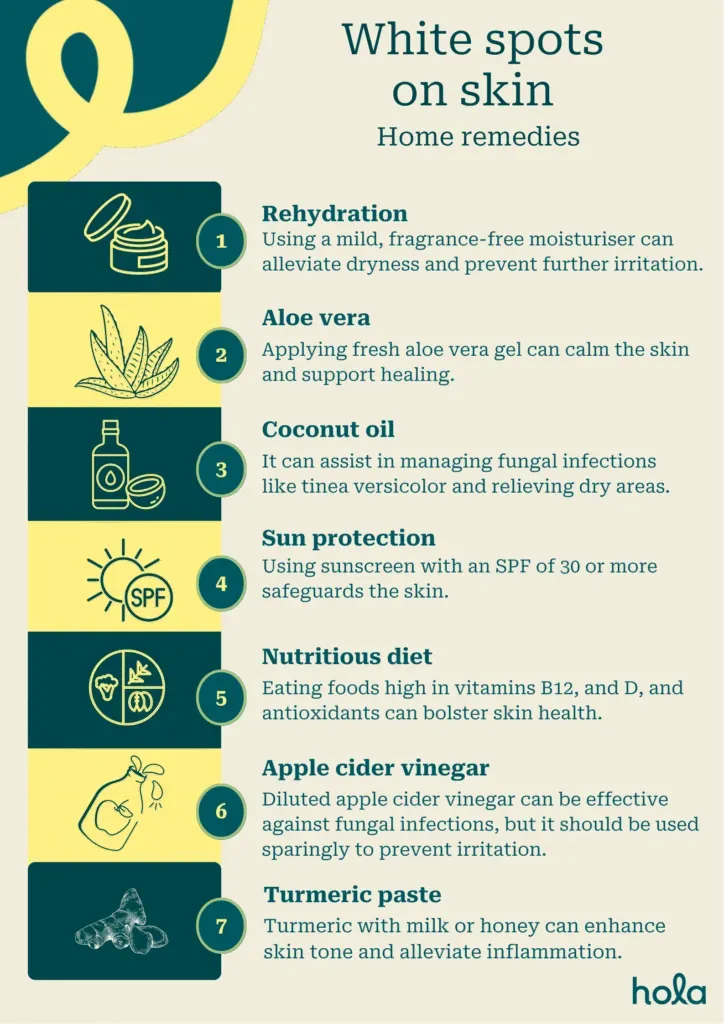
Home remedies can be beneficial for mild cases, but seeking medical advice is always advisable before initiating any new treatment. Here are several gentle methods to care for your skin and assist in healing at home:
- Stay hydrated and moisturised: Use a gentle, fragrance-free moisturiser daily to alleviate dryness and flaking.
- Utilise aloe vera: Fresh aloe vera gel calms irritation and encourages skin healing.
- Consider coconut oil: It has natural antifungal and hydrating qualities that may aid in treating infections such as tinea versicolor.
- Shield from the sun: Apply sunscreen (SPF 30 or higher) daily to avert additional pigmentation damage.
- Consume a nutrient-rich diet: Include foods rich in vitamins B12, D, and antioxidants to improve skin health.
- Apple cider vinegar: A diluted mixture can assist with mild fungal infections, but should be used in moderation.
- Turmeric paste: Mixing turmeric with milk or honey can reduce inflammation and promote a more even skin tone.
When to see a doctor
You should consult a doctor if your white spots are:
- Expanding or spreading quickly.
- Associated with itching, pain, or changes in texture.
- Sudden in appearance without an obvious cause.
- Persisting despite home treatment.
- Connected to fatigue, numbness, or any other health issues.
- If you have a family history of autoimmune or skin conditions, or if the patches impact your confidence or quality of life, a consultation can offer clarity and reassurance.
If uncertain, you can easily arrange an online doctors or medical practitioner appointment through Hola Health for prompt, professional guidance.
How Hola Health may be able to help
Hola Health is an Australian telehealth platform that connects you with registered doctors and nurse practitioners — from the comfort of your home, at a time that suits you. Depending on your situation, a Hola Health clinician may be able to help with:
- 24/7 General medical advice via telehealth doctor consult — talk through symptoms or health concerns with a registered doctor or medical practitioner
- Sick certificate online — for work or personal leave, when clinically appropriate
- Referrals to specialists – or in-person services when needed
- Online prescriptions — at a clinician’s discretion and where clinically suitable
- Pathology or imaging requests — when assessed as appropriate by your treating clinician
Hola Health clinicians are AHPRA-registered Doctors and medical practitioners in Australia. They will always recommend an in-person consultation, specialist referral, or emergency care if that is in your best interest.
Note: Telehealth is not suitable for all conditions. Hola Health does not replace your regular GP, specialist, or emergency services. If you are unsure whether telehealth is right for your situation, we recommend speaking with your usual healthcare provider. In emergencies, call 000.
Conculsion
Most white spots on the skin are non-threatening and manageable with appropriate care. Whether attributed to a fungal infection, a vitamin deficiency, or an autoimmune issue, early diagnosis simplifies management. Protect your skin from sun damage, maintain a nutritious diet, and don’t hesitate to consult a doctor if you observe persistent or spreading patches.
Request referral online. Get via SMS if approved
24/7 across Australia
FAQ
Deficiencies in vitamin B12, vitamin D, calcium, and zinc can result in reduced pigmentation or light patches on the skin.
Most are not cancerous. Common causes such as vitiligo or fungal infections are harmless, but a doctor should evaluate any spot that alters in size, shape, or texture.
Chronic stress may weaken your immune system, potentially triggering or exacerbating conditions like vitiligo or eczema that affect pigmentation.
Begin with a doctors or medical practitioner consultation. They can evaluate your symptoms, request blood tests, and refer you to a dermatologist if necessary.
Low iron typically causes the skin to appear pale rather than patchy. However, severe anaemia can contribute to general discolouration.
Vitiligo is the most prevalent autoimmune cause, but lupus and scleroderma can also lead to pigment loss in specific areas.
Authors

Editorial staff
Medically reviewed by

Dr Ammar Al-Ani
General Practitioner - MBChB, CCBST, AMC
28+ Years of Experience
Dr Ammar Al-Ani is an experienced GP with over 28 years of clinical practice, including a strong background in surgery and primary care. He delivers evidence-based telehealth consultations, offering comprehensive and patient-focused care across a wide range of conditions.
Disclaimer
This blog is for general informational purposes only and does not indicate that Hola Health provides all treatments or preventive measures mentioned. It is not intended to be a substitute for professional medical advice. Always seek the guidance of your doctor or other qualified health professional with any questions you may have regarding your health or a medical condition. For emergencies please immediately contact 000. Any medical topics discussed are intended to educate, not to imply availability through Hola Health.
Note: At Hola Health, we're committed to offering trustworthy, accurate and up-to-date health information. Our Editorial Process entails thorough research, fact- checking, and medical review by doctors in diverse health fields, including medical practitioners, doctors, and psychotherapists based in Australia. We take guidance from qualified Australian doctors. We prioritise primary sources and avoid tertiary references wherever possible.
See a Aussie GP online, available 24/7
Download the app today.