

Contents
Common IBS symptoms in females

 ChatGpt
  Google AI Mode
  Perplexity
  Claude
 This blog is for educational purposes only and does not replace professional medical advice or diagnosis. If you have health concerns, consult an AHPRA-registered telehealth doctor or request a medical certificate online if clinically appropriate. Please note: Hola Health does not currently offer Mental Health Care Plans.
Summary: Irritable Bowel Syndrome (IBS) is more prevalent in women. Common symptoms include abdominal pain, bloating, fatigue, constipation, diarrhoea, and emotional stress. Hormonal shifts often influence symptom severity. Early recognition and proper management can help improve overall comfort and quality of life.
Irritable Bowel Syndrome (IBS) is a chronic gastrointestinal disorder that primarily affects the large intestine and occurs more frequently in women. Approximately 3.5% of the population in Australia experience IBS1, and the condition is more prevalent in women, particularly those aged 18 -39. While it can affect individuals of any gender, women are more prone to experience certain symptoms more frequently and with greater intensity. Hormonal differences, especially those linked to the menstrual cycle, often influence how IBS manifests in women.
IBS symptoms in females
Common IBS symptoms in females include:
1. Constipation:
Many women with IBS experience constipation (IBS-C), which involves infrequent bowel movement, hard or dry stools, and a feeling of partial evacuation. Studies2 show that constipation is a symptom of IBS that appears more frequently in women. This may cause cramping or pressure in the stomach, making bloating worse.
2. Diarrhoea:
Some women experience IBS with diarrhoea (IBS-D), characterised by frequent loose stools and an urgent need to use the restroom. The symptoms can be erratic and are often triggered by certain foods or stress.
3. Bloating:
Bloating is a common and distressing symptom of IBS. Women may notice abdominal swelling or pressure, especially after meals or during their menstrual cycle.
4. Fatigue:
Fatigue is a common non-gastrointestinal symptom. Constant discomfort, disrupted sleep, and stress related to IBS can leave women feeling exhausted and depleted.
5. Urinary symptoms:
Women with IBS may also experience urinary problems like frequent need to urinate, sudden urges, or pelvic discomfort, potentially due to common nerve signals in the pelvic region. According to a 2017 study3, such symptoms are more prevalent among women with IBS than those without it. However, these may be due to overlapping pelvic floor dysfunctions, but further research is needed to clarify the relationship.
6. Chronic pelvic pain:
Persistent pain in the pelvic region may occur in women with IBS, frequently overlapping with other pelvic health conditions. This discomfort isn’t always related to bowel activity and can significantly impact daily life.
7. Worsening menstrual symptoms:
IBS symptoms usually worsen during menstruation. Hormonal changes can amplify gut sensitivity, causing more pronounced pain, bloating, and irregularities in bowel movements during this time.
8. Pelvic organ prolapse:
Chronic straining due to constipation in women can contribute to pelvic organ prolapse. This is a condition where organs like the bladder or uterus shift from their normal position, leading to pelvic heaviness and unease, however, the direct association with IBS requires further investigation
9. Painful sex:
Women with IBS may sometimes experience pain or discomfort during sex. This could stem from pelvic muscle strain, irritation, or other associated pelvic problems such as endometriosis. Studies3 have also found that Premenstrual Syndrome (PMS) symptoms tend to be more severe in women with IBS.
10. Depression:
Living with IBS can affect emotional health. Constant discomfort, lifestyle disruptions, and social limitations may contribute to depression, which may further intensify IBS symptoms through the gut-brain connection.
IBS in females usually involves constipation, diarrhoea, bloating, and urinary symptoms. It may also be connected with pelvic organ prolapse, severe pelvic pain, painful sex, worsened menstrual symptoms, fatigue, and depression. These symptoms frequently overlap, triggered by hormonal changes and the brain-gut connection.
See an AHPRA-registered doctor online, anytime
24/7 across Australia
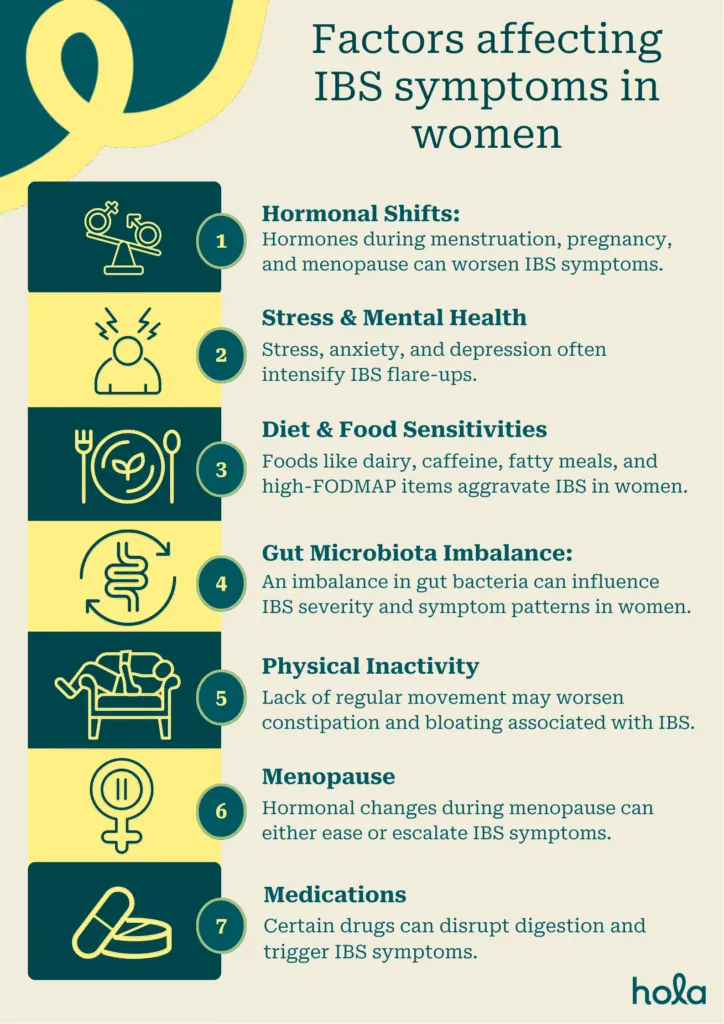
Factors affecting symptoms in women
Irritable Bowel Syndrome affects a large proportion of women and tends to manifest with symptoms that differ in severity and pattern, due to several influencing factors. Understanding these factors can lead to better symptom management and an overall improvement in quality of life.
1. Hormonal shifts:
Hormonal fluctuations, particularly during menstruation, pregnancy, and menopause, can influence IBS symptoms in some women. Many women experience severe IBS symptoms, such as bloating, abdominal discomfort, and changes in bowel movements, during menstruation. Pregnancy may also aggravate these symptoms due to hormonal changes and physiological adjustments.
2. Stress and mental health:
the connection between the brain and the gastrointestinal system, called the gut-brain axis, plays a critical role in IBS. Women with IBS frequently experience higher levels of stress, anxiety, and depression, which can exacerbate symptoms. Emotional stress may intensify episodes of abdominal cramps, diarrhoea, or constipation.
3. Diet and food sensitivities:
Certain foods are recognised for triggering IBS symptoms. Women may exhibit increased sensitivity to fatty foods, milk products, caffeine, artificial sweeteners, and foods high in FODMAPs (fermentable oligosaccharides, disaccharides, monosaccharides, and polyols). Maintaining a food journal can help identify and manage individual dietary sensitivities.
4. Gut microbiota imbalance:
An imbalance in the gut bacteria, such as reduced diversity and changes in bacterial composition, may play a role in the development of IBS. Studies4 suggest that women may have distinct gut microbiota profiles compared to men, which might change how symptoms show up and how long they last. The use of probiotics and nutritional modifications may help restore balance.
5. Physical activity:
A lack of physical activity may aggravate constipation and bloating in women with IBS. Staying active through regular exercise helps healthy intestinal mobility and improves overall digestive function.
6. Menopause:
Menopause is characterised by a substantial decline in hormone levels, which may change the nature of IBS symptoms. Some women feel better, while others may notice a worsening of symptoms, especially increased constipation.
7. Medications:
Some medications, including antibiotics, antidepressants, and birth control, can impact gastrointestinal function and provoke IBS symptoms in some women. It’s important to monitor the effects of medications on digestive health and consult a healthcare provider when necessary.
Hormonal changes, stress, diet, gut microbiota fluctuations, physical activity, menopause, and medications all influence IBS symptoms in women. These factors can worsen symptoms like abdominal pain, bloating, and changes in bowel habits. Recognising and managing these triggers through lifestyle modifications and medical guidance can help improve symptom control and overall well-being.
Is there a test for IBS?
There is no one definitive test that confirms Irritable Bowel Syndrome (IBS). Instead, IBS is typically diagnosed based on your symptoms and by eliminating other possible conditions.
- Evaluation of symptoms: Medical professionals utilise criteria such as the Rome IV criteria, which defines IBS as recurrent abdominal pain, on average, at least one per day per week in the last three months, associated with two or more of the following: related to defaecation, a change in stool frequency, or a change in stool form.
- Medical background and physical examination: Your doctor will inquire about your diet, stress levels, and any recurring patterns in your symptoms.
- Tests to exclude other conditions: Although there isn’t a specific test that confirms IBS, your doctor might recommend tests to rule out conditions like:
-
- Celiac disease
- Inflammatory bowel disease (IBD)
- Infections or parasitic infestations
- Food sensitivities
IBS is diagnosed through an evaluation of symptoms and by discounting more serious conditions. If you are facing continuous digestive problems, seeking a healthcare professional for an accurate assessment and management is essential.
Can you suddenly develop IBS?
Indeed, IBS can develop unexpectedly, can develop after events such as gastrointestinal infections (post-infectious IBS), significant stress, or dietary changes, even in those who have not experienced prior gastrointestinal issues.
- Following a gastrointestinal infection: This is referred to as post-infectious IBS, and it may arise after experiencing gastroenteritis (food poisoning or a stomach virus). Even after the infection subsides, the gut might still be sensitive, leading to IBS symptoms.
- Following a stressful period: Elevated levels of stress, anxiety, or significant life changes can provoke the development of IBS in some individuals. The connection between the gut and brain is strong, therefore, emotional turmoil can affect digestive function.
- Changes in diet or lifestyle: Rapid alterations in diet, changes in physical activity, or even medication (like antibiotics) can unsettle your gut, potentially leading to IBS manifestations.
- Gradual accumulation, sudden realisation: Sometimes symptoms progressively develop but only become noticeable or bothersome abruptly.
If symptoms emerge quickly and are severe, or if you observe warning signs like blood in your stool, unexplained weight loss, or fever, it is crucial to consult a doctor to eliminate other possibilities.
When to talk to a doctor?
You should consult a doctor if you’re experiencing symptoms that could indicate IBS, especially if they are persistent, intensifying, or affecting your daily activities.
Seek medical attention if you experience
- Frequent abdominal pain or cramping that persists
- Changes in bowel habits (diarrhoea, constipation, or both) lasting beyond a few weeks
- Significant bloating or gas that interferes with your daily routine
- Unexplained fatigue or discomfort following meals
- Persistent stress or anxiety that seems to provoke gastrointestinal symptoms
Don’t overlook your gastrointestinal health. If symptoms are new, ongoing, or worsening, it is advisable to seek medical evaluation. Early reassurance or diagnosis can aid in managing symptoms and enhancing your quality of life.
Telehealth consult with a GP today
If you need to consult a general practitioner but cannot visit a clinic, telehealth appointments offer a quick and simple option. Platforms like Hola Health allow you to connect with licensed doctors online—often in minutes. Whether you require medical guidance, a sick note, online prescription , or assistance in managing a condition, you can do it all from the comfort of your home. Just schedule a virtual appointment, describe your symptoms, and receive the care you need through a secure video call or chat.
Telehealth provides easy and convenient access to healthcare. With services like Hola Health, you can consult a online general practitioner today without delays or the need to travel to a clinic.
Questions for your doctor
Here’s a list of useful questions to consider during your appointment:
- What might be the reasons for my symptoms?
- Will I require any tests or lab evaluations?
- Is this issue likely to be temporary or persistent?
- What treatment options are available to me?
- Are there potential side effects associated with the medication?
- What lifestyle modifications could benefit my condition?
- When can I expect to start feeling better?
- Will I need another appointment for follow-up?
- Are there specific warning signs I should be aware of?
- Can I maintain my regular activities or work?
- Is this condition contagious (if relevant)?
- Should I consult a specialist?
Having these questions prepared can assist you in feeling more knowledgeable and assured in taking charge of your health.
In conclusion, IBS is a widespread condition, particularly in women, and it can lead to symptoms like abdominal pain, bloating, and changes in bowel patterns. The condition can also contribute to emotional strain and fatigue. Recognising the signs early is essential for optimal management and improving the quality of life.
Sources & references
- Irritable Bowel Syndrome - reference link
- National Library of Medicine - reference link
- Springer Nature - reference link
- National Library of Medicine - reference link
- National Library of Medicine - reference link
Authors

Editorial staff
Medically reviewed by

Dr Nelson Lau
MBBS FRACGP, General Practitioner
30+ Years of Experience
Dr Nelson Lau is a highly experienced Doctors in Australia and digital health innovator with over 30 years of clinical practice. He is a graduate of the University of Western Australia and a Fellow of the Royal Australian College of General Practitioners (FRACGP).
Disclaimer
This blog is for general informational purposes only and does not indicate that Hola Health provides all treatments or preventive measures mentioned. It is not intended to be a substitute for professional medical advice. Always seek the guidance of your doctor or other qualified health professional with any questions you may have regarding your health or a medical condition. For emergencies please immediately contact 000. Any medical topics discussed are intended to educate, not to imply availability through Hola Health.
Note: At Hola Health, we're committed to offering trustworthy, accurate and up-to-date health information. Our Editorial Process entails thorough research, fact- checking, and medical review by doctors in diverse health fields, including medical practitioners, doctors, and psychotherapists based in Australia. We take guidance from qualified Australian doctors. We prioritise primary sources and avoid tertiary references wherever possible.
See a Aussie GP online, available 24/7
Download the app today.