- Home
- /
- Health Conditions
- /
- Burns
Burns Treatment
Burns are injuries to the skin or deeper tissues caused by heat, chemicals, electricity, extreme cold, or radiation. They can range from mild to severe, depending on the source and duration of exposure. Connect with an AHPRA-accredited online doctor to manage boils symptoms within minutes from anywhere in Australia, 24/7.
4.6/5 based on 28000+ reviews
How our doctors can help
See a doctor now
100% Bulk Billed*
Request a certificate
From $14.90
Request a referral
From $39
Request a script
100% Bulk Billed*
When to consult a doctor for burns?
Severe or deep burns
Seek immediate medical care if the burn is deep or covers a large area of the body. Third-degree burns, which appear white, charred, or leathery, require urgent attention because they damage all layers of the skin.
Chemical, electrical, or painful burns
All burns caused by chemicals or electricity must be evaluated by a professional, as electrical burns can cause hidden internal injuries. Additionally, if the pain is severe and cannot be managed with basic first aid, a doctor can help.
Vulnerable people or signs of infection
Children, the elderly, and people with weakened immune systems should always see a doctor for burn injuries. You should also seek help if you notice signs of infection, such as pus, increased swelling, spreading redness, or if you develop a fever.
This guide does not replace professional care. Consult a doctor to manage your symptoms. In emergencies, call 000 or visit a hospital immediately. The content is research-backed & medically reviewed by Dr Vishnu Gopalan, Co-Founder & Chief Medical Officer at Hola.
Types of burns
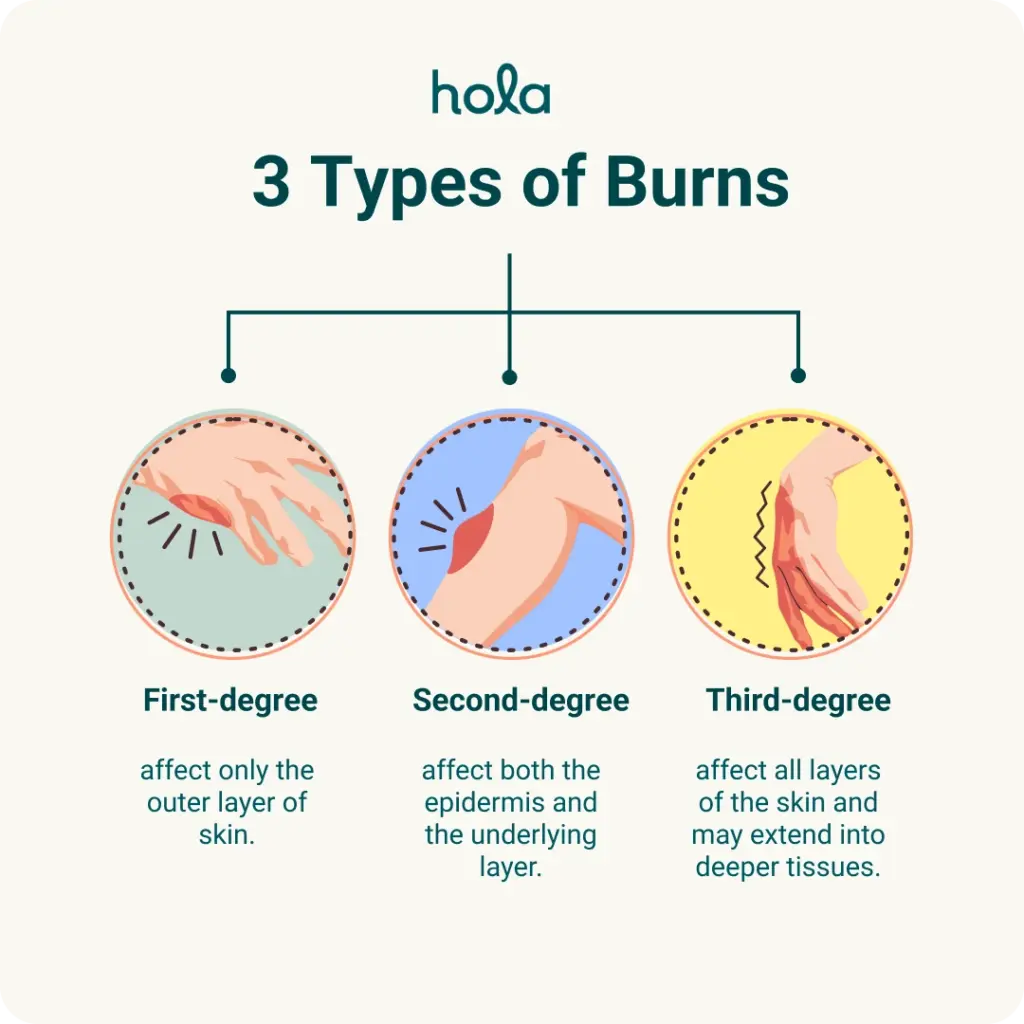
There are three main types of burns, classified based on their severity and the layers of skin affected:
- First-degree burns (Superficial burns):
- Affect only the outer layer of skin.
- Symptoms: Redness, mild swelling, pain, and sometimes peeling.
- Common causes: Sunburn, mild scalds, or brief contact with hot objects.
- Treatment: Usually treated at home with cool water, aloe vera, or medicated creams
- Second-degree burns (Partial thickness burns):
- Affect both the epidermis and the underlying layer.
- Symptoms: Blisters, severe pain, redness, and swelling.
- Common causes: Scalding liquids, contact with hot objects, or brief exposure to flames.
- Treatment: May require medical attention, especially if large or in sensitive areas. Blisters should not be popped to prevent infection.
- Third-degree burns (Full thickness burns):
- Affect all layers of the skin and may extend into deeper tissues, including muscles, bones, and nerves.
- Symptoms: White, blackened, or charred skin, and loss of sensation due to nerve damage.
- Common causes: Prolonged exposure to fire, hot liquids, chemicals, or electricity.
- Treatment: Requires immediate emergency medical attention.
Symptoms and complications
The symptoms of burns vary depending on the severity, but common signs include:
- Redness: Affected skin may turn red or pink, especially with first-degree burns.
- Pain: Burns often cause pain at the site, which can range from mild discomfort to intense throbbing, particularly with second-degree burns.
- Swelling: The skin may swell, especially with second-degree burns, as the skin’s protective barrier is compromised.
- Blisters: Second-degree burns may cause the skin to blister, which can break open and lead to fluid leakage.
- Peeling skin: As first-degree burns heal, the skin may peel or flake off.
- Charred skin: With third-degree burns, the skin may appear white, charred, or leathery, and may lose sensation due to nerve damage.
- Oozing fluid: Fluid-filled blisters or weeping skin may occur, particularly in second-degree burns.
- Shock symptoms: In severe cases, such as with large third-degree burns, symptoms of shock such as rapid heartbeat, shallow breathing, fainting, or confusion may appear.
Severe burns can lead to serious health complications because the skin’s protective barrier is destroyed. This can result in dangerous infections, permanent scarring, and restricted movement if joints are affected. Large burns also cause the body to lose fluids and heat rapidly, which may lead to dehydration, shock, or hypothermia. In cases involving smoke inhalation, your lungs can be damaged, while the most severe injuries can even impact kidney function or lead to long-term mental health challenges like PTSD.
Hola Health provides a fast and convenient way for you to see a doctor online in minutes, 24/7 across Australia. Much like an in-person GP clinic, our AHPRA-registered online GP appointment will conduct a comprehensive assessment to provide the best possible care, instantly.
Speak to our doctors 24/7
Providing consults for
Helpful resources
Download our Mobile App for better performance
- Book appointments instantly.
- Stay connected wherever you are.
- Experience healthcare, uninterrupted.
Scan the QR Code to download the app instantly