Ingrown hairs occur when a hair curls back or grows sideways into the skin, leading to redness, irritation, and painful bumps. Speak to our AHPRA-accredited online doctors via telehealth 24/7 for medical advice typically within 15 minutes (Based on typical wait times; may vary by demand and practitioner availability).
When to consult a doctor for ingrown hair?
If symptoms are persistent or recurrent
See a doctor if ingrown hairs are painful, inflamed, or occur frequently, as they may require preventive advice or treatment.
If signs of infection appear
Consult a doctor if you notice redness, pus, warmth, or spreading tenderness, which could indicate a bacterial infection.
If complications develop
Seek medical attention for scarring, darkened skin, or large/deep bumps that may need medical treatment or drainage.
This guide does not replace professional care. Consult a doctor to manage your symptoms. In emergencies, call 000. The content is research-backed & medically reviewed by Dr. Ammar AL-ANI, MBChB, CCBST, AMC
Symptoms
The symptoms of ingrown hair include:
Small, round bumps (papules) or pus-filled lesions (pustules)
Redness, inflammation, and tenderness
Itching and irritation around the affected area
Pain or discomfort, especially if infected
Darkened skin or scarring in chronic cases
A visible hair trapped beneath the skin
Causes
Ingrown hairs occur when a hair grows back into the skin instead of emerging properly. Common causes include:
Shaving: Cutting hair too close to the skin can create sharp edges that curl back.
Waxing or plucking: Removing hair from the root can cause it to grow improperly.
Curly or coarse hair: Hair that naturally curls is more likely to grow sideways into the skin.
Tight clothing: Friction from tight clothing can push hairs back into the skin.
Dead skin buildup: Clogged hair follicles prevent hair from growing outward.
Ingrown hair complications
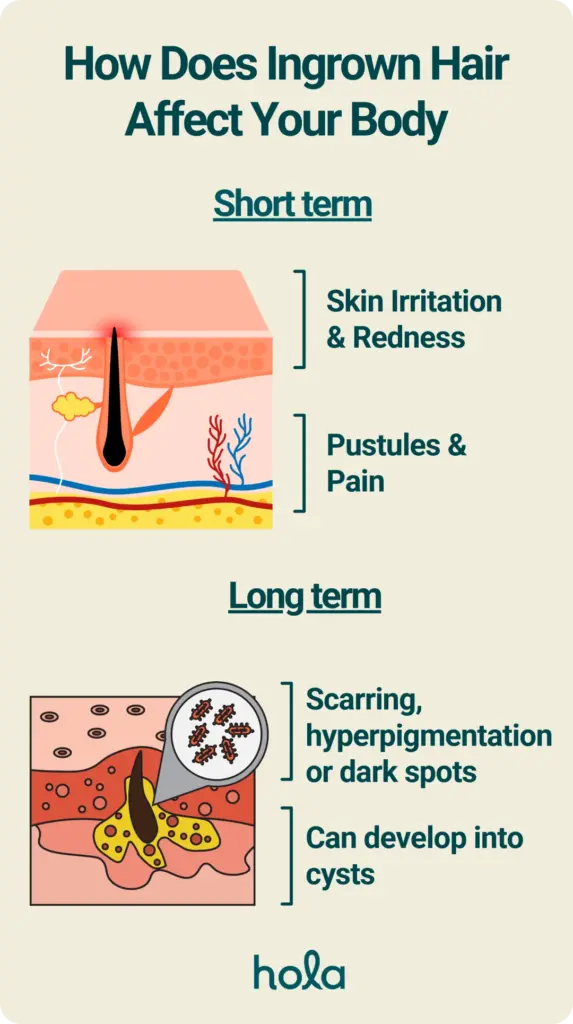
If left untreated, ingrown hairs can lead to:
Chronic inflammation: Long-term irritation may cause persistent redness and discomfort.
Infection: Bacteria can enter the follicle, causing abscesses or pus-filled bumps.
Scarring and hyperpigmentation: Frequent ingrown hairs may leave dark spots or permanent scars.
Cysts: Deep ingrown hairs can form painful cysts that may require medical drainage.
Ingrown hair prevention
Struggling with annoying ingrowns? Once you’ve had a quick chat with a GP, try these simple home remedies
Exfoliate regularly: Removes dead skin cells that clog hair follicles.
Use a sharp, clean razor: Dull blades increase the risk of ingrown hairs.
Shave in the direction of hair growth: Prevents hair from being cut too short and curling back.
Avoid tight clothing: Reduces friction that can push hairs into the skin.
Consider alternative hair removal methods: Laser hair removal or depilatory creams may reduce the risk of ingrown hairs for some people — speak with your GP about what is suitable for your skin type and hair type.
Hola Health provides a convenient way to consult an AHPRA-registered doctor online, 24/7 across Australia.
Clinical note: A telehealth assessment can help evaluate ingrown hair symptoms, provide management advice, and issue prescriptions for topical antibiotics or other treatments if clinically indicated. Visual assessment via video or high-resolution photos can assist the GP in evaluating the affected area. Telehealth is a complementary service — ingrown hairs involving deep cysts, abscess formation, or suspected significant infection may require in-person examination and possible drainage. If you notice rapidly spreading redness, fever, or signs of a serious skin infection, seek in-person medical care promptly. We recommend sharing your consult summaries with your regular GP to ensure continuity of care.
Most ingrown hairs improve on their own. Gently exfoliate that area and avoid pricking or squeezing. Use a warm compress to bring the hair to the surface. If the area becomes painful, swollen, or infected, see your doctor.
Yes. Waxing can cause ingrown hair, especially as hair grows back. Gentle exfoliating and avoiding tight clothing after waxing may help reduce the risk.
Yes. Frequent shaving can increase the risk of ingrown hairs, especially if the hair is cut very close to the skin. Use a sharp razor, shave in the direction of the hair growth, and avoid repeated strokes over the same area to prevent ingrown hairs.




 Scan the QR Code to download the Hola app.