

- Home
- /
- Health Conditions
- /
- Iron deficiency
Iron deficiency
Iron deficiency is a common condition that can lead to fatigue, weakness, and other health concerns. Get expert advice from our registered online doctors in Australia, available 24/7.
When to consult a doctor for iron deficiency ?
If symptoms are persistent or recurrent
See a doctor if you experience chronic fatigue, ongoing weakness, dizziness, or shortness of breath, as these may indicate underlying iron deficiency requiring treatment.
If noticeable physical signs appear
Consult a doctor if you have pale skin, brittle nails, frequent headaches, or unusual cravings for non-food items, which can signal iron deficiency.
If complications or high-risk situations occur
Seek medical advice if you have heart palpitations, are pregnant, or if a child shows signs of iron deficiency, to ensure proper diagnosis and management.
This guide does not replace professional care. Consult a doctor to manage your symptoms. In emergencies, call 000. The content is research-backed & medically reviewed.by Dr. Ammar AL-ANI, MBChB, CCBST, AMC
Causes
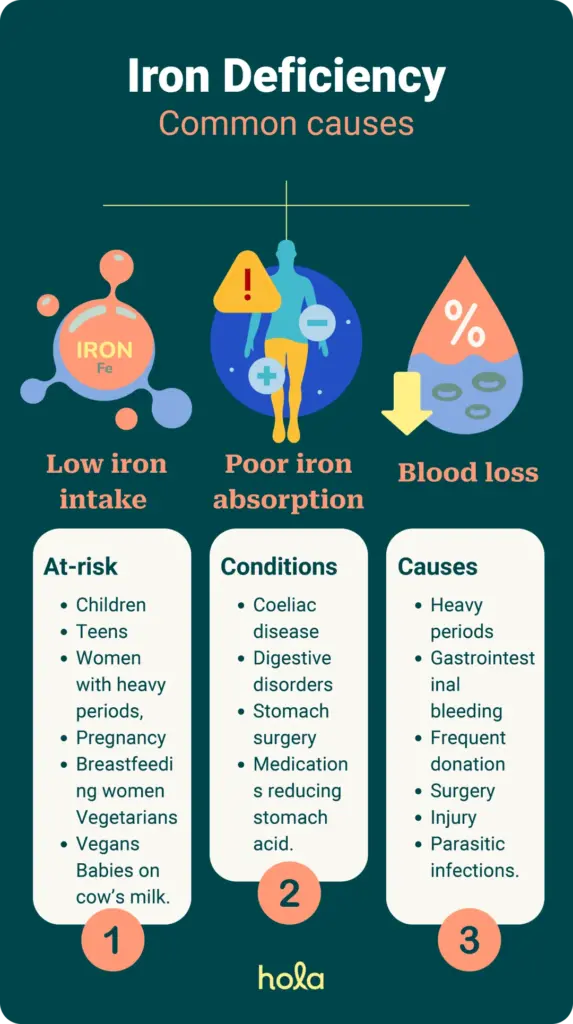
Iron deficiency can result from blood loss or a diet low in iron-rich foods. It may cause fatigue, poor concentration, and increased infections. Iron comes in two forms: haem (animal sources) and non-haem (plant sources). Non-haem iron is less easily absorbed, but pairing it with vitamin C-rich foods (e.g., citrus fruits) can improve absorption. Common causes include:
- Not eating enough iron-rich foods: As your body does not produce iron, you need to consume iron-rich foods through your diet. People at higher risk of iron deficiency due to dietary intake include:
- Children and teenagers (especially females)
- Women with heavy menstrual periods
- Pregnant and breastfeeding individuals
- Vegetarians and vegans who may not get enough iron from plant-based sources
- Babies who are fed cow’s milk instead of breast milk or iron-fortified formula
- Difficulty absorbing iron: Iron from food is absorbed in the stomach and intestines. Certain conditions and medical procedures can reduce iron absorption, such as:
- Coeliac disease or other digestive disorders
- Stomach surgery (e.g., gastric bypass)
- Certain medications that reduce stomach acid
- Blood loss: Losing blood means losing iron, which can lead to deficiency. Common causes of excessive blood loss include:
- Heavy menstrual periods (leading to chronic iron depletion)
- Gastrointestinal bleeding due to ulcers, bowel polyps, inflammatory bowel disease
- Frequent blood donation
- Surgery or injury-related blood loss
- Parasitic infections such as hookworms
Symptoms
Iron deficiency can affect multiple body systems, leading to physical, cognitive, and circulatory symptoms, including:
- Fatigue and weakness: Feeling excessively tired or lacking energy
- Shortness of breath: Difficulty breathing even with mild activity
- Pale skin: Noticeable paleness, especially in the face and inner eyelids
- Dizziness or light-headedness: Frequent spells of feeling faint
- Cold hands and feet: Poor circulation due to low oxygen levels
- Brittle nails : Nails becoming weak
- Frequent headaches: Oxygen deprivation leading to persistent headaches
- Unusual cravings: A desire to eat non-food items like ice, dirt, or chalk
- Rapid heartbeat or palpitations: The heart working harder to compensate for low oxygen levels
Hola Health provides a convenient way to consult an AHPRA-registered doctor online, 24/7 across Australia.
Clinical note: A telehealth assessment can help evaluate your symptoms and provide medical advice, including referrals for blood tests to investigate possible iron deficiency. Online GPs can provide pathology referrals, prescriptions, or specialist referrals if clinically indicated. Where blood test results suggest further management is needed, your GP may recommend follow-up in person. We recommend sharing your consult summaries with your regular GP to ensure continuity of care. In emergencies, call 000

Frequently Asked Questions
What foods are high in iron?
How is iron deficiency managed?
Can iron deficiency cause hair loss?
How can I tell if I have an iron deficiency?
Common signs include weakness, tiredness, pale skin, shortness of breath, headaches, dizziness, brittle nails, and difficulty concentrating. A blood test is the best way to confirm iron deficiency.
Note: If you experience severe shortness of breath or chest pain, call 000 immediately or attend your nearest Emergency Department (ED).
What are the three stages of iron deficiency?
Can iron deficiency cause weight gain?
Can iron deficiency cause depression?
Can iron deficiency cause dizziness or headaches?
Can iron deficiency become serious?
Speak to our doctors 24/7
Providing consults for
Helpful resources



Download our Mobile App for better performance
- Consult a GP anytime you need to.
- Stay connected wherever you are.
- Experience healthcare, uninterrupted.
 Scan the QR Code to download the Hola app.