Morning sickness is nausea and vomiting experienced by pregnant woman. Get medical advice from a registered online doctor within 15 minutes.
When to consult a doctor for morning sickness?
If vomiting is severe or ongoing
See a doctor if you are unable to keep food or fluids down for more than 24 hours, as persistent vomiting can quickly lead to dehydration and complications.
If there are signs of dehydration or weight loss
Consult a doctor if you notice dark urine, dizziness, infrequent urination, or significant weight loss due to ongoing nausea and vomiting.
If symptoms are extreme or suggest hyperemesis gravidarum
Seek medical attention if nausea and vomiting are severe, persistent, and interfere with daily activities, or if they lead to weakness, dehydration, or poor nutrition.
This guide does not replace professional care. Consult a doctor to manage your symptoms. In emergencies, call 000. The content is research-backed & medically reviewed byDr. Ammar AL-ANI, MBChB, CCBST, AMC
Causes
Causes of morning sickness include a combination of hormonal, physical, and lifestyle factors, such as:
Hormonal changes: Increased levels of pregnancy hormones such as human chorionic gonadotropin (hCG) and estrogen can trigger nausea and vomiting.
Gastric changes: Slower digestion during pregnancy and having an empty stomach can contribute to feelings of nausea.
Common triggers
Triggers of morning sickness may include:
Sensitivity to odours: Heightened sensitivity to certain smells, such as food, perfumes, or smoke, can trigger nausea.
Time of day: Symptoms are often worse in the early morning or when the stomach is empty.
Is morning sickness dangerous for the baby?
Mild to moderate morning sickness usually doesn’t harm the baby. However, severe morning sickness may lead to dehydration and weight loss, requiring medical attention.
Symptoms
Morning sickness symptoms typically start around the 6th week of pregnancy and usually subside by the end of the first trimester. However, some women may experience symptoms throughout their pregnancy. If symptoms are severe or lead to weight loss or dehydration, you should consult a doctor. Some of the morning sickness symptoms include:
Nausea
Vomiting
Food aversions
Increased sensitivity to smells
Fatigue
Loss of appetite
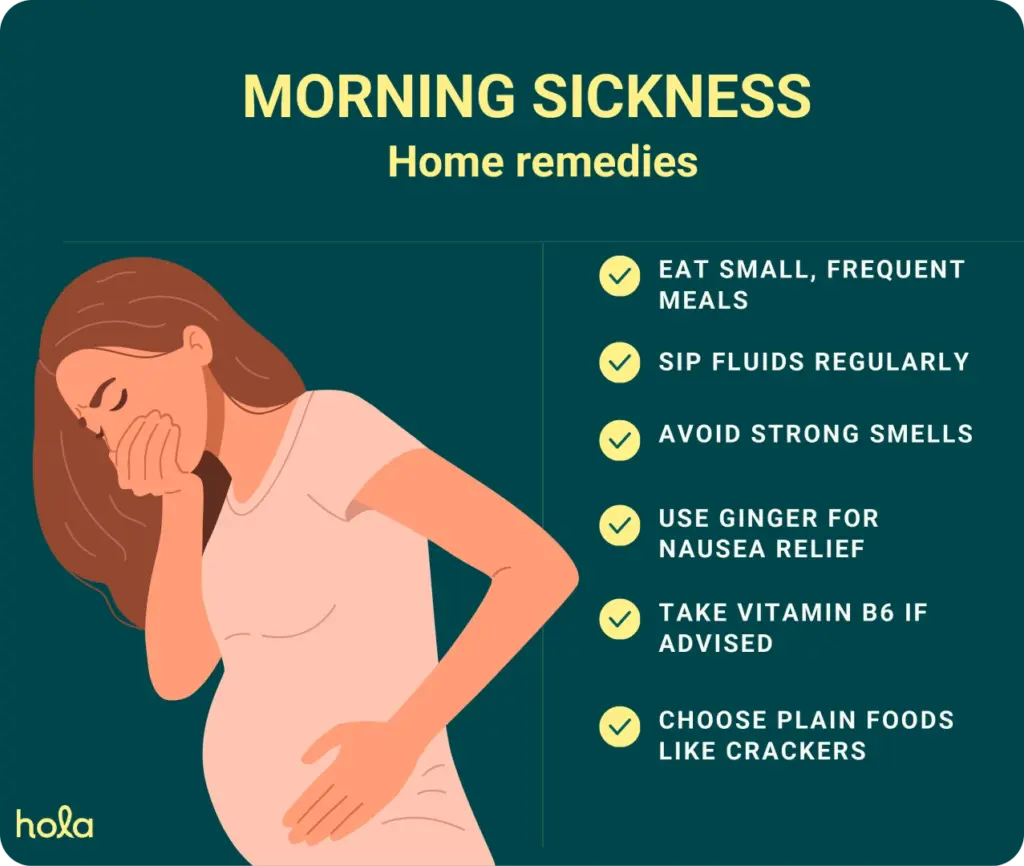
Home remedies
Many people find relief by trying safe and practical home remedies for morning sickness at home.
Eat smaller, frequent meals – Helps prevent an empty stomach and reduces nausea triggers.
Stay well hydrated – Sipping water or clear fluids can ease nausea and prevent dehydration.
Avoid strong smells – Limiting exposure to strong odours may reduce nausea episodes.
Try ginger – Ginger tea, biscuits, or supplements can help calm the stomach.
Consider vitamin B6 – May help reduce morning sickness when taken as advised.
Consult a doctor first – Always check with a healthcare professional before trying supplements or remedies.
Hola Health provides a fast and convenient way for you to consult a doctor online in minutes, 24/7 across Australia. Much like an in-person GP clinic, our AHPRA-registered Australian online GPwill conduct a comprehensive assessment to provide the best possible care, instantly.






 Scan the QR Code to download the Hola app.