Motion sickness occurs when the brain receives mixed signals from the inner ear, eyes, and body, leading to symptoms like nausea, dizziness, sweating, and vomiting. Consult an online GP to get quick advice and treatment options.
When to consult a doctor for motion sickness?
If nausea or vomiting is severe or persistent
Seek medical advice if frequent nausea or vomiting interferes with daily activities, travel, or work.
If symptoms do not improve with self-care or OTC treatments
Consult a GP if over-the-counter remedies and preventive strategies fail to relieve motion sickness symptoms.
If motion sickness is affecting daily life
See a doctor if motion sickness limits your ability to travel, work, or take part in routine activities.
This guide does not replace professional care. Consult a doctor to manage your symptoms. In emergencies, call 000. The content is research-backed & medically reviewed by Dr. Ammar AL-ANI, MBChB, CCBST, AMC
Causes
Motion sickness occurs when the brain receives mixed signals from different sensory systems. Several factors can contribute to this, including:
Conflicting sensory signals: The primary cause of motion sickness is a disconnect between what the eyes see and what the inner ear detects.
Sensitivity of the vestibular system: The inner ear’s vestibular system controls balance and spatial orientation. Some individuals have a more sensitive vestibular system, making them more prone to motion sickness.
Genetics and family history: Research suggests that genetics may play a role, as people with a family history of motion sickness are more likely to experience it themselves.
Migraines and inner ear disorders: People who suffer from migraines or conditions affecting the inner ear (such as Ménière’s disease) are more susceptible to motion sickness.
Anxiety and stress: Stress and anxiety can make symptoms worse, as they heighten sensitivity to bodily sensations.
Hormonal changes: Pregnant women, individuals on hormonal birth control, and those undergoing hormonal fluctuations (such as during menstruation) may be more prone to motion sickness.
Symptoms
Motion sickness symptoms can range from mild to severe and typically include:
Nausea and vomiting
Dizziness or lightheadedness
Sweating
Increased saliva production
Headache
Fatigue
Shortness of breath
A general feeling of discomfort
Symptoms usually resolve once the motion stops, but in some cases, they can persist for hours after travel
How to manage?
If you frequently experience motion sickness, here are some ways to manage and prevent it:
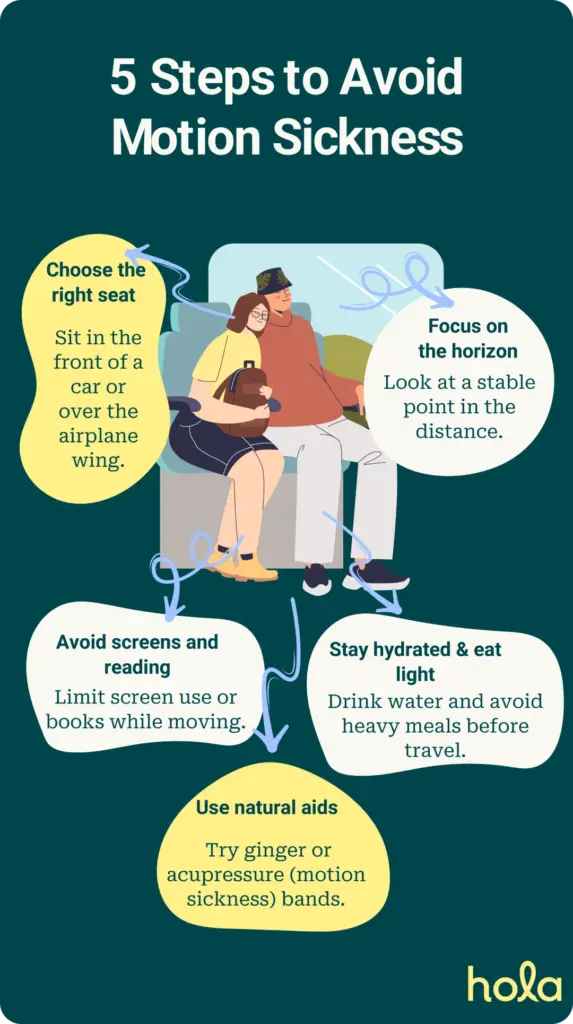
Choose the right seat: Sit in the front seat of a car, over the wing of an airplane, or in the middle of a boat where movement is less intense.
Focus on a stable object: Look at the horizon or a distant fixed point instead of reading or looking at screens.
Stay hydrated: Drink plenty of water and avoid alcohol or caffeine, which can worsen nausea.
Eat light meals: Avoid heavy, greasy, or spicy foods before travel, as they can trigger nausea.
Use acupressure bands: Wristbands that apply pressure to the P6 acupressure point may help prevent nausea.
Try ginger or peppermint: Both are natural remedies known to reduce nausea and motion sickness symptoms.
Get fresh air: Open a window or step outside to reduce discomfort when possible.
Take breaks: If traveling by car, stop for fresh air and movement to help reset your balance.
Practice relaxation techniques: Deep breathing and meditation can help reduce anxiety-related motion sickness.
Does anxiety contribute to motion sickness?
Yes, anxiety can heighten sensory sensitivity, making motion sickness worse. Relaxation techniques may help reduce symptoms.
Hola Health provides a fast and convenient way for you to consult a doctor online in minutes, 24/7 across Australia. Much like an in-person GP clinic, our AHPRA-registered Australian online GP will conduct a comprehensive assessment to provide the best possible care, instantly.







 Scan the QR Code to download the Hola app.