

Contents
Is it good to be stressed?

 ChatGpt
  Google AI Mode
  Perplexity
  Claude
 This blog is for educational purposes only and does not replace professional medical advice or diagnosis. If you have health concerns, consult an AHPRA-registered telehealth doctor or request a medical certificate online if clinically appropriate. Please note: Hola Health does not currently offer Mental Health Care Plans.
Summary
While stress often gets a bad name, not all forms of stress are harmful. A certain level of stress, known as eustress, can boost motivation, sharpen focus, and help you grow. However, when stress becomes constant or overwhelming, it can contribute to serious physical and mental health problems. When managed effectively, mild to moderate stress can become a quiet force for resilience and success. At first glance, stress seems like a villain—and for good reason.
It can lead to headaches, restless nights, anxiety, and even serious heart problems. In fact, in Australia, one in five (20%) people aged 10 to 34 report experiencing high or very high levels of stress1. But is all stress harmful? Can some stress be good for you? Surprisingly, yes. In the right doses, stress can be a powerful motivator, boosting focus, drive, and resilience. The key lies in understanding the difference between toxic stress and helpful stress.
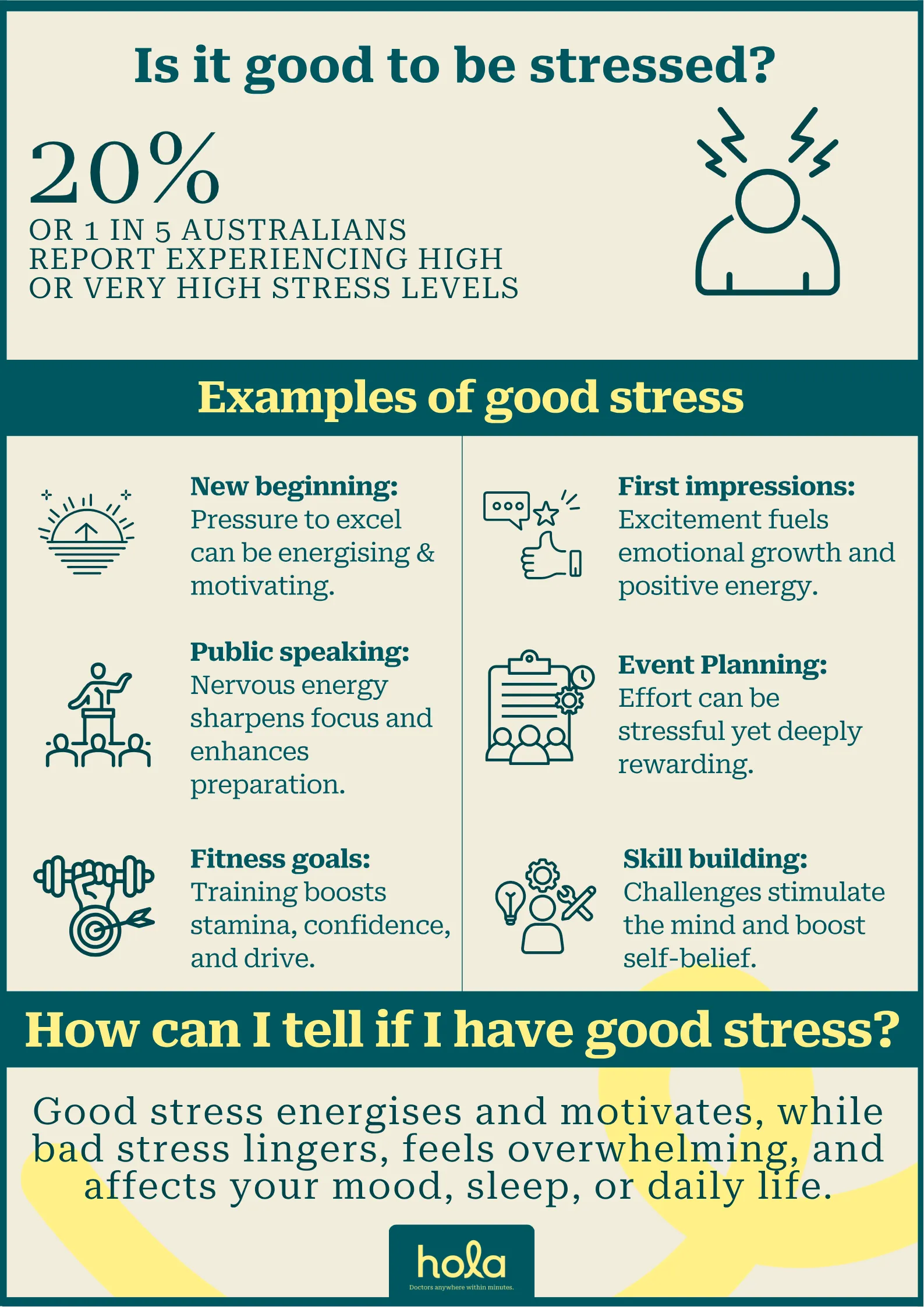
Signs of good stress – Hola Health
What is good stress?
Positive stress, referred to as eustress, represents a constructive form of stress that can inspire, energise, and enhance your performance. In contrast to chronic or negative stress, which can feel oppressive and detrimental, eustress helps you maintain focus, overcome obstacles, and achieve your goals.
Instances of beneficial stress include embarking on a new job, studying for an exam, going on a first date, or training for a competition. It typically accompanies sensations of excitement, anticipation, or nervous energy, yet lacks the feelings of threat or helplessness. Unlike distress, eustress activates a healthy level of arousal without overwhelming the nervous system, says Amira, a psychotherapist and expert in ACT, Australia. Eustress is crucial for personal development, productivity, and resilience, provided it remains short-term and is balanced with periods of rest and recovery.
Get medical certificate sent via SMS, if approved
24/7 across Australia
Benefits of good stress
Experiencing good stress, or eustress, can bring numerous advantages to your mental and physical well-being when encountered in controllable doses. Here are some notable benefits:
- Enhances motivation, energy, and performance: Eustress enables you to remain focused and energised, particularly when pursuing goals or meeting deadlines.
- Fosters personal development: It often arises during new endeavours, assisting you in adapting, learning, and building self-confidence.
- Boosts resilience: Confronting and overcoming challenges through positive stress can strengthen your emotional fortitude and better prepare you for future difficulties.
- Improves cognitive function: Moderate stress can sharpen focus, enhance memory, and aid in problem-solving abilities in the short term.
- Encourages a sense of accomplishment: Completing a task or overcoming a hurdle through good stress contributes to feelings of pride and success.
What’s the difference between good stress and bad stress?
The primary distinction between positive stress (eustress) and negative stress (distress) is found in how your body and mind react to a challenge.
Positive stress (eustress):
This type of stress is perceived as thrilling, inspiring, and manageable. It emerges in situations such as starting a new job, speaking in public, or engaging in sports competition. Eustress keeps your alert, enhances your performance, and facilitates growth through new experiences. It is typically short-lived and results in positive outcomes.
Negative stress (distress):
Distress feels all-consuming, exhausting, or threatening. It often arises from scenarios such as job-related pressures, financial concerns, or interpersonal conflicts. When persistent or prolonged, it can negatively impact your physical and mental well-being, leading to feelings of anxiety, fatigue, or burnout. It can also dysregulate your nervous system and impair your ability to cope.
Examples of good stress in everyday life
Beneficial stress, or eustress, manifests in daily scenarios that challenge or excite you, without leading to overwhelm. Some typical examples include:
- Beginning a new job or project: The enthusiasm and pressure to excel can be motivating.
- Delivering a speech or creating a presentation: Nervous energy can enhance your focus and improve your preparation.
- Engaging in physical activity or training for a competition: The drive to achieve fitness objectives boosts both stamina and confidence.
- Going on a first date or meeting new individuals: The excitement can generate positive energy and emotional growth.
- Organising a vacation or significant event: The effort involved may be stressful, but it is often revitalising and fulfilling.
- Acquiring a new skill or hobby: The challenge keeps your mind engaged and stimulated. The sense of progress contributes to increased self-efficacy.
Why does good stress matter?
Good stress, or eustress, is essential for our capacity to grow, adapt, and flourish. It encourages us to step beyond our comfort zones, fuelling motivation, creativity, and success. Unlike harmful, prolonged stress, eustress is temporary and is associated with a sense of excitement or purpose rather than anxiety or pressure.
It is important because it enables you to meet challenges, build confidence, and foster mental resilience. Whether you are preparing for an interview, learning something new, or striving to achieve a personal goal, good stress keeps you attentive and engaged. It stimulates goal-directed behaviour and supports the development of coping skills. It also enhances your sense of fulfilment and progress in life.
When good stress becomes harmful
Beneficial stress, known as eustress, can become detrimental when it is excessively intense, occurs too frequently, or persists for an extended period without adequate rest or balance. What begins as motivating pressure can escalate into physical and emotional stress if you consistently push yourself without taking time to recover.
For instance, the thrill of a new job or venture can lead to burnout if the demands become too much to handle. In the same way, regular exercise intended to invigorate you can result in fatigue or injury if you fail to let your body recuperate.
Signs that good stress may be tipping into distress include constant feelings of anxiety, fatigue, irritability, or difficulty concentrating. Even positive stress can spill into this territory and negatively impact your sleep, mood, and overall health. It’s important to take a moment to step back, assess your limits, and prioritise self-regulation and rest
See an AHPRA-registered doctor online, anytime
24/7 across Australia
Conclusion
So, is stress the villain? Not always. A little pressure can fuel ideas, spark motivation, and add excitement, like a bit of spice in your favourite dish. But too much? That’s when things lead to overwhelm and burnout. The challenge is to find the right balance, know when to push and when to pause. When you become aware of how your body responds to stress and actively manage it, stress can shift from being a burden to being a tool for growth.
In short, therapy offers clarity and coping skills to manage stress more calmly. It can also help reframe your perception of stress, turning it into a manageable ally instead of a persistent threat.
Examples of good stress in everyday life
Beneficial stress, or eustress, manifests in daily scenarios that challenge or excite you, without leading to overwhelm. Some typical examples include:- Beginning a new job or project: The enthusiasm and pressure to excel can be motivating.
- Delivering a speech or creating a presentation: Nervous energy can enhance your focus and improve your preparation.
- Engaging in physical activity or training for a competition: The drive to achieve fitness objectives boosts both stamina and confidence.
- Going on a first date or meeting new individuals: The excitement can generate positive energy and emotional growth.
- Organising a vacation or significant event: The effort involved may be stressful, but it is often revitalising and fulfilling.
- Acquiring a new skill or hobby: The challenge keeps your mind engaged and stimulated. The sense of progress contributes to increased self-efficacy.
Why does good stress matter?
Good stress, or eustress, is essential for our capacity to grow, adapt, and flourish. It encourages us to step beyond our comfort zones, fuelling motivation, creativity, and success. Unlike harmful, prolonged stress, eustress is temporary and is associated with a sense of excitement or purpose rather than anxiety or pressure. It is important because it enables you to meet challenges, build confidence, and foster mental resilience. Whether you are preparing for an interview, learning something new, or striving to achieve a personal goal, good stress keeps you attentive and engaged. It stimulates goal-directed behaviour and supports the development of coping skills. It also enhances your sense of fulfilment and progress in life.When good stress becomes harmful
Beneficial stress, known as eustress, can become detrimental when it is excessively intense, occurs too frequently, or persists for an extended period without adequate rest or balance. What begins as motivating pressure can escalate into physical and emotional stress if you consistently push yourself without taking time to recover. For instance, the thrill of a new job or venture can lead to burnout if the demands become too much to handle. In the same way, regular exercise intended to invigorate you can result in fatigue or injury if you fail to let your body recuperate. Signs that good stress may be tipping into distress include constant feelings of anxiety, fatigue, irritability, or difficulty concentrating. Even positive stress can spill into this territory and negatively impact your sleep, mood, and overall health. It’s important to take a moment to step back, assess your limits, and prioritise self-regulation and restConclusion
So, is stress the villain? Not always. A little pressure can fuel ideas, spark motivation, and add excitement, like a bit of spice in your favourite dish. But too much? That’s when things lead to overwhelm and burnout. The challenge is to find the right balance, know when to push and when to pause. When you become aware of how your body responds to stress and actively manage it, stress can shift from being a burden to being a tool for growth.FAQs
What is the definition of good stress?
Good stress, also known as eustress, is a healthy kind of pressure that energises and motivates you. It usually occurs in short bursts and helps you concentrate, handle challenges, and perform at your best, like before a presentation, competition, or important decision. Unlike harmful stress, eustress feels uplifting or stimulating rather than draining, and it can boost confidence, spark creativity, and support growth. It is typically linked to situations you perceive as within your ability to manage, according to Amy, a registered psychotherapist in Australia.Is any kind of stress healthy?
Yes, not all stress is harmful—some, like eustress, can be beneficial. This form of stress feels energising rather than exhausting. It drives motivation, sharpens focus, and helps you adapt to new challenges. It shows up in moments like prepping for a big day, the drive to finish a project or trying something bold or new. However, persistent or chronic stress—the type that feels constant and overwhelming—is harmful. Over time, it can harm your body and mind. The difference lies in intensity, duration, and your ability to recover.Can good stress turn into bad stress?
Yes, good stress can turn into bad stress if it becomes too intense, prolonged, or isn’t managed well. For instance, the excitement of a new project (good stress) can turn into burnout (bad stress) if demands increase, deadlines loom, and there’s no time to rest. Without proper balance, even good stress can wear you down. The key lies in maintaining balance—stress can fuel progress when it is well-managed, but if it starts to drain your energy, it turns unhealthy. That’s why self-care, boundaries, and rest are essential to keep stress manageable and positive. Regular check-ins with your energy levels and emotional state can help you catch the tipping point early.How can I tell if my stress is motivating or harmful?
Good stress feels energising, temporary, and keeps you alert and motivated. Bad stress lingers, feels overpowering, and can impact your mood, sleep, or overall well-being. If your stress keeps you moving forward, it’s likely good. If it feels like a burden, it may be time to slow down and recharge. Other signs that stress is becoming harmful include irritability, physical exhaustion, headaches, or a loss of interest in usual activities.Is stress ever necessary for success?
Yes, stress can play a valuable role in success when it’s the right kind. A healthy level of stress (called eustress) can boost concentration, motivation, and productivity. It helps you meet deadlines, sharpen performance, and encourages you to step out of your comfort zone—all essential for growth and achievement. It’s all about the right balance—enough stress to push you forward, but not so much that it overwhelms you. So yes, a little stress can be a powerful yet silent force behind success. <p?What matters most is how you interpret and respond to it.Can good stress affect your physical health?
Yes, good stress can benefit your physical health by increasing alertness, stamina, and your ability to cope. However, if sustained too long, it can still be draining—so balance is key. Prolonged activation of the stress response, even from positive pressure, can eventually impact sleep, digestion, or immunity if not balanced with rest says expert psychotherapist, Amy.How do therapists help with managing stress?
Therapists support you in navigating stress by teaching healthier ways to respond, calm your mind, and stay grounded. They help you:- Recognise triggers and patterns causing stress
- Develop coping strategies like breathing, mindfulness, or time management
- Change negative thinking with tools like cognitive-behavioural therapy (CBT)
- Establish healthy boundaries and strengthen interpersonal skills
- Boost mental flexibility to bounce back from challenges
FAQ
Good stress, also known as eustress, is a healthy kind of pressure that energises and motivates you. It usually occurs in short bursts and helps you concentrate, handle challenges, and perform at your best, like before a presentation, competition, or important decision. Unlike harmful stress, eustress feels uplifting or stimulating rather than draining, and it can boost confidence, spark creativity, and support growth. It is typically linked to situations you perceive as within your ability to manage, according to Amy, a registered psychotherapist in Australia.
Yes, not all stress is harmful—some, like eustress, can be beneficial. This form of stress feels energising rather than exhausting. It drives motivation, sharpens focus, and helps you adapt to new challenges. It shows up in moments like prepping for a big day, the drive to finish a project or trying something bold or new. However, persistent or chronic stress—the type that feels constant and overwhelming—is harmful. Over time, it can harm your body and mind. The difference lies in intensity, duration, and your ability to recover.
Yes, good stress can turn into bad stress if it becomes too intense, prolonged, or isn’t managed well. For instance, the excitement of a new project (good stress) can turn into burnout (bad stress) if demands increase, deadlines loom, and there’s no time to rest. Without proper balance, even good stress can wear you down. The key lies in maintaining balance—stress can fuel progress when it is well-managed, but if it starts to drain your energy, it turns unhealthy. That’s why self-care, boundaries, and rest are essential to keep stress manageable and positive. Regular check-ins with your energy levels and emotional state can help you catch the tipping point early.
Good stress feels energising, temporary, and keeps you alert and motivated. Bad stress lingers, feels overpowering, and can impact your mood, sleep, or overall well-being. If your stress keeps you moving forward, it’s likely good. If it feels like a burden, it may be time to slow down and recharge. Other signs that stress is becoming harmful include irritability, physical exhaustion, headaches, or a loss of interest in usual activities.
Yes, stress can play a valuable role in success when it’s the right kind. A healthy level of stress (called eustress) can boost concentration, motivation, and productivity. It helps you meet deadlines, sharpen performance, and encourages you to step out of your comfort zone—all essential for growth and achievement. It’s all about the right balance—enough stress to push you forward, but not so much that it overwhelms you. So yes, a little stress can be a powerful yet silent force behind success. <p?What matters most is how you interpret and respond to it.
Yes, good stress can benefit your physical health by increasing alertness, stamina, and your ability to cope. However, if sustained too long, it can still be draining—so balance is key. Prolonged activation of the stress response, even from positive pressure, can eventually impact sleep, digestion, or immunity if not balanced with rest says expert psychotherapist, Amy.
Therapists support you in navigating stress by teaching healthier ways to respond, calm your mind, and stay grounded. They help you:
Recognise triggers and patterns causing stress
Develop coping strategies like breathing, mindfulness, or time management
Change negative thinking with tools like cognitive-behavioural therapy (CBT)
Establish healthy boundaries and strengthen interpersonal skills
Boost mental flexibility to bounce back from challenges
In short, therapy offers clarity and coping skills to manage stress more calmly. It can also help reframe your perception of stress, turning it into a manageable ally instead of a persistent threat.
Authors

Editorial staff
Medically reviewed by

Amira Shah
Master’s in Counselling Psychology, Psychotherapist & Counsellor
8+ Years of Experience
Amira Shah is a trauma-informed psychotherapist with over a decade of experience in supporting women through complex mental health challenges. She holds a Master’s in Counselling Psychology and has worked extensively at a women’s centre, offering therapy to survivors of physical abuse, sexual assault, PTSD, and human trafficking. Amy owns her practice, Empathetic Counselling & Psychotherapy (ECP), and is committed to continuing her support for women.
Disclaimer
This blog is for general informational purposes only and does not indicate that Hola Health provides all treatments or preventive measures mentioned. It is not intended to be a substitute for professional medical advice. Always seek the guidance of your doctor or other qualified health professional with any questions you may have regarding your health or a medical condition. For emergencies please immediately contact 000. Any medical topics discussed are intended to educate, not to imply availability through Hola Health.
Note: At Hola Health, we're committed to offering trustworthy, accurate and up-to-date health information. Our Editorial Process entails thorough research, fact- checking, and medical review by doctors in diverse health fields, including medical practitioners, doctors, and psychotherapists based in Australia. We take guidance from qualified Australian doctors. We prioritise primary sources and avoid tertiary references wherever possible.
See a Aussie GP online, available 24/7
Download the app today.