A chest infection is a common illness in Australia, affecting the lungs or airways. It can range from a mild, self-limiting condition like acute bronchitis to a more serious infection like pneumonia. Speak to registered practitioners regarding a chest infection from anywhere in Australia typically within 15 minutes (Based on typical wait times; may vary by demand and practitioner availability), 24/7.
When to consult a doctor for chest infection?
If symptoms are severe or worsening
Consult a doctor if your cough lasts longer than 7–10 days, gets worse, returns after initially improving, or if you have a high fever (over 38°C) that doesn’t settle with medication.
If you experience breathing related issues
Seek medical advice if you have breathlessness or wheezing (especially at rest), chest pain when breathing or coughing, or are coughing up yellow, green, or bloody mucus.
If you are high-risk or feel unusually unwell
See a doctor if you feel extreme fatigue, dizziness, or confusion, or if you are an older adult, pregnant, a young child, or have conditions such as asthma, COPD, heart disease, or diabetes.
This guide does not replace professional care. Consult a doctor to manage your symptoms. In emergencies, call 000. The content is research-backed & medically reviewed by Dr. Ammar AL-ANI, MBChB, CCBST, AMC
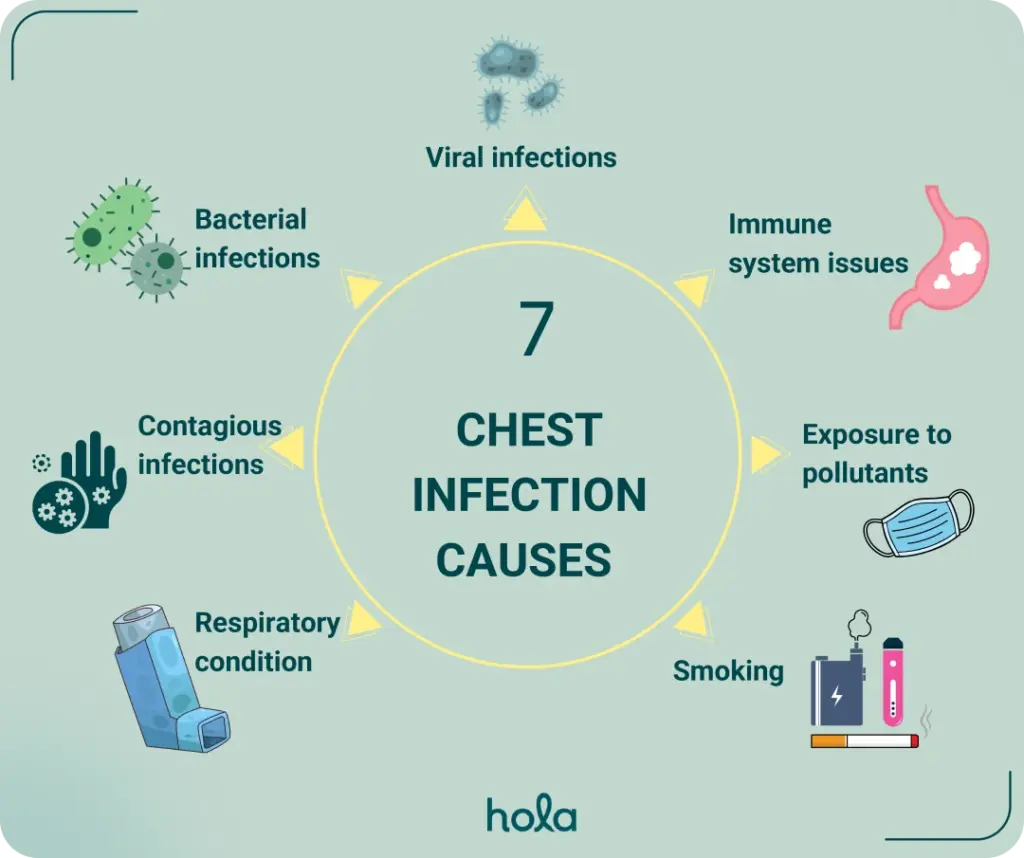
Chest Infection causes
Viral infections: The most common cause of chest infections like bronchitis and bronchiolitis, especially in colder months. Viruses such as influenza, RSV, and adenoviruses are frequent culprits.
Bacterial infections: Can cause more serious chest infections like pneumonia.
Weakened immune system: People with chronic illnesses, the elderly, infants, and those on immune-suppressing medications are at higher risk.
Smoking: Damages lung tissues and impairs the airways’ natural defence, making infections more likely.
Chronic respiratory conditions: Asthma, COPD, or cystic fibrosis increase susceptibility to infections.
Exposure to pollutants: Dust, chemicals, and smoke irritate airways and lungs, raising infection risk.
Close contact with infected people: Chest infections often spread through droplets from coughing or sneezing.
Chest infection symptoms
Persistent cough
Chest pain or discomfort
Shortness of breath or wheezing
Fever and chills
Fatigue and body aches
Loss of appetite
Headache and sore throat
Types of chest infections
Bronchitis
The most common type.
Involves inflammation of the bronchial tubes (the airways leading to your lungs).
Often caused by viruses, occasionally bacteria.
Symptoms: persistent cough, chest tightness, mild fever, and mucus production.
Pneumonia
A more serious infection of the lung tissue itself.
Can be caused by bacteria, viruses, or fungi.
Symptoms: high fever, chills, breathlessness, chest pain, fatigue, and thick mucus.
Bronchiolitis
Common in babies and young children.
Involves inflammation of the small airways (bronchioles).
Caused mostly by viruses like RSV (Respiratory Syncytial Virus).
Tuberculosis (TB)
Less common in Australia but still occurs.
Caused by the bacteria Mycobacterium tuberculosis.
Symptoms: chronic cough, night sweats, weight loss, and fatigue.
Note: Suspected TB requires urgent in-person assessment. TB is a notifiable disease in Australia — if TB is suspected, contact your GP or local health department promptly.
Prevention and home remedies
Rest and Environment: Prioritize sleep with your head elevated and avoid smoking or alcohol to speed up recovery.
Hydration and Nutrition: Drink plenty of warm fluids and eat nutrient-rich, light meals to support your immune system and loosen mucus.
Congestion Relief: Use steam inhalation or a humidifier to ease chest tightness and practice gentle breathing exercises.
Professional Advice: Consult a healthcare practitioner before starting any medication or if your symptoms worsen.
Hola Health provides a convenient way for you to consult a doctor online, 24/7 across Australia. Our AHPRA-registered Australian online GP can conduct a comprehensive assessment to provide an appropriate care.
Clinical note: A telehealth assessment can help evaluate chest infection symptoms, provide management advice, and issue prescriptions for appropriate treatment or referrals if clinically indicated. Telehealth is a complementary service — distinguishing between bronchitis and pneumonia typically requires physical chest examination (auscultation) and may require chest X-ray. TB requires specific testing and cannot be diagnosed or managed via telehealth alone. If you have breathlessness at rest, chest pain when breathing, bloody mucus, high fever that does not settle, or blue-tinged lips, call 000 or attend an Emergency Department immediately — do not use telehealth for these presentations. We recommend sharing your consult summaries with your regular GP to ensure continuity of care.
Cough, chest pain, fever, shortness of breath, exhaustion, wheezing, and mucus production are some of the common symptoms. Symptoms vary according to the cause and intensity.
Mild chest infections typically resolve within 1-3 weeks; cough symptoms can often continue longer. Persistent or worsening symptoms require medical attention.





 Scan the QR Code to download the Hola app.