Concerned about chlamydia? Consult an AHPRA-registered doctor online for sexual health advice and pathology referrals — available 24/7.
When to consult a doctor for chlamydia?
If you’ve had unprotected sex
See a doctor or get tested if you’ve had unprotected sex with a new partner, someone who may have an STI, or if a partner informs you they’ve tested positive for an infection such as chlamydia.
If you or your partner notice symptoms
Consult a doctor if you experience symptoms like painful urination, unusual discharge, pelvic pain, bleeding between periods, testicular pain, or discomfort even if symptoms are mild.
If you need routine or preventive screening
Regular STI screening is important if you’re sexually active and haven’t been tested in the past year, particularly for people under 30 or men who have sex with men.
This guide does not replace professional care. Consult a doctor to manage your symptoms. In emergencies, call 000 or visit a hospital immediately. The content is research-backed & medically reviewed by Dr Vishnu Gopalan,MBBS, FRACGP, Co-Founder and Chief Medical Officer, Hola Health.
Causes and symptom
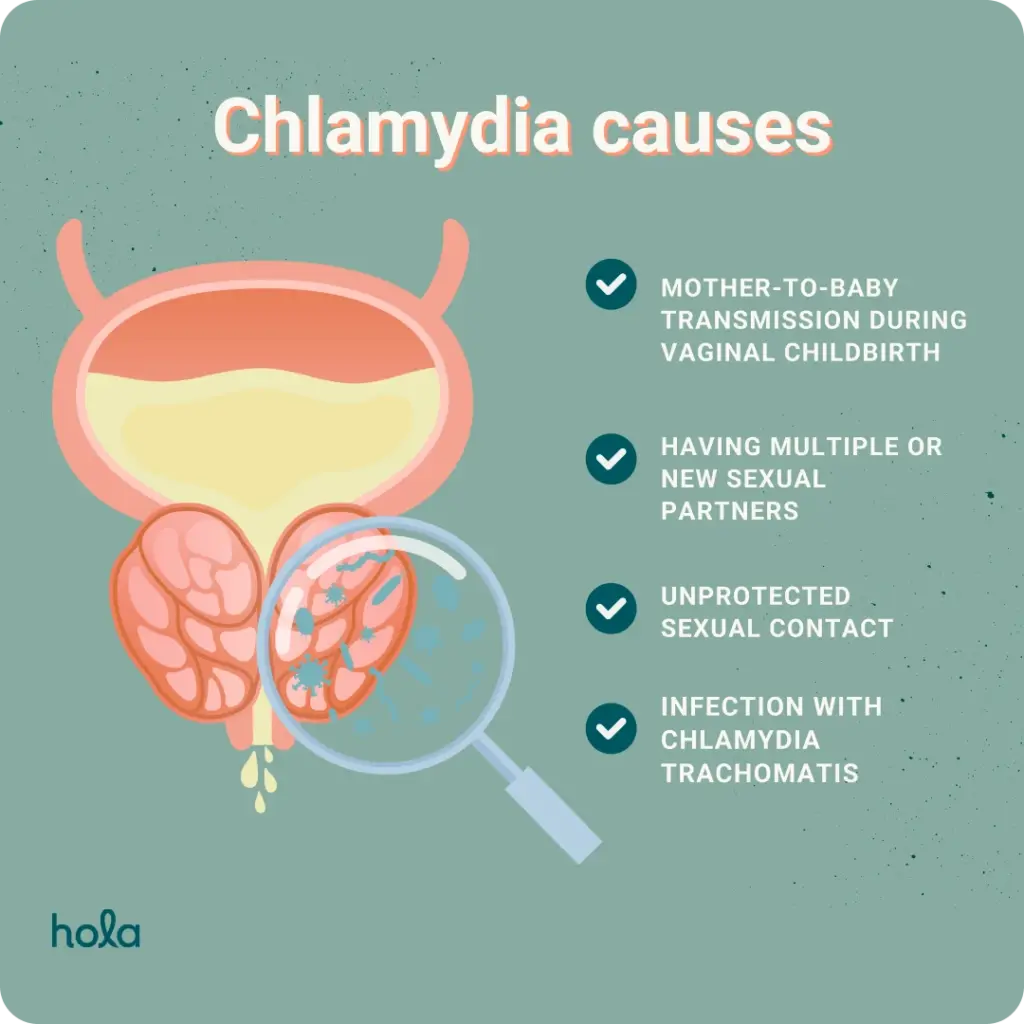
Chlamydia causes
Infection with Chlamydia trachomatis which infects the genital tract, rectum, throat, or eyes.
Unprotected sexual contact with an infected person.
Having multiple or new sexual partners increases the risk, especially if STI testing is not done regularly.
Mother-to-baby transmission during vaginal childbirth, potentially causing eye or lung infections in the newborn.
Chlamydia symptoms
Changes in vaginal discharge
Pain or burning while urinating
Pain during intercourse or sex for women
Pain in the lower abdomen for women
Bleeding or spotting between the periods or during sex.
Milky discharge from the penis
Redness near the opening of the penis
Pain or swelling in one of the testicles
Prevention and diagnosis
How is chlamydia diagnosed?
A urine test, where you provide a sample to check for the presence of Chlamydia trachomatis bacteria.
A swab test, where a healthcare professional or you (with instructions) use a cotton swab to collect a sample from the affected area, such as the cervix, vagina, urethra, throat, or rectum, depending on sexual practices and symptoms.
These tests are painless and can often be done at home or at a clinic.
Prevention
Preventing chlamydia involves a few simple but important steps (after you consult with a GP):
Use condoms correctly every time you have vaginal, anal, or oral sex, they’re the most effective barrier against chlamydia and other STIs.
Have regular STI check-ups, especially if you’re under 30, have new or multiple partners, or are in a non-monogamous relationship.
Avoid sharing sex toys or use a fresh condom on them and clean thoroughly between uses.
Communicate openly with sexual partners about STI testing and sexual health.
Limit the number of sexual partners, if possible, to lower exposure risk.
Complete treatment properly if diagnosed, and ensure sexual partners are tested and treated too before resuming sexual activity.
Hola Health provides a convenient way to consult an AHPRA-registered doctor online, 24/7 across Australia.
Clinical note: A telehealth assessment can help evaluate your sexual health concerns, arrange pathology referrals for STI testing (including chlamydia testing), and provide prescriptions for confirmed infections if clinically indicated. Chlamydia cannot be diagnosed via telehealth — laboratory testing is required. Some presentations involving pelvic pain, testicular symptoms, or suspected complications may require in-person assessment. If chlamydia is confirmed, your doctor can discuss partner notification and follow-up care. We recommend sharing your consult summaries with your regular GP to ensure continuity of care.
Chlamydia is a sexually transmitted infection (STI) caused by a bacterium called Chlamydia trachomatis. It’s one of the most commonly reported infectious diseases in Australia. Many people with chlamydia don’t have any symptoms, making it easy to pass on without knowing. Without management, it can cause complications such as Pelvic Inflammatory Disease and infertility.
Chlamydia is often spread during unprotected vaginal, oral, or anal intercourse with an infected partner. It can also spread through sharing sex toys or during childbirth from mother to baby.




 Scan the QR Code to download the Hola app.