Cold sores, also known as fever blisters, are small, painful blisters that usually appear around the lips or mouth. Concerned about cold sores? Consult an AHPRA-registered doctor online for advice — available in minutes, 24/7.
When to consult a doctor for cold sores?
If it’s your first outbreak or if it’s severe
See a doctor if this is your first cold sore and you’re unsure about the symptoms, or if cold sores are frequent, unusually large, very painful, or make it difficult to eat, drink, or speak.
If the cold sore isn’t healing or became infected
Consult a doctor if sores last longer than 10–14 days without improvement, or if you develop a high fever, swollen glands, pus, or increasing redness, which may indicate a secondary infection.
If you are high risk or it’s in a sensitive area
Seek medical advice urgently if the cold sore appears near your eyes, or if you have a weakened immune system due to illness or medication, as complications can be more serious.
This guide does not replace professional care. Consult a doctor to manage your symptoms. In emergencies, call 000 or visit a hospital immediately. The content is research-backed & medically reviewed by Dr. Ammar AL-ANI, MBChB, CCBST, AMC
Symptoms and causes
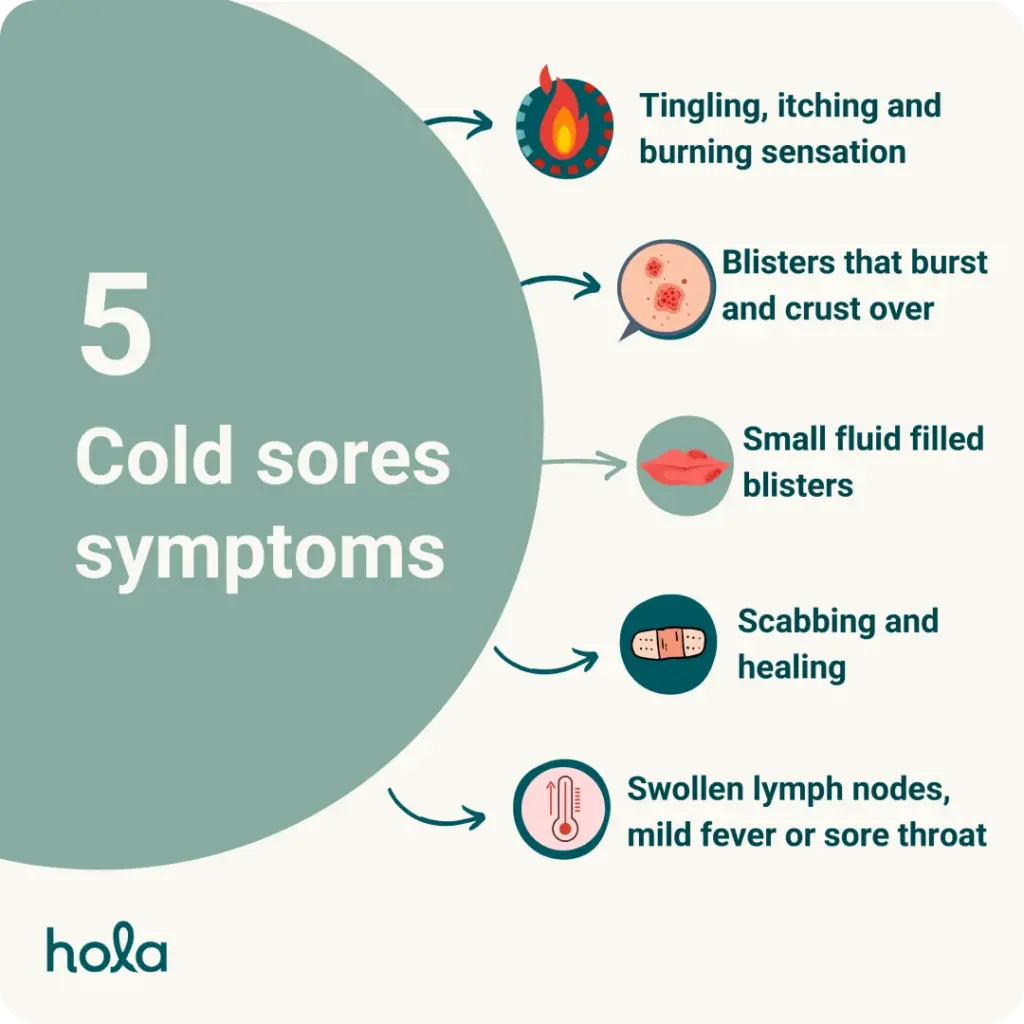
Cold sores symptoms generally include tingling, itching and burning sensations. There could be small fluid-filled blisters that burst and crust over. Sometimes symptoms include swollen lymph nodes, mild fever or sore throat.
Cold sores causes
Stress and emotional strain
Fatigue or physical exhaustion
Illnesses like colds, flu, or fever
Exposure to strong sunlight or UV rays
Hormonal changes (including menstruation)
Weakened immune system
Injuries to the lips or mouth
Dehydration or dry, chapped lips
Complication of cold sores
Secondary bacterial infections: Blisters can become infected, causing redness, pus, or increased pain.
Eye infections (Herpes keratitis): If the virus spreads to the eyes, it can lead to serious issues like corneal damage or vision problems.
Severe outbreaks in people with weakened immune systems: Such as those with HIV, cancer, or on immunosuppressant medications.
Eczema herpeticum: A rare but serious condition where the virus spreads to large areas of skin in people with eczema.
Psychological distress: Recurrent cold sores can cause anxiety, embarrassment, and social discomfort.
Scarring: Rare, but can happen if sores are repeatedly picked at or become infected.
Preventing the spread of cold sores
Cold sores are highly contagious, especially when the blisters are visible and fluid filled. Here are some prevention methods to try after GP advice:
Avoid direct contact with cold sores, no kissing, sharing utensils, or lip balms with someone who has an active sore.
Manage stress levels with mindfulness, exercise, or relaxation techniques.
Use lip balm with SPF to protect your lips from sun exposure, a common trigger.
Keep your immune system strong with regular sleep, a balanced diet, and hydration.
Avoid excessive fatigue and physical exhaustion.
Stay well-hydrated and avoid letting your lips dry out.
Hola Health provides a convenient way to consult an AHPRA-registered doctor online, 24/7 across Australia.
Clinical note: A telehealth assessment can help evaluate cold sore symptoms — visual assessment via video or high-resolution photos can assist diagnosis for most presentations. Online GPs can provide prescriptions for antiviral medications if clinically indicated. Telehealth is a complementary service — cold sores near the eyes (herpes keratitis risk), severe outbreaks in immunocompromised patients, or presentations requiring swab testing for confirmation may need in-person assessment. We recommend sharing your consult summaries with your regular GP to ensure continuity of care.
Cold sores are frequently caused by the herpes simplex virus and can spread by intimate contact, such as kissing, oral contact, or sharing utensils or lip cosmetics.
Yes. Cold sores are contagious, especially when blisters are present or actively leaking fluid. Even modest symptoms may allow the infection to spread.
Yes. Doctors can use telehealth consultation to check cold sore symptoms and explain management options. Some severe or uncommon symptoms may necessitate an in-person evaluation.




 Scan the QR Code to download the Hola app.