

- Home
- /
- Health Conditions
- /
- Chronic Wounds
Chronic Wounds
When to consult a doctor for chronic wounds?
If the wound is not healing properly
Consult a doctor if your wound shows no noticeable improvement within 2 weeks or does not heal completely within 6 weeks, as delayed healing may indicate an underlying issue.
If there are signs of infection or worsening symptoms
Seek medical advice if the wound is painful, swollen, red, warm to touch, or starts discharging pus or an unpleasant smell, or if you develop a fever or feel generally unwell.
If you are at higher risk or unsure about care
People with diabetes, poor circulation, or immune conditions should see a doctor early for wound care. It’s also best to get care if you’re unsure about proper wound management.
This guide does not replace professional care. Consult a doctor to manage your symptoms. In emergencies, call 000. The content is research-backed & medically reviewed by Dr. Ammar AL-ANI, MBChB, CCBST, AMC
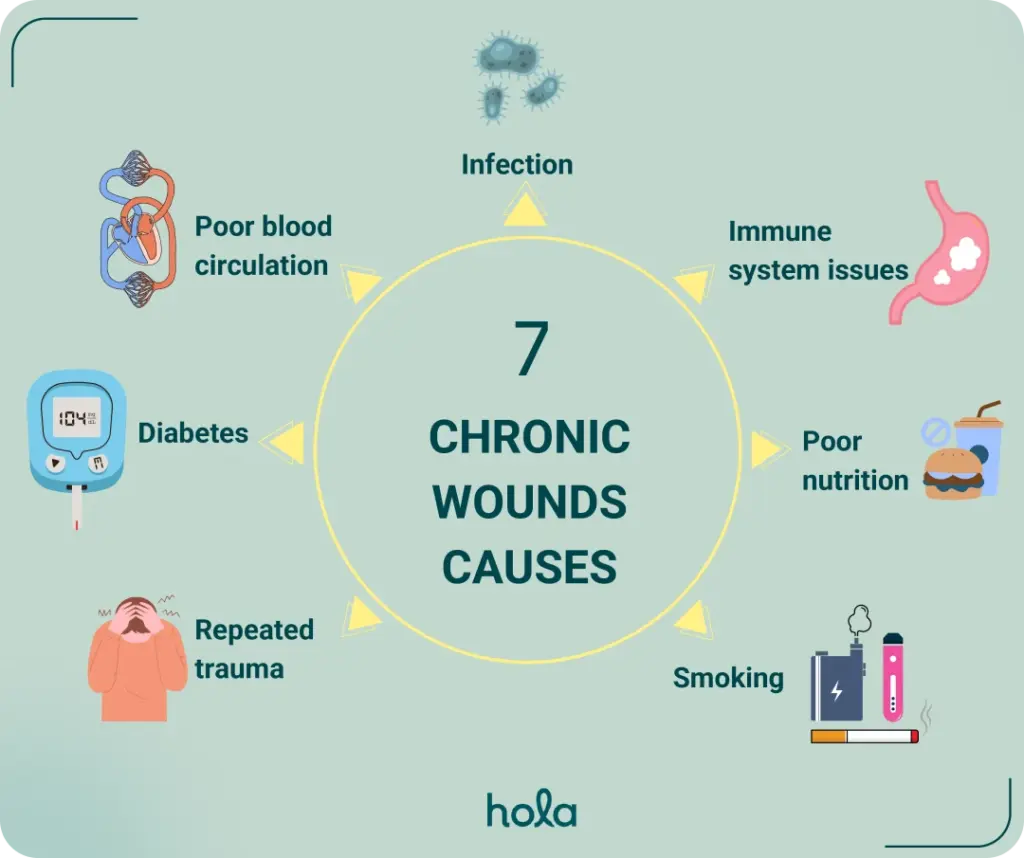
Chronic wounds causes
- Poor blood circulation: Conditions like venous insufficiency or arterial disease reduce oxygen and nutrient supply to the wound.
- Diabetes: High blood sugar can damage blood vessels and nerves, increasing infection risk.
- Infection: Bacteria in a wound can prevent normal tissue repair and lead to complications.
- Pressure or repeated trauma: Continuous pressure or injury to a wound site can stop it from healing.
- Immune system issues: Autoimmune disorders, chronic illness, or certain medications can impair the body’s ability to heal.
- Poor nutrition: Lack of essential nutrients like protein, zinc, and vitamin C affects wound healing.
- Smoking: Reduces blood flow and oxygen delivery to tissues.
Chronic wounds symptoms
- A wound that remains open for more than 2–6 weeks
- Persistent or increasing pain
- Redness, swelling, or warmth in the surrounding skin
- Discharge or pus, bleeding or oozing that doesn’t settle
- Unpleasant smell
- Delayed scab formation or failure to close
- Hardened, discoloured, or dead tissue around the wound edges
- Fever, or chills
- Skin irritation or itchiness around the wound site
Types of chronic wound
- Pressure ulcers or bedsores: Caused by prolonged pressure on the skin, common in people with limited mobility or those confined to a bed.
- Diabetic foot ulcers: Open sores that develop on the feet of people with diabetes, often due to nerve damage and poor blood circulation.
- Venous leg ulcers: Typically found around the ankles, these result from poor blood flow in the leg veins, causing swelling and skin breakdown.
- Arterial ulcers: Caused by restricted blood flow through arteries, usually painful and located on the lower legs or feet.
- Non-healing surgical wounds: Wounds from surgery that don’t close or heal properly.
Prevention and self-care
Preventing chronic wounds involves managing underlying conditions and protecting vulnerable skin areas:
- If you have diabetes, inspect your feet daily and maintain blood sugar control
- Keep skin clean, moisturised, and protected from prolonged pressure
- Maintain good nutrition including adequate protein, vitamin C, and zinc
- Avoid smoking, which impairs wound healing
- If a wound develops, keep it clean and covered with an appropriate dressing — speak with your GP or wound care nurse before applying any topical treatments
Note: Wound dressing selection for chronic wounds should be guided by a healthcare professional. Do not apply home remedies to chronic or non-healing wounds without medical advice.
Hola Health provides a convenient way to consult an AHPRA-registered doctor online, 24/7 across Australia.
Clinical note: A telehealth assessment can provide initial medical advice for chronic wound concerns, help identify signs of infection, and issue referrals to wound care clinics, specialist services, or pathology if clinically indicated. However, chronic wound assessment requires in-person clinical examination to properly assess wound dimensions, tissue type, exudate, and surrounding skin. Telehealth cannot replace hands-on wound assessment and is not appropriate as the sole management approach for chronic wounds. Patients with diabetic foot ulcers, arterial or venous ulcers, or wounds showing signs of systemic infection should seek in-person specialist care. If you develop a high fever, spreading red streaks from the wound (lymphangitis), or other signs of serious infection, call 000 or attend an Emergency Department immediately. We recommend sharing your consult summaries with your regular GP and wound care team to ensure continuity of care.

Frequently Asked Questions
Why is my wound not healing?
Infections, diabetes, poor circulation, pressure, smoking, alcohol, nutritional deficiencies, and underlying medical diseases can all cause delayed wound healing. Medical attention should be sought for persistent wounds.
Seek immediate medical attention if you develop signs of systemic infection, such as high fever, chills, or spreading red streaks from the wound.
How can I know whether my wound is infected?
Infection symptoms may include increased redness, swelling, warmth, pus, discomfort, pain, a foul odour, or fever. If these symptoms appear, you should seek medical attention.
Can diabetes increase the risk of chronic wounds?
Yes. Diabetes may impair circulation and nerve function, increasing the likelihood of slow-healing wounds and infection.
What dressings work best for chronic wounds?
The most appropriate dressing is determined by the type of wound, its location, moisture level, and infection risk. A doctor or wound care specialist may suggest suitable wound management.
Speak to our doctors 24/7
Providing consults for
Helpful resources




Download our Mobile App for better performance
- Consult a GP anytime you need to.
- Stay connected wherever you are.
- Experience healthcare, uninterrupted.
 Scan the QR Code to download the Hola app.