

- Home
- /
- Health Conditions
- /
- Burns
Burns
Burns are injuries to the skin or deeper tissues caused by heat, chemicals, electricity, extreme cold, or radiation. They can range from mild to severe, depending on the source and duration of exposure. Consult an AHPRA-registered online doctor about minor burn symptoms — available 24/7 across Australia. For severe, chemical, electrical, or third-degree burns, call 000 immediately.
When to consult a doctor for burns?
Severe or deep burns
Seek immediate medical care if the burn is deep or covers a large area of the body. Third-degree burns, which appear white, charred, or leathery, require urgent attention because they damage all layers of the skin.
Chemical, electrical, or painful burns
All burns caused by chemicals or electricity must be evaluated by a professional, as electrical burns can cause hidden internal injuries. Additionally, if the pain is severe and cannot be managed with basic first aid, a doctor can help.
Vulnerable people or signs of infection
Children, the elderly, and people with weakened immune systems should always see a doctor for burn injuries. You should also seek help if you notice signs of infection, such as pus, increased swelling, spreading redness, or if you develop a fever.
This guide does not replace professional care. Consult a doctor to manage your symptoms. In emergencies, call 000 or visit a hospital immediately. The content is research-backed & medically reviewed by Dr Vishnu Gopalan, MBBS, FRACGP, Co-Founder and Chief Medical Officer, Hola Health.
Types of burns
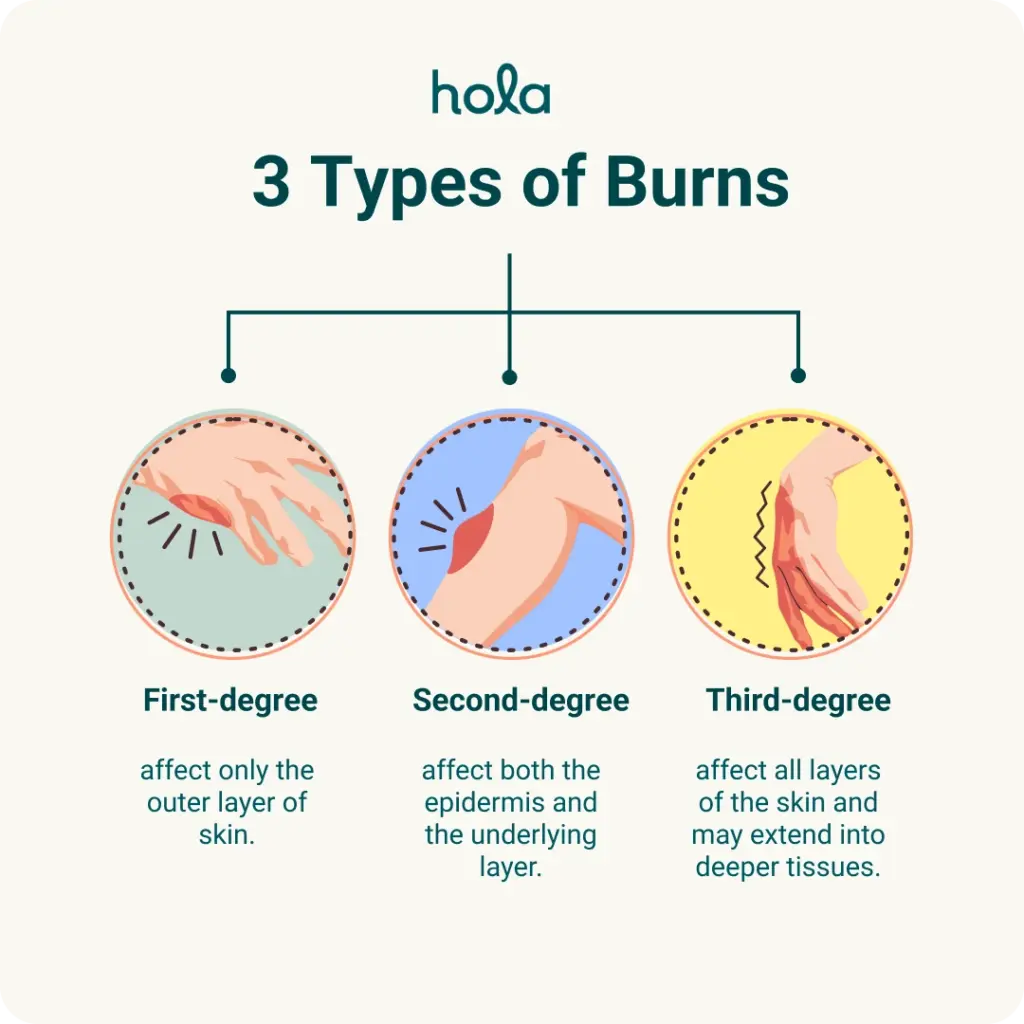
There are three main types of burns, classified based on their severity and the layers of skin affected:
- First-degree burns (Superficial burns):
- Affect only the outer layer of skin.
- Symptoms: Redness, mild swelling, pain, and sometimes peeling.
- Common causes: Sunburn, mild scalds, or brief contact with hot objects.
- Treatment: Usually treated at home with cool water, aloe vera, or medicated creams
- Second-degree burns (Partial thickness burns):
- Affect both the epidermis and the underlying layer.
- Symptoms: Blisters, severe pain, redness, and swelling.
- Common causes: Scalding liquids, contact with hot objects, or brief exposure to flames.
- Treatment: May require medical attention, especially if large or in sensitive areas. Blisters should not be popped to prevent infection.
- Third-degree burns (Full thickness burns):
- Affect all layers of the skin and may extend into deeper tissues, including muscles, bones, and nerves.
- Symptoms: White, blackened, or charred skin, and loss of sensation due to nerve damage.
- Common causes: Prolonged exposure to fire, hot liquids, chemicals, or electricity.
- Treatment: Requires immediate emergency medical attention.
Symptoms
The symptoms of burns vary depending on the severity, but common signs include:
- Redness: Affected skin may turn red or pink, especially with first-degree burns.
- Pain: Burns often cause pain at the site, which can range from mild discomfort to intense throbbing, particularly with second-degree burns.
- Swelling: The skin may swell, especially with second-degree burns, as the skin’s protective barrier is compromised.
- Blisters: Second-degree burns may cause the skin to blister, which can break open and lead to fluid leakage.
- Peeling skin: As first-degree burns heal, the skin may peel or flake off.
- Charred skin: With third-degree burns, the skin may appear white, charred, or leathery, and may lose sensation due to nerve damage.
- Oozing fluid: Fluid-filled blisters or weeping skin may occur, particularly in second-degree burns.
- Shock symptoms: In severe cases, such as with large third-degree burns, symptoms of shock such as rapid heartbeat, shallow breathing, fainting, or confusion may appear. Shock symptoms indicate a life-threatening emergency — call 000 immediately.
Telehealth assessment for burns
It is important to speak to a GP first to understand and manage your symptoms.
Hola Health provides a convenient way to consult an AHPRA-registered doctor online, 24/7 across Australia.
Clinical note: An online GP consult provides medical advice for burn management and evaluates if an in-person assessment, physical examination, or specialised wound care is required. Telehealth is a complementary service; an in-person assessment is essential for determining the total body surface area (TBSA) affected and the depth of the burn accurately. Online GPs can provide sick certificates, prescriptions for topical treatments, pathology referrals, or referrals to specialists if clinically indicated. Diagnosis via telehealth relies on the accuracy of the symptoms reported and the quality of visual assessment provided via video or high-resolution photos. In case of burns to the face, hands, feet, or genitals, burns caused by chemicals/electricity, difficulty breathing, or any third-degree (charred) burns, call 000 or visit an Emergency Department immediately. We recommend sharing your consult summaries with your regular GP to ensure continuity of care.

Frequently Asked Questions
How do your manage a burn?
Minor burns should be managed with cool running water for about 20 minutes as soon as possible. Keep the place clean and safe. Avoid using ice, butter, or toothpaste on burns.
Note: This information is for educational purposes only. You should consult a medical practitioner before attempting home remedies to ensure they are safe for your specific condition.
What makes burns worse?
Burns can worsen due to delayed cooling, friction, infection, sun exposure, or exposure to irritating chemicals. Popping blisters may potentially pose an infection risk.
Should I cover a burn or let it breathe?
Most mild burns heal faster when lightly covered with a clean, non-sticky bandage. This helps protect the wound from contamination and may support healing.
When should I seek urgent medical care for a burn?
Large burns, children, elderlies, burns to the face, hands, feet, or genitals, electrical or chemical burns, trouble breathing, or infection symptoms such as spreading redness or fever require immediate medical attention. If you have life-threatening symptoms or serious medical concerns, contact 000 or go to the local Emergency Department right away.
Can a medical practitioner in Australia assess and manage burns?
Yes. Medical practitioners can check minor burn symptoms via telehealth consultation. For anything other than minor burns, a face-to-face physical examination is required to assess the depth of tissue damage.
How long does it typically take for a minor burn to heal?
Minor burns typically recover in 1-3 weeks, depending on the severity and size of the burn. Healing may take longer if an infection develops.
Speak to our doctors 24/7
Helpful resources



Download our Mobile App for better performance
- Consult a GP anytime you need to.
- Stay connected wherever you are.
- Experience healthcare, uninterrupted.
 Scan the QR Code to download the Hola app.