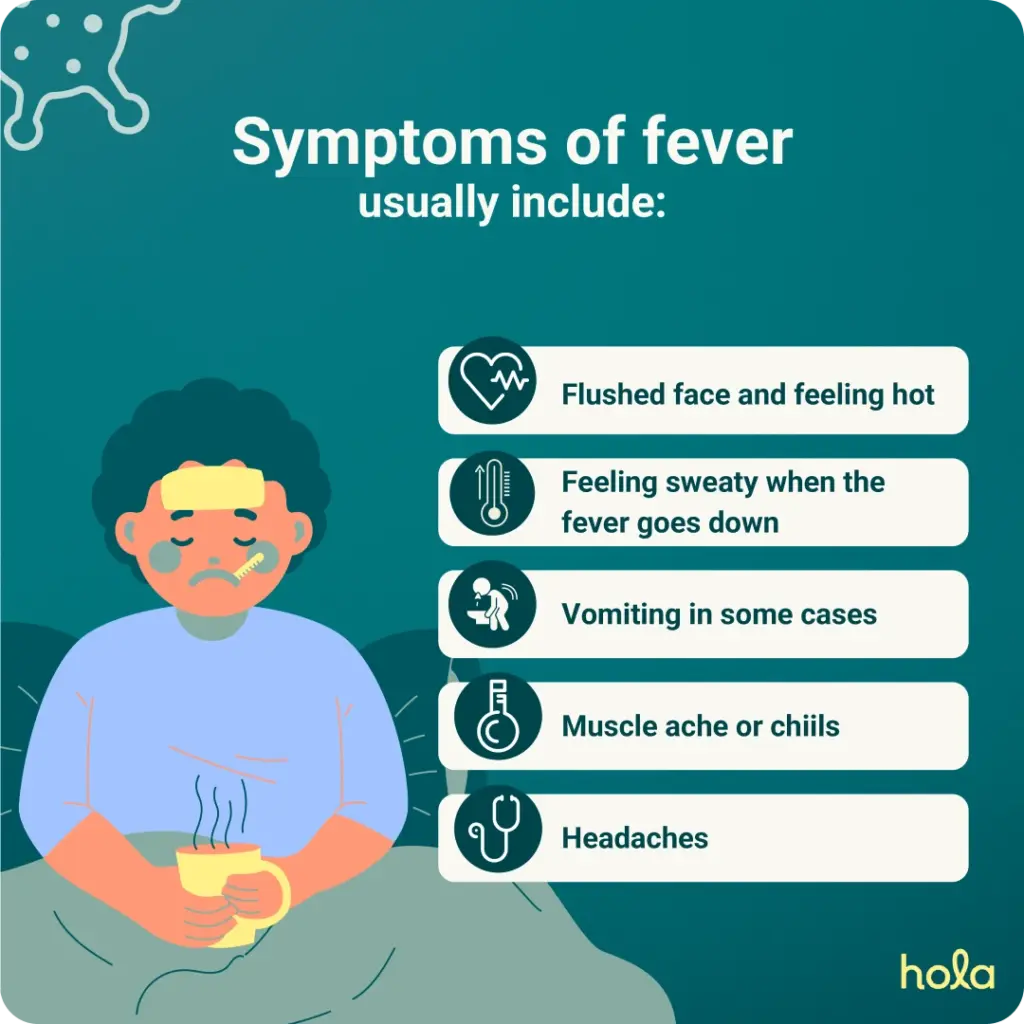
Fever is a natural immune response where the body temporarily raises its temperature—usually above 38°C—to help fight infections or illness by slowing germ growth and boosting the immune system. Consult online doctors & get medical advice 24/7.
When to consult a doctor for fever?
If the fever is high or lasts several days
See a doctor if your fever lasts more than three days or is very high (above 39.4°C or 103°F), as this may indicate a more serious infection.
If severe or unusual symptoms occur
Seek medical attention if the fever is accompanied by chest pain, difficulty breathing, persistent vomiting or diarrhoea, rash, severe headache, neck stiffness, confusion, or seizures.
If you are at higher risk or symptoms worsen
Consult a GP if the fever occurs in an infant under three months old, if you have a weakened immune system or chronic illness, if you’ve recently travelled abroad, or if the fever continues to worsen over time.
This guide does not replace professional care. Consult a doctor to manage your symptoms. In emergencies, call 000. The content is research-backed & medically reviewed. by Dr. Ammar AL-ANI, MBChB, CCBST, AMC
Causes
It is important to understand the underlying cause of the fever to diagnose and treat it correctly. Here are some common types of fever:
Viral infections: Such as colds, flu, COVID-19, and other respiratory infections.
Bacterial infections: Such as tonsillitis, pneumonia, and urinary tract infections.
Chronic illnesses: Such as rheumatoid arthritis and ulcerative colitis, which can lead to prolonged fevers.
Tropical diseases: Such as malaria, dengue, and typhoid fever, often cause recurring fevers.
Heat stroke: Causes fever without sweating.
Medication reactions: Some individuals may experience fevers as a side effect of specific drugs.
Others: Some other fevers are found in Australia such as Q Fever or Australian spotted fever (Tick bites).
Warning signs for child fever
When it comes to fever in children or fever in babies, it’s essential to consult a doctor if:
A baby under three months has a fever above 38°C
A baby between three to six months has a fever or appears unusually irritable, lethargic, or uncomfortable.
The fever lasts more than three days
Your child shows signs of dehydration, difficulty breathing, persistent vomiting or diarrhoea, rash, or is unusually sleepy or unresponsive.
The fever is accompanied by a seizure, stiff neck, or severe headache.
Home remedies
Stay well hydrated by drinking water, oral rehydration solutions, or clear fluids
Get plenty of rest to help the body fight the infection
Use a cool or lukewarm compress on the forehead or body
Take lukewarm showers or sponge baths to help lower body temperature
Wear light, breathable clothing and avoid bundling up
Eat light, nutritious foods if you feel up to it
Avoid alcohol, strenuous activity, and excessive physical exertion while recovering
Hola Health provides a fast and convenient way for you to consult a GP online in minutes, 24/7 across Australia. Much like an in-person GP clinic, our AHPRA-registeredAustralian online doctorswill conduct a comprehensive assessment to provide the best possible care, instantly.





 Scan the QR Code to download the Hola app.
