- Home
- /
- Health Conditions
- /
- Bacterial Infections
Bacterial Infections
4.6/5 based on 28000+ reviews
How our doctors can help
See a doctor now
100% Bulk Billed*
Request a certificate
From $14.90
Request a referral
From $39
Request a script
100% Bulk Billed*
When to consult a doctor for bacterial infection?
If you have a high or persistent fever
If you have a fever above 38.5 degrees or a fever that continues for several days or is accompanied by other symptoms such as chills or body aches, it may indicate a bacterial infection. It is important to see a doctor and seek medical advice.
If symptoms worsen or don’t improve
When pain, swelling, breathing difficulty, or illness lasts more than 10 days, it could signal a bacterial infection that needs proper treatment. Worsening symptoms or recurring illness require prompt medical attention.
If infections become severe or keep returning
Chest pain, pus-filled skin infections, or persistent vomiting and diarrhoea are signs of serious infection. Frequent bacterial infections may also indicate a weakened immune system, and it’s best to consult a doctor for proper treatment.
This guide does not replace professional care. Consult a doctor to manage your symptoms. In emergencies, call 000 or visit a hospital immediately. The content is research-backed & medically reviewed by Dr Vishnu Gopalan, Co-Founder & Chief Medical Officer at Hola.
Causes and symptoms of bacterial infections
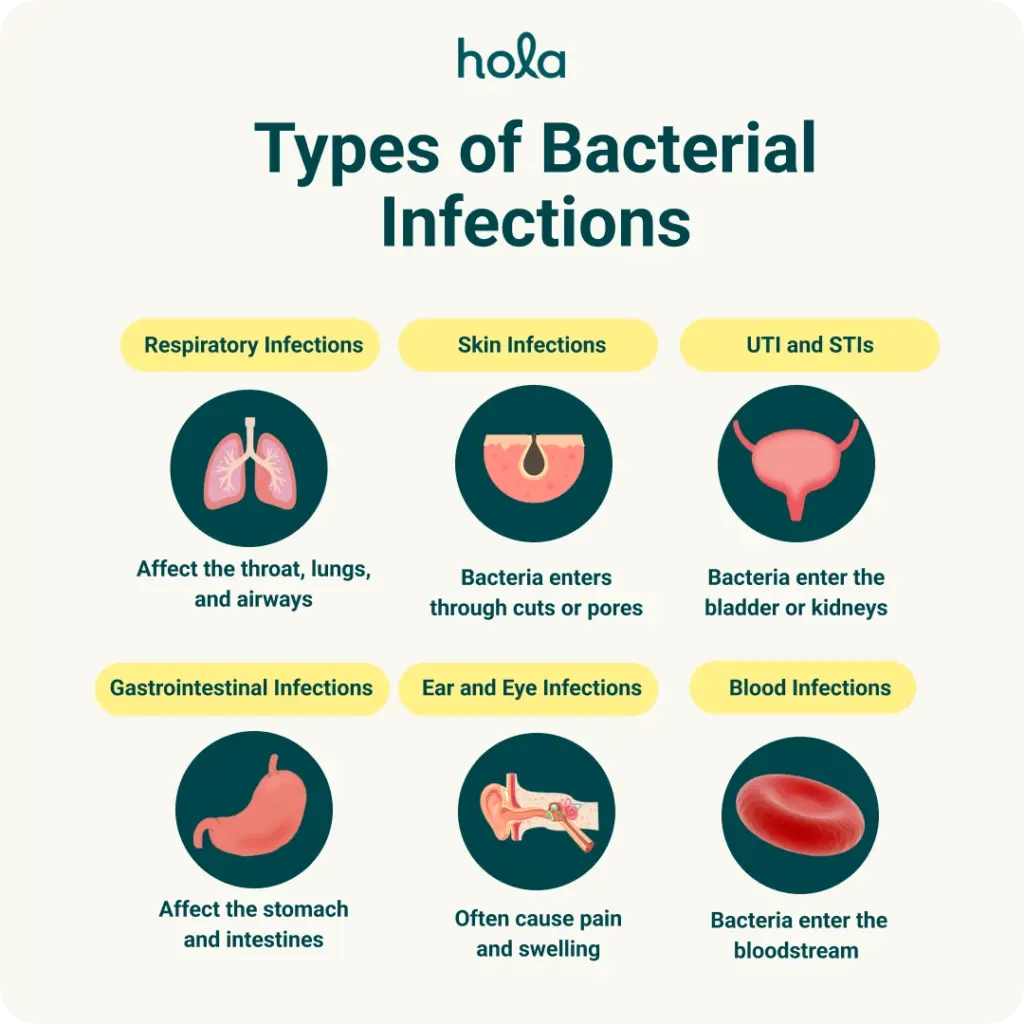
Bacterial growth is a primary cause of Urinary Tract Infections (UTIs) and Sexually Transmitted Infections (STIs), as well as more severe conditions such as blood infections.
Symptoms of Bacterial infections
- Flu-like symptoms: Fever, fatigue, chills, and excessive sweating.
- Respiratory distress: Persistent cough (with or without mucus), a sore throat, shortness of breath, or sharp chest pain.
- Skin and wound changes: Redness, warmth, swelling, and the presence of pus or drainage from a wound.
- Digestive issues: Stomach cramps, nausea, vomiting, or diarrhoea (sometimes bloody).
- Urinary discomfort: Pain or burning during urination, a frequent urge to go, and cloudy or strong-smelling urine.
- Severe systemic signs: A rapid heart rate, low blood pressure, and sudden confusion or dizziness.
Treatment and prevention of bacterial infections
The first step is to speak to a GP and complete the course of care or medication, if any. With a GP’s advice, some prevention methods could include:
- Practise good hygiene by washing hands regularly with soap and water.
- Stay up to date on vaccinations
- Proper food handling
- Avoid close contact with sick individuals
- Boost your immune system
Hola Health provides a fast and convenient way for you to see a doctor online in minutes, 24/7 across Australia. Much like an in-person GP clinic, our AHPRA-registered Australian telehealth doctor will conduct a comprehensive assessment to provide the best possible care, instantly.
Speak to our doctors 24/7
Providing consults for
Helpful resources
Download our Mobile App for better performance
- Book appointments instantly.
- Stay connected wherever you are.
- Experience healthcare, uninterrupted.
Scan the QR Code to download the app instantly