

- Home
- /
- Health Conditions
- /
- Bad Breath
Bad breath
Bad breath is due to oral hygiene or temporary factors like food or dry mouth; it can be controlled. However, if bad breath is linked to a medical condition, such as gum disease or diabetes, ongoing treatment of the underlying issue is necessary. Here’s more.
When to consult a doctor for bad breath?
If bad breath persists despite good oral hygiene
If your bad breath doesn’t improve even after brushing, flossing, and using mouthwash, it could signal other infections or diseases. See a doctor for persistent bad breath and identify the root cause.
If bad breath is accompanied by other symptoms
If you experience metallic taste, dry mouth, mouth sores or difficulty swallowing, it could point to certain underlying conditions such as diabetes, kidney stones or throat infections. Seek medical opinion from a doctor in this case.
If there are signs of infection or disease
Bad breath caused by swollen gums, bleeding, or cavities should not be ignored. These may indicate gum disease or tooth decay, which can worsen if left untreated. Get medical advice from a doctor to prevent further complications.
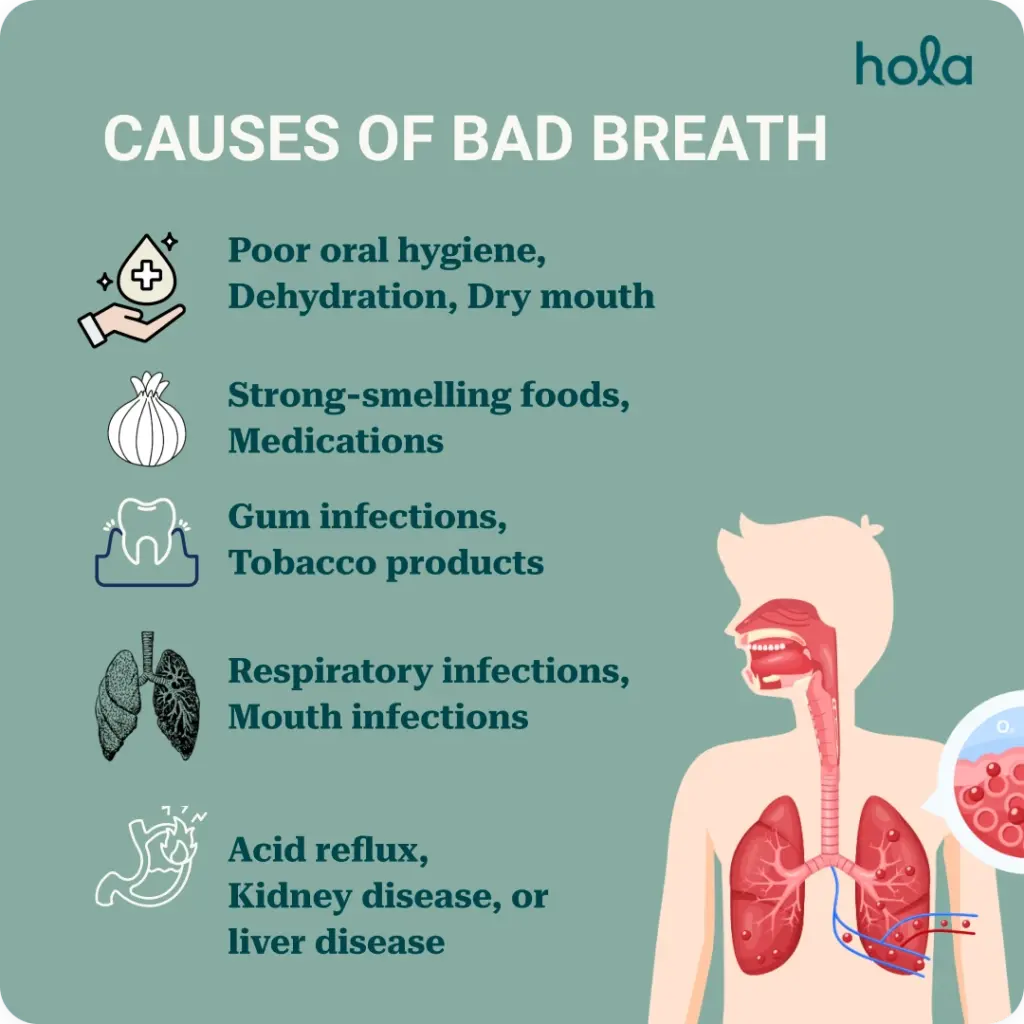
Causes of bad breath
- Poor oral hygiene, such as not brushing well or flossing
- Strong-smelling foods like garlic, onions, and spices
- A lack of saliva, due to dehydration, medications, or a certain condition
- Gum infections can result in foul-smelling breath due to bacteria in the gums.
- Tobacco products dry out the mouth and leave a persistent odour, while also increasing the risk of gum disease.
- Respiratory infections (like sinusitis or bronchitis), tonsillitis, or mouth infections like abscesses can produce foul odours.
- Acid reflux or ulcers
- Diabetes, kidney disease, or liver disease can cause distinctive odours in the breath.
Prevention
Some prevention steps, after a GP consultation, can include:
- Brush your teeth at least twice a day, floss daily, brush your tongue and use an antibacterial mouthwash.
- Drink plenty of water throughout the day to prevent dry mouth.
- Chewing gum can stimulate saliva production, helping to keep your mouth moist and fresh.
- Limit foods like garlic, onions, and strong spices, which can temporarily affect your breath.
- Smoking and tobacco use contribute to bad breath and dry mouth. Quitting smoking can significantly improve your breath and overall oral health.
- Routine dental checkups help identify and treat underlying issues like gum disease, cavities, or infections that can cause bad breath.
- If your bad breath is caused by an underlying condition such as GORD, diabetes, or sinus infections, addressing and managing the condition can help improve your breath.
- Rinsing with a mix of water and baking soda may help neutralise odours. Note: Apple cider vinegar rinses are acidic and may affect tooth enamel with regular use — speak with your dentist before using.
Telehealth assessment for bad breath
It is important to speak to a GP first to understand and manage your bad breath.
Hola Health provides a convenient way for you to consult a doctor online, 24/7 across Australia. Our AHPRA-registered Australian online GP can conduct a comprehensive assessment to provide an appropriate care.
Clinical note: An online GP consult provides medical advice for persistent halitosis and evaluates if an in-person assessment, dental referral, or diagnostic tests (such as blood glucose monitoring for diabetes or kidney function tests) are required. Telehealth is a complementary service; a physical examination of the oral cavity and throat is required for identifying local infections like tonsillitis or dental abscesses. Online GPs can provide e-scripts, pathology referrals or specialist referrals if clinically indicated. Diagnosis via telehealth relies on the accuracy of the symptoms reported and visual assessment via video, where possible. Your GP may discuss the link between oral health and systemic conditions like GORD or metabolic disorders. In case of sudden difficulty breathing, severe swelling of the throat or tongue, or an inability to swallow, call 000 or visit an Emergency Department immediately. We recommend sharing your consult summaries with your regular GP to ensure continuity of care.

Frequently Asked Questions
How to get rid of bad breath?
Good oral hygiene, such as brushing and flossing regularly, tongue cleansing, staying hydrated, and visiting the dentist, can help with bad breath. Avoiding smoking and limiting meals with strong odours might also assist. A medical professional should evaluate persistent poor breath to rule out underlying causes.
Note: This information is for educational purposes only. You should consult a medical practitioner before attempting home remedies or lifestyle changes to ensure they are safe for your specific condition.
Is bad breath contagious?
No. Bad breath isn’t generally communicable. However, diseases or oral health conditions that cause foul breath can occasionally be transmitted from person to person.
Can a Hola Health medical practitioner help manage persistent bad breath?
Yes. A medical practitioner may use telehealth to assess symptoms and provide management suggestions. Telehealth consultation is an alternative for convenience, but persistent issues typically require a physical dental or clinical evaluation.
Can a Hola Health doctor refer me for further tests if bad breath persists?
Yes. If symptoms continue or an underlying illness is suspected, doctors may provide referrals or conduct further investigations if clinically necessary.
Is bad breath a sign of an underlying health condition?
Yes. Dental problems, sinus infections, GORD, dry mouth, tonsillitis, or other medical conditions may cause persistent bad breath. A medical examination may help determine the reason.
Speak to our doctors 24/7
Helpful resources




Download our Mobile App for better performance
- Consult a GP anytime you need to.
- Stay connected wherever you are.
- Experience healthcare, uninterrupted.
 Scan the QR Code to download the Hola app.