A bladder infection, also known as cystitis, is a common type of urinary tract infection (UTI) that occurs when bacteria, usually E. coli, enter the bladder and cause inflammation. Get medical advice for bladder infection from licensed online doctors in Australia, anywhere, anytime.
When to consult a doctor for a bladder infection?
If symptoms don’t improve within a few days
If burning, pain during urination, or frequent urges continue without relief after 2–3 days, it may indicate a worsening UTI. Seek medical advice to prevent complications.
If symptoms are severe or unusual
See a doctor immediately if you have severe lower abdominal or back pain, fever, chills, nausea, or blood in urine, as these may suggest the infection has reached the kidneys.
If you are at higher risk or get recurrent infections
Consult a doctor if you have repeated UTIs or if you’re pregnant, diabetic, have a weak immune system, or if you’re a male experiencing UTI symptoms, as these cases may require specialised care.
This guide does not replace professional care. Consult a doctor to manage your symptoms. In emergencies, call 000 or visit a hospital immediately. The content is research-backed & medically reviewed by Dr. Ammar AL-ANI, MBChB, CCBST, AMC
Causes and symptoms
Bladder infection causes
Bacterial infections are a potential cause esp Escherichia coli (E. coli), a bacterium from the digestive tract.
Wiping from back to front can transfer bacteria from the anus to the urethra, increasing infection risk.
Sexual activity can introduce bacteria into the urinary tract
Long-term or improper catheter use can allow bacteria to enter directly into the bladder.
Diaphragms and spermicides can upset the natural balance of bacteria and increase UTI risk.
Postmenopausal women may have a higher risk due to reduced oestrogen, which affects bladder lining protection.
Conditions like diabetes reduce the body’s ability to fight infections.
Blockages or structural issues can increase infection susceptibility.
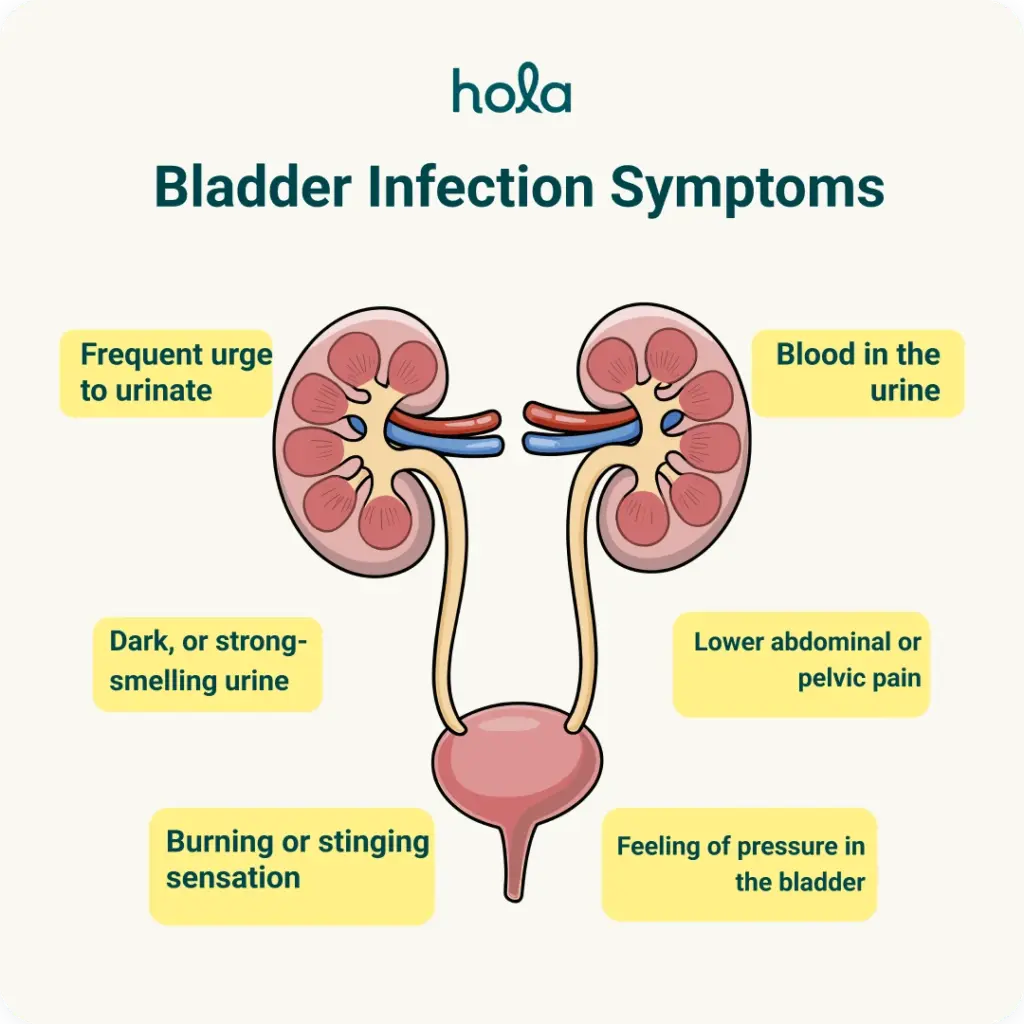
Bladder infection symptoms
Frequent urge to urinate, even if little comes out
Burning or stinging sensation during urination
Cloudy, dark, or strong-smelling urine
Lower abdominal or pelvic pain or pressure
Blood in the urine (pink, red, or cola-coloured)
Types and prevention
Types of bladder infections
Acute bladder infection (acute cystitis): Caused by bacteria, usually E. coli. It leads to a sudden onset of symptoms like burning urination, frequent urge to pee, and pelvic pain.
Chronic bladder infection: Recurs frequently (two or more times in six months, or three times in a year) and may be due to underlying health issues like kidney stones, diabetes.
Complicated bladder infection: Usually occurs in people with risk factors such as pregnancy, diabetes, urinary catheters, kidney stones or structural problems in the urinary tract.
Interstitial cystitis (Painful Bladder Syndrome): Usually not caused by bacteria but it is a chronic bladder condition causing pain, pressure, and frequent urination.
Haemorrhagic cystitis: Involves inflammation of the bladder with bleeding. The causes could be infections, certain medications (like chemotherapy drugs), or radiation therapy.
Prevention steps after the GP’s advice
Drink plenty of water: This helps flush out bacteria from your bladder.
Avoid bladder irritants: Cut down on caffeine, alcohol, spicy foods, and acidic drinks while healing.
Empty your bladder often: Don’t hold in urine; frequent urination helps clear bacteria.
Use heat therapy: A warm heat pack on your lower abdomen may relieve pain.
Practise good hygiene: Wipe front to back and stay clean to prevent further infection.
Hola Health provides a fast and convenient way for you to see a doctor online in minutes, 24/7 across Australia. Much like an in-person GP clinic, our AHPRA-registered Australian online GP will conduct a comprehensive assessment to provide the best possible care, instantly.
Telehealth assessment for bladder infection
It is important to speak to a GP first to understand and manage your symptoms.
Hola Health provides a convenient way for you to consult a doctor online, 24/7 across Australia. Our AHPRA-registered Australian online GP will conduct a comprehensive assessment to provide the best possible care.
Clinical note: An online GP consult provides medical advice for urinary symptoms and evaluates if an in-person assessment, physical examination (to check for kidney tenderness), or diagnostic tests (such as a urine MCS or dipstick) are required. Telehealth is a complementary service; a physical examination is needed for assessing systemic involvement or structural issues. Online GPs can provide pathology referrals, medical certificates, or prescriptions if clinically indicated. Diagnosis via telehealth relies on the accuracy of the symptoms reported. In case of severe back/flank pain, high fever with chills, vomiting, or if you are pregnant and notice urinary changes, call 000 or visit an Emergency Department immediately. We recommend sharing your consult summaries with your regular GP to ensure continuity of care.







 Scan the QR Code to download the Hola app.