Gain instant access to a registered practitioner and get medical advice regarding conjunctivitis within minutes from anywhere in Australia, 24/7.
When to consult a doctor for conjunctivitis?
If symptoms worsen or do not improve
if eye redness, swelling, or discharge becomes more severe or does not improve within a few days of home care or over-the-counter treatment, see a doctor.
If you have pain, vision changes, or discharge
If you have significant eye pain, blurred vision, sensitivity to light, or thick yellow or green discharge, which may indicate a bacterial infection. Seek medical attention immediately.
If you are at high risk or its recurrent
Consult a doctor if conjunctivitis keeps returning, you have frequent flare-ups, a weakened immune system, existing eye conditions, or are taking medications that affect immunity.
This guide does not replace professional care. Consult a doctor to manage your symptoms. In emergencies, call 000 or visit a hospital immediately. The content is research-backed & medically reviewed by Dr Vishnu Gopalan, Co-Founder & Chief Medical Officer at Hola.
Causes and symptoms
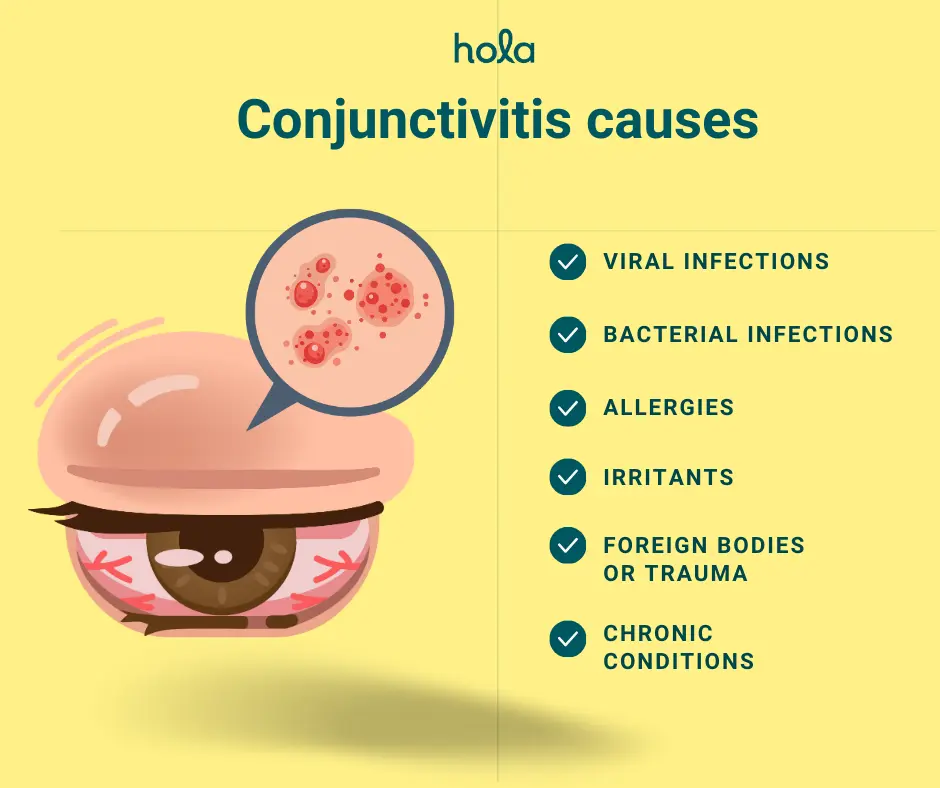
Conjunctivitis causes
Viral infections: The most common cause of conjunctivitis. It’s often caused by adenovirus and can be spread through contact with infected respiratory droplets, eye secretions, or surfaces.
Bacterial infections: Bacterial conjunctivitis is caused by bacteria like Staphylococcus aureus, Streptococcus pneumoniae, and Haemophilus influenzae.
Allergies: Allergic conjunctivitis occurs when the eyes react to allergens like pollen, dust, pet dander, or mould.
Irritants: Exposure to irritants like smoke, chemicals, chlorine in swimming pools, or makeup can cause conjunctivitis.
Foreign bodies or trauma: Any foreign object in the eye or injury to the eye can lead to conjunctivitis.
Chronic conditions: Conditions like dry eye can increase the likelihood of developing conjunctivitis.
Conjunctivitis symptoms
Redness: The white part of the eye becomes red or pink due to inflammation of the conjunctiva.
Swelling: The conjunctiva may appear swollen or puffy, especially around the eyelids.
Watery discharge: Depending on the cause, the eye may produce a clear, watery discharge (viral or allergic) or a thicker, yellow or green discharge (bacterial).
Itchiness or irritation: The eye may feel irritated, gritty, or itchy, often leading to rubbing.
Eye sensitivity: Light sensitivity can occur, making bright lights uncomfortable.
Swollen eyelids: In some cases, the eyelids themselves may become swollen or tender to the touch, especially with allergic conjunctivitis
How long does the pink eye last?
Viral conjunctivitis: This type is the most common and often resolves on its own within 1 to 2 weeks. It typically starts with mild redness and watery discharge, improving gradually over several days.
Bacterial conjunctivitis: Symptoms usually improve within 2 to 5 days with antibiotic treatment, though it may take up to 1-2 weeks to fully resolve without medication.
Allergic conjunctivitis: This type can last if the person is exposed to the allergen, which could be days to weeks.
Irritant-induced conjunctivitis: This form of pink eye will usually improve within hours to a day once the irritant (such as smoke, chemicals, or dust) is removed.
Prevention
Wash your hands regularly, especially after touching your eyes.
Avoid touching or rubbing your eyes to reduce the risk of infection.
Clean shared items such as towels, pillowcases, and face cloths frequently.
If you wear contact lenses, clean them properly and never share them with others.
Minimise exposure to known allergens if you are prone to allergic conjunctivitis.
Avoid close contact with infected individuals to prevent the spread of viral or bacterial conjunctivitis.
Seek immediate medical attention if symptoms persist or worsen over time.
Hola Health provides a fast and convenient way for you to see a doctor online in minutes, 24/7 across Australia. Much like an in-person GP clinic, our AHPRA-registered Australian online GP will conduct a comprehensive assessment to provide the best possible care, instantly.






 Scan the QR Code to download the Hola app.