

- Home
- /
- Health Conditions
- /
- Bacterial Infections
Bacterial Infections
When to consult a doctor for bacterial infection?
If you have a high or persistent fever
If you have a fever above 38.5 degrees or a fever that continues for several days or is accompanied by other symptoms such as chills or body aches, it may indicate a bacterial infection. It is important to see a doctor and seek medical advice.
If symptoms worsen or don’t improve
When pain, swelling, breathing difficulty, or illness lasts more than 10 days, it could signal a bacterial infection that needs proper treatment. Worsening symptoms or recurring illness require prompt medical attention.
If infections become severe or keep returning
Pus-filled skin infections, or persistent vomiting and diarrhoea are signs of serious infection. Frequent bacterial infections may also indicate a weakened immune system, and it’s best to consult a doctor for proper treatment.
This guide does not replace professional care. See a doctor to manage acne symptoms. In emergencies, call 000 or visit a hospital immediately. The content is research-backed & medically reviewed by Dr Vishnu Gopalan, MBBS, FRACGP, Co-Founder and Chief Medical Officer, Hola Health & Dr. Ammar AL-ANI, MBChB, CCBST, AMC. Last updated on 7 Oct 2026
Symptoms of Bacterial Infections
- Flu-like symptoms: Fever, fatigue, chills, and excessive sweating.
- Respiratory distress: Persistent cough (with or without mucus), a sore throat, shortness of breath, or sharp chest pain.
- Skin and wound changes: Redness, warmth, swelling, and the presence of pus or drainage from a wound.
- Digestive issues: Stomach cramps, nausea, vomiting, or diarrhoea (sometimes bloody).
- Urinary discomfort: Pain or burning during urination, a frequent urge to go, and cloudy or strong-smelling urine.
- Severe systemic signs: A rapid heart rate, low blood pressure, and sudden confusion or dizziness. These symptoms may indicate sepsis — a life-threatening emergency. Call 000 immediately if you or someone else shows these signs.
Causes of Bacterial Infections
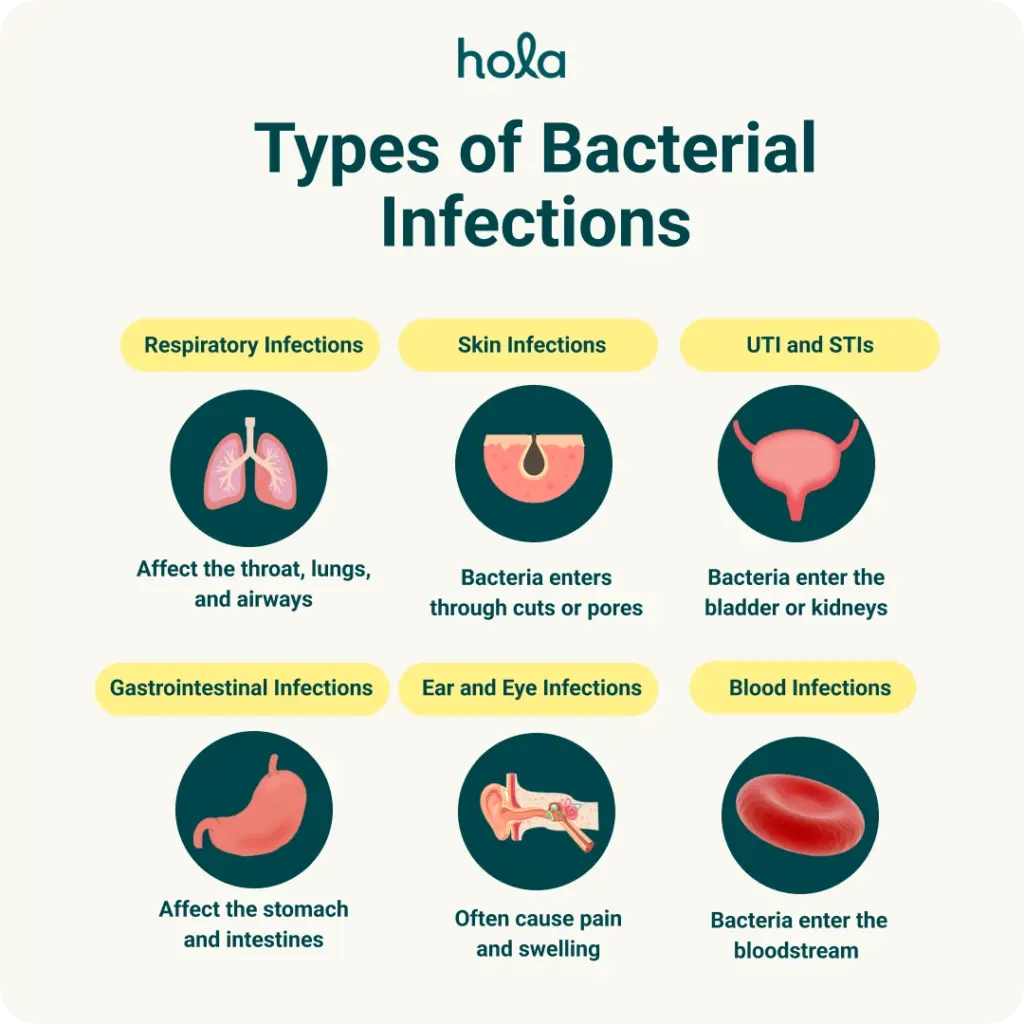
Bacterial infections occur when harmful bacteria enter the body and multiply.
- Wounds: Bacteria can enter through damaged skin from cuts, wounds, or bites.
- Contaminated food or water: Consuming contaminated food or water can introduce harmful bacteria into the body.
- Airborne droplets: Some germs can spread through tiny droplets released when an infected person coughs or sneezes.
- Contaminated surfaces: Touching a contaminated surface and then touching your eyes, nose, or mouth can spread bacteria.
- Blood or bodily fluids: Some bacterial illnesses can be transmitted through contact with contaminated blood or other body fluids.
- Overgrowth of normal bacteria: Bacteria that usually live on or inside your body might multiply excessively and cause illness.
Prevention for Bacterial illnesses
- Wash your hands: Wash your hands properly with soap and water, especially before eating and after using the restroom.
- Keep wounds clean: Keep wounds clean and covered when necessary.
- Practise food safety: Cook and store food properly.
- Avoid sharing personal items: Do not share anything that may come into contact with bodily fluids.
- Cover coughs and sneezes: Use a tissue or your elbow to reduce the spread of infection.
- Take medications only when prescribed: Do not use leftover medications or share them with others.
Management Option
The type and location of the bacterial infection determine the appropriate treatment.
- Medications: Doctors may prescribe appropriate medications when they are appropriate for a specific bacterial infection.
- Finish the course: Take medications exactly as prescribed.
- Symptom relief: Rest, hydration, and appropriate pain or fever management may alleviate symptoms.
- Testing: Your doctor may request blood, urine, stool, or swab tests to determine the source of an illness.
- Further treatment: Severe infections may require hospital care.

Get the care you need with Hola Health

Online doctor consult
From $39


Medical certificate
From $14.90
Frequently Asked Questions
What types of bacterial infections can an online doctor manage?
A telehealth consultation is a complementary option to help assess and manage some minor bacterial illnesses:
- Sore throat symptoms
- Skin Infections
- Urinary tract infections (UTI)
- Ear infections.
- Sinus Infections
- Mild respiratory illnesses
More severe infections may necessitate in-person consultation or hospital admission.
Can an online doctor refer me for in-person care or specialist review?
Yes. If clinically indicated, a Hola Health doctor may recommend an in-person examination, a hospital review, or a specialist referral to another doctor.
Will I obtain a medical certificate if I need to take time off work due to a bacterial infection?
It depends. If the doctor determines that it is clinically suitable, a medical certificate may be granted. Medical certifications are not guaranteed.
How do I know if I have a bacterial infection rather than a viral infection?
It depends. Some symptoms overlap, necessitating a medical examination or testing. When analysing infections, doctors consider factors such as symptom duration, fever, oedema, discharge, and examination findings.
When is a bacterial infection considered an emergency?
Seek urgent medical management if you have:
- Worsening symptoms not responding to management
- Difficulty breathing
- Severe chest pain
- High fever and disorientation
- Rapidly spreading skin redness
- Severe dehydration
- Persistent vomiting
If you have life-threatening symptoms or serious medical concerns, contact 000 or go to the local Emergency Department right away.
When to see a doctor in person for bacterial illnesses?
See a doctor in person if:
- You have a high or persistent temperature.
- Your symptoms are severe or worsening.
- You experience extreme pain, swelling, or redness.
- You have trouble breathing.
- You show signs of a severe infection, such as disorientation, acute weakness, or rapidly worsening symptoms.
- You have a weakened immune system and develop signs of illness.
Your symptoms are not improving despite treatment.
Speak to our doctors 24/7
Helpful resources



Download our Mobile App for better performance
- Consult a GP anytime you need to.
- Stay connected wherever you are.
- Experience healthcare, uninterrupted.
 Scan the QR Code to download the Hola app.