

- Home
- /
- Health Conditions
- /
- Blisters
Blisters
Blisters are small, fluid-filled sacs that form on the skin’s surface because of friction, burns, or certain skin conditions. Consult an AHPRA-registered practitioner online about blister symptoms, available 24/7 across Australia.
When to consult a doctor for blisters?
If blisters are large and painful
If you have blisters that are large and painful, especially those in areas that make it difficult to heal or move comfortably, should be checked by a doctor. They may need drainage or protection to prevent infection.
If your blisters show signs of infection
If blisters show signs of infection or spread Seek medical advice if the blister becomes red, swollen, filled with pus, or if multiple blisters appear or spread rapidly. These could indicate an infection or an underlying skin condition that needs treatment.
If blisters are from burns or unknown causes
If blisters are from burns, unknown causes, or frequent Blisters caused by burns, of unknown origin, or that recur often should be evaluated by a GP. People with weakened immunity should also consult a doctor promptly to avoid complications.
This guide does not replace professional care. Consult a doctor to manage your symptoms. In emergencies, call 000 or visit a hospital immediately. The content is research-backed & medically reviewed by Dr. Ammar AL-ANI, MBChB, CCBST, AMC.
Causes and stages of blisters
Blisters causes
- Repeated rubbing or pressure on the skin
- Sunburn, hot surfaces, or scalding liquids
- Viral infections like herpes simplex (cold sores), varicella zoster (shingles or chickenpox)
- Contact with allergens such as poison ivy or certain chemicals
- Conditions like eczema, pemphigus, or bullous impetigo
- Exposure to extreme cold can damage the skin
- Contact with harsh chemicals, detergents, or solvents
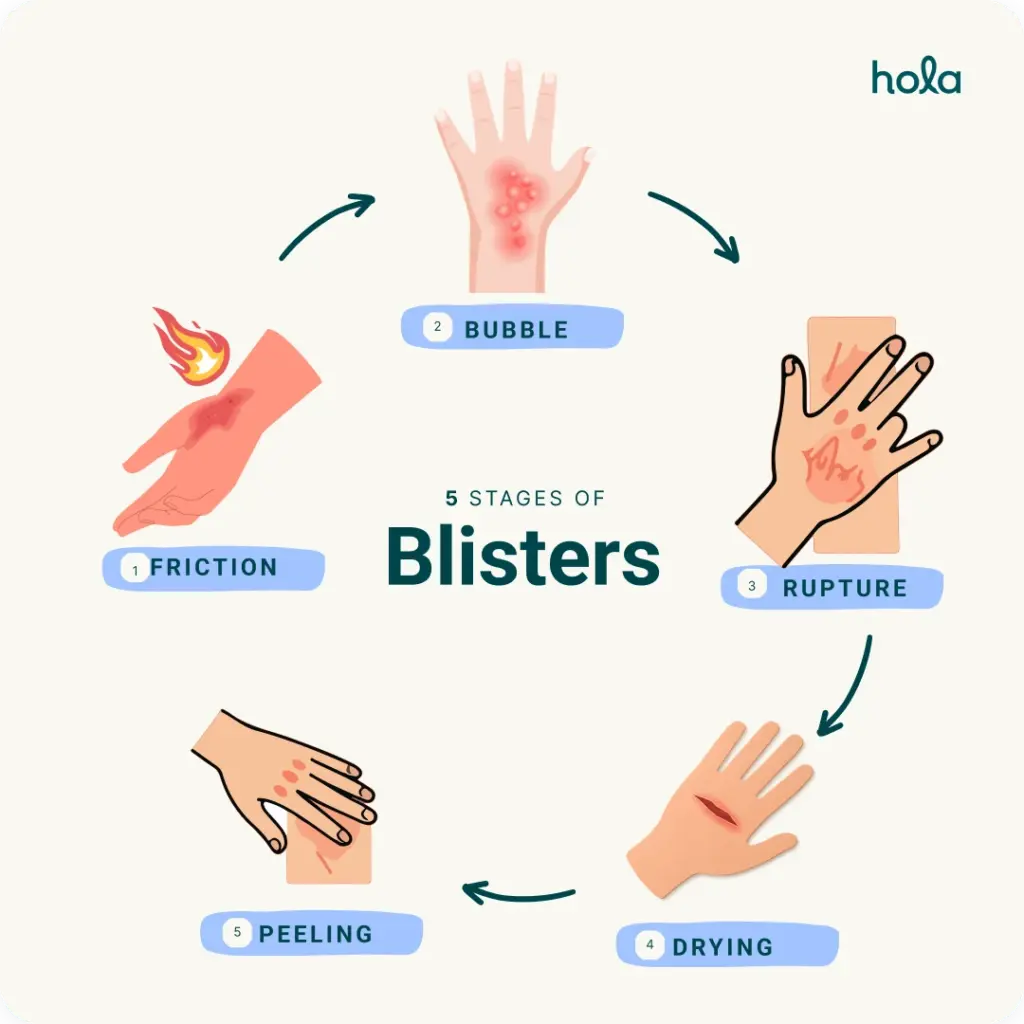
Blisters stages
- The “Hot Spot” (Friction) – Before a blister appears, the skin often becomes red, warm, and tender.
- Fluid Formation (The Bubble) – As the skin layers separate, a clear fluid called serum fills the space to protect the tissue underneath. This creates the characteristic “bubble.”
- Rupture (Draining) – If the pressure becomes too great or the skin is rubbed further, the blister may tear or “pop.” The fluid drains out, leaving the underlying raw skin exposed.
- Healing and Drying – Once the fluid is gone, the body begins growing a new layer of skin underneath the blister. The old, dead skin on top will eventually dry out and harden.
- Peeling – In the final stage, the dried skin naturally peels away, revealing the healed, pinkish skin underneath.
Management and prevention
The healing time for blisters varies depending on their size, location, and cause. Generally:
- Small blisters: Most small blisters heal within 3 to 7 days as the fluid gradually absorbs, and the skin underneath regenerates.
- Larger blisters: Larger blisters may take 1 to 2 weeks to heal fully, depending on their severity and whether the blister was drained or left intact.
- Blisters from burns or infections: Blisters caused by burns or infections may take longer to heal, sometimes up to 2 to 3 weeks or more.
Some prevention methods after you consult with a GP can include:
- Ensure your shoes fit well and are not too tight or too loose to avoid friction.
- Use blister pads, bandages, or moleskin in areas that are prone to friction.
- Moisture can increase friction, so keep your feet dry by wearing moisture-wicking socks.
- Wear socks made of materials that wick moisture.
- Apply petroleum jelly or blister prevention tape.
- Wear gloves or other protective equipment to minimise friction.
- Protect your skin from extreme temperatures, as burns and frostbite can lead to blisters.
Telehealth assessment for blisters
It is important to speak to a GP first to understand and manage your symptoms. Hola Health provides a convenient way to consult an AHPRA-registered doctor online, 24/7 across Australia.
Start your telehealth consult now
Clinical note: An online GP consult provides medical advice for blister management and evaluates if an in-person assessment or physical examination is required. Telehealth is a complementary service; a physical examination may be required for identifying secondary bacterial infections (cellulitis) or viral patterns (such as Shingles). Online GPs can provide a script online, med cert, pathology referrals (for viral swabs), or referrals for specialised wound care if clinically indicated. Diagnosis via telehealth relies on the quality of the visual assessment provided via video or high-resolution photos. Our GPs may prioritise the prevention of infection and the assessment of underlying causes in high-risk patients (e.g., those with diabetes). In case of a blister accompanied by a spreading red rash, high fever, blisters on the face/eyes, or a severe burn, call 000 or visit an Emergency Department immediately. We recommend sharing your consult summaries with your regular GP to ensure continuity of care.

Frequently Asked Questions
How to manage mouth blisters
Mouth blisters may improve with drinking fluids, avoiding hot or acidic meals, and practising proper dental hygiene. If the symptoms are severe, recurring, or interfere with eating and drinking, medical attention may be required.
Note: This information is for educational purposes only. You should consult a medical practitioner before attempting home remedies to ensure they are safe for your specific condition.
What causes cold sores and fever blisters?
The herpes simplex virus frequently causes cold sores and fever blisters. Stress, illness, sun exposure, or a weakened immune system are all potential triggers.
How to heal blisters on feet overnight
Foot blisters seldom heal completely overnight. Protecting the region, decreasing friction, wearing comfortable shoes, and keeping the blister clean may aid in healing and alleviate discomfort.
Are fever blisters contagious?
Yes. Fever blisters can spread through intimate contact, such as kissing or sharing personal things, particularly while the blisters are active.
How long should a blister last?
Minor blisters often heal within a few days to two weeks, depending on their cause and severity. Healing may take longer if blisters become infected or are regularly inflamed.
Can a Hola Health doctor refer me for further testing or specialist care for blisters?
Yes. If the blisters are severe, persistent, infectious, or associated with an underlying medical problem, doctors may arrange referrals to specialists or send you for further investigations.
Can an online doctor assess and manage blisters?
Yes. Doctors can check blister symptoms via telehealth consultation and offer management advice, medications if clinically appropriate, or referrals as needed. Some circumstances may still require an in-person assessment.
Speak to our doctors 24/7
Helpful resources



Download our Mobile App for better performance
- Book appointments instantly.
- Stay connected wherever you are.
- Experience healthcare, uninterrupted.
 Scan the QR Code to download the app instantly