Brain fog can stem from lifestyle, medical and hormonal factors. Brain fog isn’t just feeling a little scattered. It can affect memory, concentration, and your ability to make decisions, often leaving you anxious, frustrated, or emotionally drained. Many people with brain fog also experience dips in their mood and motivation, which can impact daily life and mental well-being. Here’s more.
When to consult a doctor for brain fog?
If brain fog lasts longer than usual
If you feel sluggish, forgetful, or unfocused for several days or weeks without improvement, it may be more than just tiredness. Persistent brain fog could point to a health concern that needs medical attention.
If brain fog is severe or has other symptoms
If your brain fog affects your memory, focus, or work performance, or if it comes with other symptoms like severe headaches, dizziness, vision changes, or mood swings, you need to consult a doctor immediately.
If brain fog occurs after injury or illness
If brain fog appears after a viral infection such as COVID-19, a head injury, or starting a new medication, it could be linked to certain conditions. It’s best to seek medical advice from a doctor.
This guide does not replace professional care. Consult a doctor to manage your symptoms. In emergencies, call 000 or visit a hospital immediately. The content is research-backed & medically reviewed by Dr Vishnu Gopalan, Co-Founder & Chief Medical Officer at Hola.
Causes and symptoms
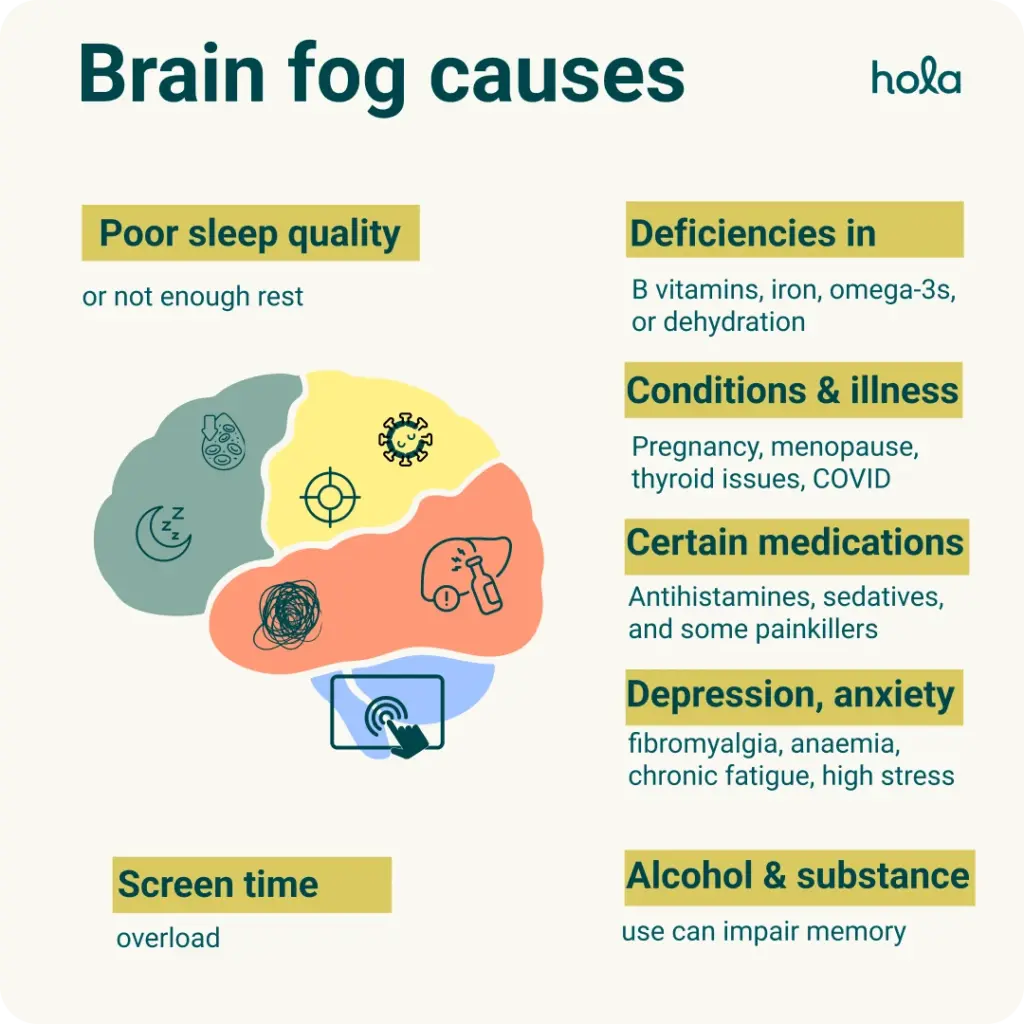
Brain fog causes
Poor sleep quality or not enough rest
Deficiencies in B vitamins, iron, omega-3s, or dehydration.
Pregnancy, menopause, thyroid issues, or hormonal imbalances. After illnesses like COVID-19 or the flu, there could be occurrences of brain fog
Certain medications like Antihistamines, sedatives, and some painkillers
Depression, anxiety, fibromyalgia, anaemia, chronic fatigue syndrome, or autoimmune disorders. High stress hormones disrupt memory and focus
Alcohol and substance use
Screen time overload can exhaust mental bandwidth.
Brain fog symptoms
Difficulty concentrating or staying focused on tasks
Forgetfulness or misplacing things, missing appointments.
Mental fatigue even after light activities
Confusion or disorientation
Slow thinking
Feeling spaced out or detached from your surroundings
Poor memory or short-term memory lapses
Difficulty finding the right words or following conversations
Irritability or frustration linked to cognitive sluggishness
Prevention
Some prevention steps, after a GP consultation, can include:
Get quality sleep of 7–9 hours nightly.
Stay physically active through regular exercise.
Eat brain-friendly foods. Include omega-3-rich fish, berries, leafy greens, nuts, whole grains, and plenty of water.
Challenge your mind using puzzles, reading, learning new skills or languages, and memory games.
Practise mindfulness or meditation as it reduces stress.
Stay socially connected through engaging conversations and social activities
Chronic stress impairs memory; use relaxation techniques or hobbies you enjoy.
Limit alcohol and avoid smoking.
Telehealth assessment for brain fog
It is important to speak to a GP first to understand and manage your brain fog symptoms.
Hola Health provides a convenient way for you to consult a doctor online, 24/7 across Australia. Our AHPRA-registered Australian online GP will conduct a comprehensive assessment to provide the best possible care.
Clinical note: An online GP consult provides medical advice for cognitive symptoms and evaluates if an in-person assessment, neurological examination, or diagnostic tests (such as blood panels for iron, B12, or thyroid function) are required. Telehealth is a complementary service; a physical examination is often necessary to rule out underlying organic causes. Online GPs can provide pathology referrals or specialist referrals if clinically indicated. Diagnosis via telehealth relies on the accuracy of the symptoms reported and the patient’s medical history. Following 2026 Australian clinical guidelines, your GP may discuss lifestyle interventions or screen for “Long COVID” and mood-related factors. In case of sudden confusion, facial drooping, slurred speech, sudden weakness in limbs, or a severe “thunderclap” headache, call 000 or visit an Emergency Department immediately. We recommend sharing your consult summaries with your regular GP to ensure continuity of care.





 Scan the QR Code to download the app instantly
