

Manage Stress At Work: Dos And Don’ts To Prevent Burnout

Contents
 Facebook
  X
X  Copy Link
Summarise with AI:
 ChatGpt
  Google AI Mode
  Perplexity
  Claude
 This blog is for educational purposes only and does not replace professional medical advice or diagnosis. If you have health concerns, consult an AHPRA-registered telehealth GP or request a medical certificate online if clinically appropriate.
How to Manage stress at work
Set clear work boundaries
Setting boundaries helps safeguard your time, energy, and well-being.- Log off at a reasonable time
- Avoid checking emails after work hours
- Make use of annual leave and personal leave
Take regular breaks
Regular breaks support focus and reduce mental fatigue.- Take short breaks during the workday
- Step away from screens
- Stretch or go for a short walk
Prioritise tasks realistically
Managing workload expectations helps ease pressure.- Focus on what’s most important
- Break large tasks into smaller steps
- Set achievable daily goals
Talk to someone
Discussing issues early can help prevent stress from escalating.- Speak with your manager or HR
- Use Employee Assistance Programs (EAPs)
- Talk to a trusted colleague, friend, or family member
Look after your health outside work
Your wellbeing beyond the workplace affects your ability to handle work stress.- Maintain good sleep habits
- Eat balanced meals
- Stay active
- Make time for hobbies and relaxation
Seek professional help early
Early support can prevent burnout from worsening.- When stress affects well-being or performance
- GPs and mental health professionals can assess stress-related symptoms and recommend appropriate support.
Habits that increase burnout risk
Don’t ignore early warning signs
Overlooking warning signs often allows burnout to progress.- Pushing through constant exhaustion
- Normalising feeling overwhelmed
Don’t overwork regularly
Chronic overwork can lead to increased physical and mental strain.- Consistently working long hours
- Skipping breaks or leave
Don’t isolate yourself
Isolation can increase the weight of stress.- Bottling up stress
- Avoiding conversations about workload or wellbeing
Don’t rely on unhealthy coping strategies
Unhealthy habits often contribute to long-term stress.- Excess caffeine or alcohol
- Poor sleep routines
- Avoiding the issue instead of addressing it
Workplace rights and support
Australian workplace laws provide protections and support options for employees experiencing work-related stress.| Workplace support | Explanation |
| Flexible work arrangements | Eligible employees have the legal right to request flexible work arrangements under the Fair Work Act, though approval depends on reasonable business grounds. |
| Personal and sick leave | Can be used for mental health reasons |
| Employee Assistance Programs | Confidential counselling support |
| Safe work environment | Employers must protect employee well-being |
| Protection from discrimination | Mental health is protected under Australian law |
When is work stress becoming too much
You may need extra support if you experience:- Persistent anxiety or low mood
- Trouble sleeping most nights
- Feeling overwhelmed or emotionally detached
- Panic attacks
- Ongoing physical symptoms (headaches, stomach issues)
When to see a GP
Consult a GP if:- Stress affects daily functioning
- Mental health symptoms persist
- Physical symptoms worsen
- You need to discuss burnout, mental health support, or stress leave
- You require medical certificates or workplace adjustments
How Hola Health can help
Hola Health simplifies access to medical support when work stress becomes overwhelming. Doctors at Hola Health can help with:- Online GP consultations across Australia
- Support for stress, anxiety, and burnout
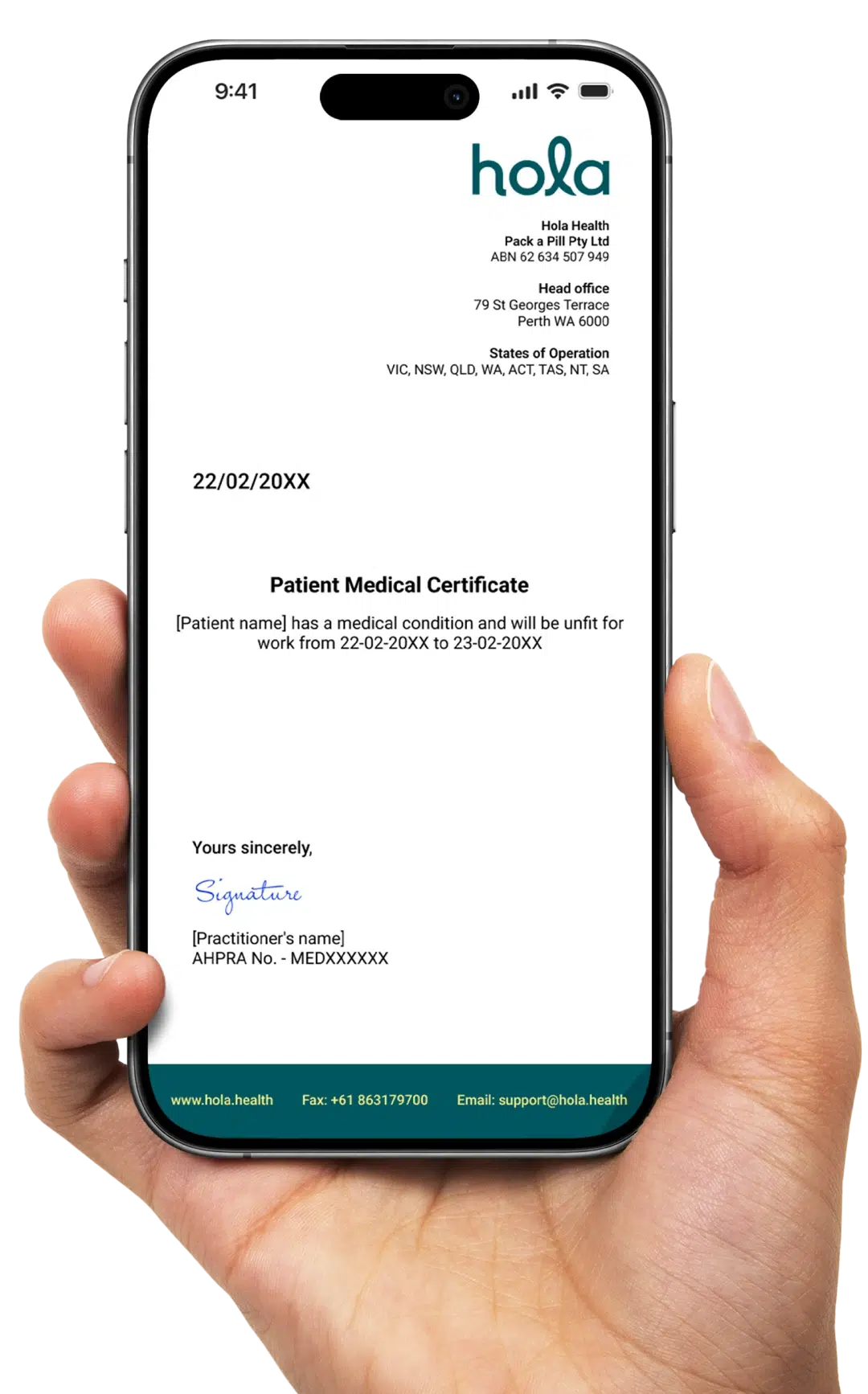
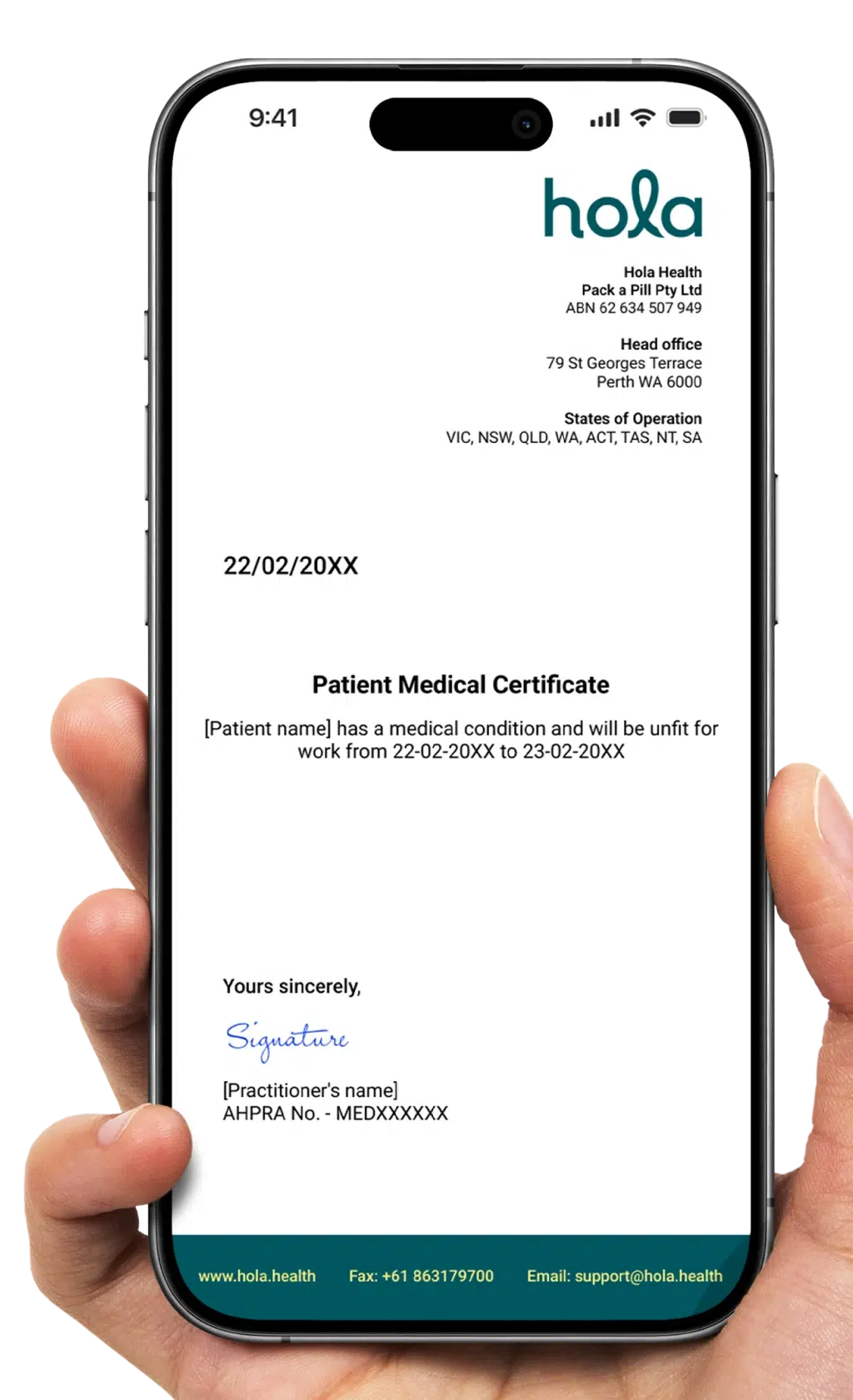
- Online Doctors Cert for stress-related leave from office
- Referrals to mental health specialists if needed
Conclusion
Work stress is common, but burnout can often be prevented. Recognising early signs, creating clear boundaries, and reaching out for support can make a meaningful difference. Prioritising mental health is not a sign of weakness; it’s an essential part of staying healthy, productive, and engaged at work.FAQs
Is work stress considered a health issue?
Yes. Chronic work stress can affect both mental and physical health and is recognised as a workplace health and safety issue in Australia.What’s the difference between stress and burnout?
Stress is a natural response to pressure and is usually short-term. Burnout develops when stress is prolonged and unmanaged, leading to emotional exhaustion and reduced functioning.Can I take sick leave for mental health in Australia?
Yes. Personal (sick) leave can be used for mental health reasons under Australian workplace laws.Can a GP provide a medical certificate for stress?
Yes. GPs can evaluate stress-related conditions and provide medical certificates when discussing burnout.How do I talk about burnout?
Begin by explaining how stress is affecting your work and well-being. Concentrate on potential solutions, like modifying your workload, implementing flexible schedules, or seeking temporary assistance.Consult an AHPRA-registered practitioner online, anytime
Consult NowAvailable 24/7 across Australia


Reference
Key Work Health and Safety Statistics Australia 2025 - reference linkSee a Aussie GP online, available 24/7
Download the app today.


Related Articles

How to Stop Overthinking? Easy Tips From Experts

Navigating the Depths of Depression: Understanding, Coping, and Seeking Help

Disclaimer
This blog is for general informational purposes only and does not indicate that Hola Health provides all treatments or preventive measures mentioned. It is not intended to be a substitute for professional medical advice. Always seek the guidance of your doctor or other qualified health professional with any questions you may have regarding your health or a medical condition. For emergencies please immediately contact 000. Any medical topics discussed are intended to educate, not to imply availability through Hola Health. Hola Health's telehealth services facilitate access to AHPRA-registered healthcare professionals in Australia; however, a telehealth consultation is not equivalent to an in-person medical examination. Telehealth may not be appropriate for all conditions, symptoms, or circumstances.