

Why UTI keep coming back? Reasons & management

Contents
 Facebook
  X
X  Copy Link
Summarise with AI:
 ChatGpt
  Google AI Mode
  Perplexity
  Claude
 This blog is for educational purposes only and does not replace professional medical advice or diagnosis. If you have health concerns, consult an AHPRA-registered telehealth GP or request a medical certificate online if clinically appropriate.
What does it mean if your UTI keeps coming back?
Recurrent UTIs can indicate several underlying conditions including:- Incomplete treatment or antibiotic resistance: If a UTI was not fully treated, bacteria may remain in the urinary tract and cause a recurrent infection. Some bacteria may also develop resistance to antibiotics, making them more difficult to treat.
- Weakened immune system: Conditions like autoimmune diseases can weaken the body’s ability to fight infections.
- Hormonal changes: For women, hormonal changes, especially during and after menopause, can affect urinary tract health, leading to an increased risk of UTI.
- Anatomical or structural issues: Conditions like kidney stones, urine retention, or structural abnormalities in the urinary tract can increase the risk of UTIs.
- Improper hygiene: improper wiping after using the toilet or exposure to irritants like soaps, can increase the risk of UTIs.
- Sexual activity: Engaging in sexual activity can introduce bacteria into the urinary tract, causing infection.
- Catheter use: urinary catheters increase the risk to UTIs.


How do you stop a UTI from coming back?
To prevent a urinary tract infection (UTI) from coming back, consider the following steps:- Ensure you drink enough fluids: Consuming a good amount of water daily helps eliminate bacteria from the urinary tract, preventing their buildup and the resulting infections.
- Respond to urination urges: Refraining from holding urine for extended periods can promote bacterial growth. Regularly emptying your bladder aids in flushing out harmful bacteria before they lead to an infection.
- Wipe from front to back: For women, it's essential to wipe from front to back after using the toilet to avoid transferring bacteria from the anus to the urethra, which can result in UTIs.
- Urinate post-intercourse: After engaging in sexual activity, urinating can help eliminate any bacteria that may have entered the urethra during intercourse, lowering the risk of infection.
- Steer clear of irritants: Avoid using scented soaps, bubble baths, and douches, as they can irritate the urinary tract and heighten the risk of infection.
- Choose loose, breathable attire: Select loose-fitting garments and cotton underwear to keep the area dry and reduce the chances of bacteria thriving in a warm, moist environment.
Preventing recurrent UTIs
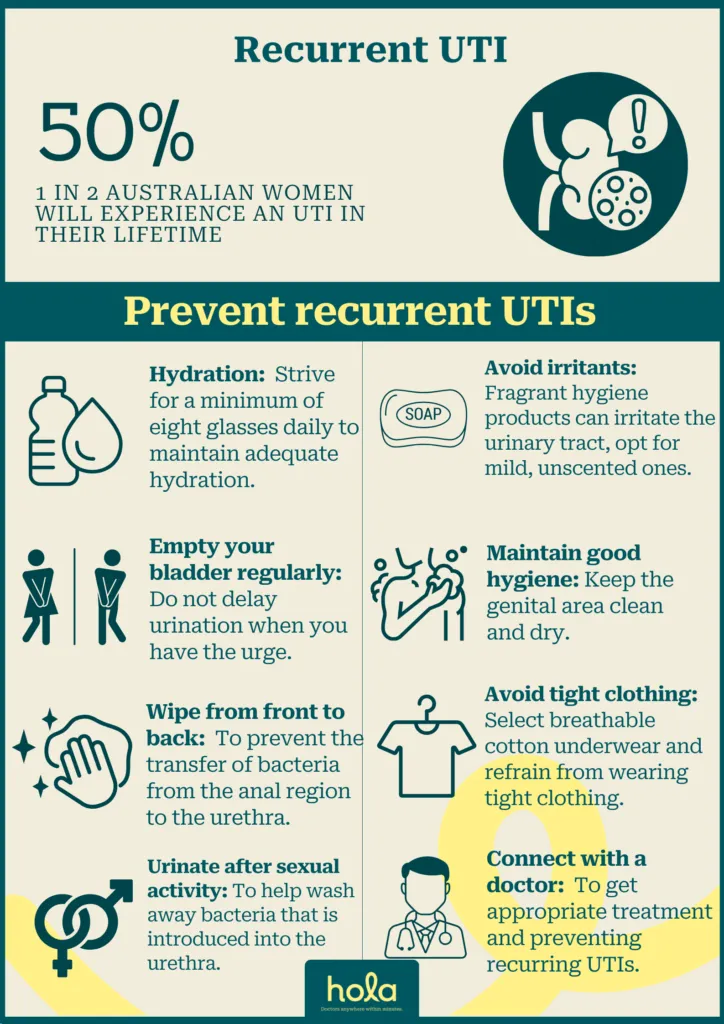
- Keep yourself well-hydrated: Drinking plenty of water helps to wash away bacteria from the urinary tract, reducing the risk of infection. Strive for a minimum of eight glasses daily to maintain adequate hydration.
- Empty your bladder regularly: Do not delay urination when you have the urge. Frequently emptying your bladder helps eliminate bacteria before they can take hold in the urinary tract.
- Wipe from front to back: For women, it’s essential to always wipe from front to back to prevent the transfer of bacteria from the anal region to the urethra, which could lead to UTIs.
- Urinate after sexual activity: Following sexual intercourse, try to urinate as soon as possible to help wash away any bacteria that might have been introduced into the urethra.
- Avoid irritants: Fragrant hygiene products such as soaps, bubble baths, and douches can irritate the urinary tract and heighten the risk of UTIs. Opt for mild, unscented products.
- Maintain good genital hygiene: It is important to keep the genital area clean and dry to prevent bacteria from entering the urinary tract. Select breathable cotton underwear and refrain from wearing tight clothing that can retain moisture.
Other underlying conditions with UTI-like symptoms
Several underlying conditions can present symptoms similar to a urinary tract infection (UTI). Identifying the true cause of these symptoms is essential for appropriate treatment and management.Interstitial cystitis (IC):
Interstitial cystitis, often referred to as painful bladder syndrome, causes ongoing bladder discomfort and the need for frequent urination, similar to urinary tract infection (UTI) symptoms. Nevertheless, no infection is involved, and the pain can be continuous and intense.Vaginal infections:
Conditions like yeast infections or bacterial vaginosis can lead to symptoms that mimic those of UTIs, such as frequent urination, burning sensations, and discomfort, but these issues stem from vaginal infections instead of a urinary tract infection.Kidney stones:
Kidney stones may result in pain, blood in the urine, and frequent urination, which can mirror the symptoms of a UTI. Stones in the urinary tract can block urine flow, causing irritation or infection.Bladder cancer:
In its early stages, bladder cancer can exhibit symptoms such as blood in the urine, frequent urination, and a burning feeling, which could be confused with those of a UTI.Prostatitis:
For men, prostatitis, or inflammation of the prostate gland, can produce symptoms similar to a UTI, including pain, burning during urination, and the need to urinate frequently. Bacterial or non-bacterial causes can trigger it.Overactive bladder (OAB):
Overactive bladder is a condition that involves a strong, often sudden urge to urinate frequently, sometimes without warning. While it doesn’t involve an infection, its symptoms can closely resemble a UTI.Pelvic organ prolapse:
In women, pelvic organ prolapse occurs when pelvic organs, such as the bladder, descend and exert pressure on the urethra, resulting in frequent urination, urgency, and discomfort that resembles UTI symptoms.Diabetes:
When uncontrolled, diabetes can produce symptoms like frequent urination, burning, and discomfort, as elevated blood sugar levels may force the kidneys to work harder, occasionally mimicking UTI symptoms.Urethritis:
Urethritis refers to inflammation of the urethra which can result from infection, injury, or irritation. It can lead to symptoms similar to a UTI, such as pain, burning, and frequent urination.When to consult a GP?
You should see a general practitioner if you notice UTI symptoms that don’t improve with home remedies, or if you frequently experience UTIs. Get medical assistance if you’re facing intense pain, see blood in your urine, have a fever, or struggle when trying to urinate. Furthermore, if you have symptoms that might indicate a more serious issue, such as kidney stones, bladder problems, or pelvic discomfort, a GP can assist in identifying the underlying cause. They can also help address any related concerns. Consulting early can help avert complications and ensure you get the appropriate treatment.How Hola Health may be able to help
Hola Health is an Australian telehealth platform that connects you with registered doctors and nurse practitioners — from the comfort of your home, at a time that suits you. Depending on your situation, a Hola Health clinician may be able to help with:- 24/7 General medical advice via telehealth doctor consult — talk through symptoms or health concerns with a registered doctor or medical practitioner
- Medical certificate online — for work or personal leave, when clinically appropriate
- Referrals to specialists - or in-person services when needed
- Online prescriptions — at a clinician's discretion and where clinically suitable
- Pathology or imaging requests — when assessed as appropriate by your treating clinician
- Mental health Care Plan — Mental Health Treatment Plans (referral to your regular GP may be recommended for ongoing care)

See a Aussie GP online, available 24/7
Download the app today.


Related Articles



Disclaimer
This blog is for general informational purposes only and does not indicate that Hola Health provides all treatments or preventive measures mentioned. It is not intended to be a substitute for professional medical advice. Always seek the guidance of your doctor or other qualified health professional with any questions you may have regarding your health or a medical condition. For emergencies please immediately contact 000. Any medical topics discussed are intended to educate, not to imply availability through Hola Health. Hola Health's telehealth services facilitate access to AHPRA-registered healthcare professionals in Australia; however, a telehealth consultation is not equivalent to an in-person medical examination. Telehealth may not be appropriate for all conditions, symptoms, or circumstances.