

Contents
Oral thrush management

 ChatGpt
  Google AI Mode
  Perplexity
  Claude
 This blog is for educational purposes only and does not replace professional medical advice or diagnosis. If you have health concerns, consult an AHPRA-registered telehealth doctor or request a medical certificate online if clinically appropriate. Please note: Hola Health does not currently offer Mental Health Care Plans.
Oral thrush is a fungal infection of the mouth caused by an overgrowth of a yeast called Candida, which is normally found in the body. In small amounts, Candida is typically harmless, but certain conditions can promote its overgrowth and cause unpleasant symptoms. This guide explains what oral thrush is, what causes it, how to treat it, and how to prevent it.
What is oral thrush?
Oral thrush is an oral fungal infection that develops when the Candida fungus grows in excess. Thrush usually manifests as white or yellowish patches on the tongue, inner cheeks, roof of the mouth, or even the throat. It can happen to anyone, but certain people may be more vulnerable than others.
What causes oral thrush?
The primary culprit behind oral thrush is an overgrowth of the yeast Candida albicans, which is normally found in the mouth. A healthy immune system and gut bacteria usually control Candida. However, certain factors can disrupt this balance, such as:
- Compromised immune system: Conditions like HIV, cancer, or diabetes can weaken the immune system, allowing Candida to flourish.
- Medications: Prolonged use of antibiotics, corticosteroids, or chemotherapy can interfere with the body’s natural bacterial balance.
- Lack of oral hygiene: Poor dental care creates an environment that encourages yeast overgrowth.
- Dentures or mouth appliances: Poorly fitted dentures or mouth guards increase the risk of yeast overgrowth.
- Dry mouth: Saliva has antifungal properties; a dry mouth increases vulnerability.
- Hormonal changes: Pregnancy or birth control pills can create an environment where yeast can thrive.
See an AHPRA-registered doctor online, anytime
24/7 across Australia
Who gets oral thrush?
Oral thrush can occur in:
- Infants and toddlers with immature immune systems.
- Elderly persons, especially those wearing dentures.
- People with long-term conditions like diabetes or HIV/AIDS.
- People taking certain medications, such as prolonged antibiotics or inhaled corticosteroids.
What are symptoms of oral thrush?
Symptoms of oral thrush vary in severity but commonly include:
- White, creamy lesions in the mouth that cannot be wiped off.
- A fuzzy feeling in the mouth.
- Redness, soreness, or irritation in affected areas.
- Difficulty swallowing or a sensation that food is stuck in the throat (if the infection spreads to the throat).
- Cracking or redness at the corners of the mouth.
When should I see my doctor?
- Symptoms last over 7 days or bleed when touched despite at-home care.
- Painful or difficult swallowing (e.g., a sensation of food getting stuck in the throat).
- You have a weakened immune system or other health issues.
How is oral thrush diagnosed?
Doctors typically diagnose oral thrush by examining the mouth for telltale white patches. In some cases, they may scrape a patch and examine it under a microscope. If the infection has spread, additional tests like throat swabs or blood tests may be necessary.
How is oral thrush treated?
Treatment depends on the severity and underlying cause:
- Antifungal medications: These may include lozenges, pills, or liquid forms (e.g., nystatin or fluconazole) as prescribed by a physician.
- Manage underlying conditions: For example, regulate blood sugar levels if diabetic or discontinue antibiotics if medically justified.
- Improving oral hygiene: Brush your teeth twice daily with a soft-bristled toothbrush, floss once a day, and ensure saliva flow by staying hydrated.
How can I avoid oral thrush?
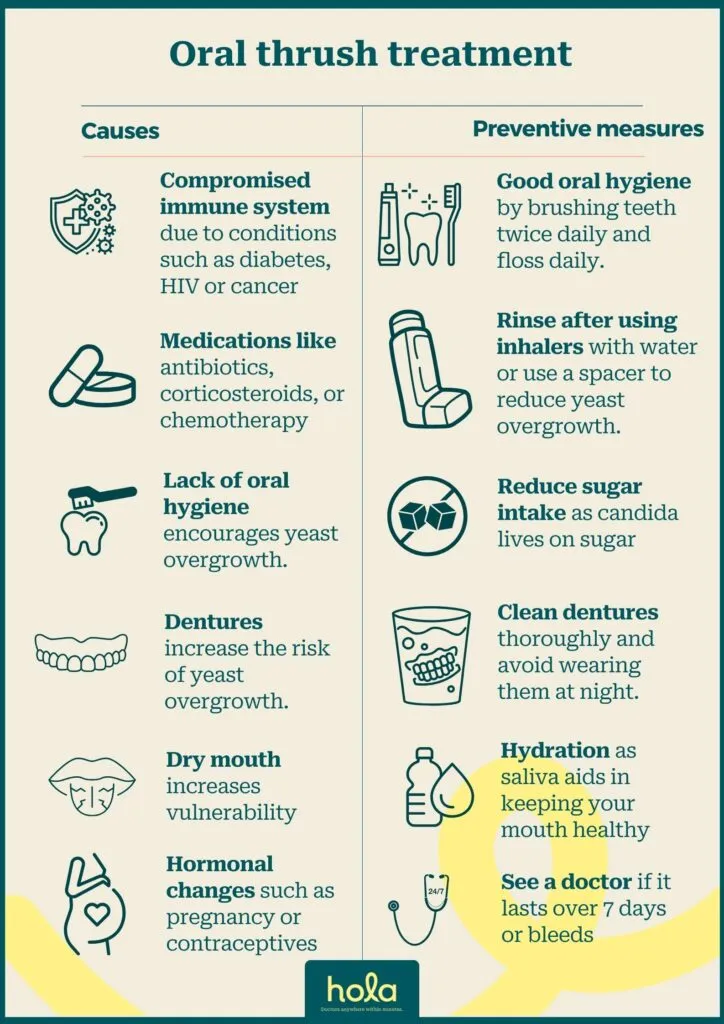
Preventing oral thrush involves maintaining good oral and general health:
- Good oral hygiene: Brush teeth twice daily and floss daily using a soft toothbrush.
- Rinse after using inhalers: If using a corticosteroid inhaler, rinse your mouth with water or use a spacer to reduce yeast overgrowth.
- Reduce sugar intake: Candida thrives on sugar; consuming less can help.
- Denture hygiene: Clean dentures thoroughly and avoid wearing them at night.
- Hydration: Saliva aids in keeping your mouth healthy.
Does oral thrush go away on its own?
In mild cases, oral thrush may improve on its own, especially if the cause (e.g., antibiotics) is temporary and discontinued. However, persistent or severe cases require antifungal medication to prevent complications.
What mouthwash kills thrush?
Mouthwashes containing antifungals can reduce yeast overgrowth and relieve symptoms but should be used only under medical advice.
How can telehealth help?
Telehealth makes it easier to consult doctors about non-emergency conditions like oral thrush. Services include:
- Discussing symptoms with a licensed professional.
- Virtual examinations to confirm a suspected diagnosis.
- Receiving prescriptions for antifungal medication without an in-person visit.
How Hola Health may be able to help
Hola Health is an Australian telehealth platform that connects you with registered doctors and nurse practitioners — from the comfort of your home, at a time that suits you. Depending on your situation, a Hola Health clinician may be able to help with:
- 24/7 General medical advice via telehealth doctor consult – talk through symptoms or health concerns with a registered doctor or medical practitioner
- Sick leave certificate online – for work or personal leave, when clinically appropriate
- Referrals to specialists – or in-person services when needed
- Get Instant scripts online (if clinically appropriate)
- Pathology or imaging requests – when assessed as appropriate by your treating clinician
Hola Health clinicians are AHPRA-registered Doctors and medical practitioners in Australia. They will always recommend an in-person consultation, specialist referral, or emergency care if that is in your best interest.
Note: Telehealth is not suitable for all conditions. Hola Health does not replace your regular GP, specialist, or emergency services. If you are unsure whether telehealth is right for your situation, we recommend speaking with your usual healthcare provider. In emergencies, call 000.
Last thoughts
Oral thrush can be painful but is typically easy to treat with proper medication and preventive care. Recognizing symptoms and their causes helps in taking timely action and avoiding complications. If unsure about your symptoms, seek medical advice in person or through telehealth. By managing risk factors and maintaining good oral health, you can significantly reduce the likelihood of developing oral thrush.
Request referral online. Get via SMS if approved
24/7 across Australia
Authors

Medically reviewed by
Dr Nelson Lau
MBBS FRACGP, General Practitioner
30+ Years of Experience
Dr Nelson Lau is a highly experienced Doctors in Australia and digital health innovator with over 30 years of clinical practice. He is a graduate of the University of Western Australia and a Fellow of the Royal Australian College of General Practitioners (FRACGP).
Disclaimer
This blog is for general informational purposes only and does not indicate that Hola Health provides all treatments or preventive measures mentioned. It is not intended to be a substitute for professional medical advice. Always seek the guidance of your doctor or other qualified health professional with any questions you may have regarding your health or a medical condition. For emergencies please immediately contact 000. Any medical topics discussed are intended to educate, not to imply availability through Hola Health.
Note: At Hola Health, we're committed to offering trustworthy, accurate and up-to-date health information. Our Editorial Process entails thorough research, fact- checking, and medical review by doctors in diverse health fields, including medical practitioners, doctors, and psychotherapists based in Australia. We take guidance from qualified Australian doctors. We prioritise primary sources and avoid tertiary references wherever possible.
See a Aussie GP online, available 24/7
Download the app today.