
Contents
Australia’s social media ban for under-16s: Will it really improve children’s mental health?
 ChatGpt
  Google AI Mode
  Perplexity
  Claude
 This blog is for educational purposes only and does not replace professional medical advice or diagnosis. If you have health concerns, consult an AHPRA-registered telehealth doctor or request a medical certificate online if clinically appropriate. Please note: Hola Health does not currently offer Mental Health Care Plans.
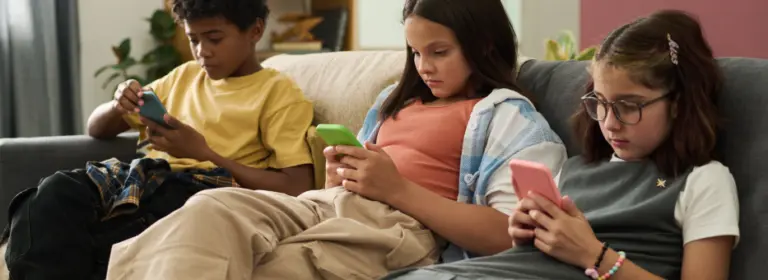
Australia’s move to limit social media access for individuals under 16 stems from increasing worries regarding young people’s mental health. Escalating instances of anxiety, depression, cyberbullying and online pressure have brought the matter to the forefront of national discussions. Although the aim is to safeguard children, a crucial question lingers. Does restricting social media genuinely enhance mental well-being, or does it merely obscure deeper mental health issues?
What is Australia’s social media ban?
According to Amira, a registered psychotherapist –
- The ban1 applies to children under the age of 16; implementation details and timelines are still being finalised.
- Major social media platforms are expected to be affected, though the final list of platforms has not yet been confirmed.
- Under the proposed framework, responsibility for age verification and enforcement would fall on platforms rather than parents or children.
- Children may still be able to view publicly available content without creating an account, depending on how platforms implement the rules.
Why is social media linked to children’s mental health issues?
- Heightened anxiety and decreased self-esteem: Continuous exposure to idealised lives can lead children to feel unworthy.
- Body image issues: Filters and digitally altered images skew reality and self-view.
- Cyberbullying and online harassment: Digital platforms can magnify peer cruelty beyond school hours.
- Sleep disturbances: Late-night scrolling disrupts sleep and emotional regulation.
- Fear of missing out (FOMO): Observing peers’ activities in real time can increase feelings of exclusion.
Common mental health conditions linked to excessive social media use
| Mental health issue | How social media can contribute |
| Anxiety | Constant notifications and social comparison |
| Depression | Isolation and negative self-image |
| Low self-esteem | Likes culture and filtered realities |
| Sleep problems | Late-night scrolling and overstimulation |
| Stress | Online pressure to perform and respond |
Could the ban actually improve children’s mental health?
- Reduced exposure to harmful or distressing material.
- Lower risks of cyberbullying and online harassment.
- Improved sleep routines and daily structure.
- Increased face-to-face social interaction.
- Better concentration and attention at school.
For some children, reducing social media exposure may offer relief from constant stimulation and comparison.
The other side: Possible mental health challenges after the ban
- Feelings of social disconnection from peer groups.
- Heightened fear of missing out (FOMO).
- Migration to alternative or less regulated online platforms.
- Loss of online peer support or identity-based communities.
- Adjustment difficulties for teenagers reliant on online social interaction.
These concerns highlight that restrictions alone do not resolve underlying emotional or developmental needs.
What mental health experts are saying?
Numerous mental health professionals contend that bans alone are not a complete solution. Sustainable improvement relies on fostering emotional resilience alongside healthy online habits. Professionals emphasise the importance of digital literacy, transparent communication within families, and proactive mental health assessments when problems arise.
Signs a child may be struggling with mental health – with or without social media
- Persistent sadness, irritability, or fluctuating moods.
- Withdrawal from friends or family members.
- Alterations in sleep habits or appetite.
- Deteriorating academic performance.
- Increased anxiety or emotional outbursts.
- Loss of interest in previously enjoyed activities.
How parents can support children’s mental health during this change
- Encourage offline interests, routines, and physical activities.
- Foster open, non-judgmental discussions.
- Establish healthy screen limitations instead of relying solely on restrictions.
- Observe emotional and behavioural shifts closely.
- Pursue professional support promptly when issues arise.
How telehealth can help support children and families
- Facilitates access to qualified GPs for mental health advice.
- Allows for early evaluations and referrals to suitable services.
- Enables convenient and private consultations from home.
- Provides support for both parents and teenagers.
- Especially beneficial for families in remote areas or with limited time.
Conclusion
Australia’s prohibition on social media might mitigate certain immediate dangers for children, particularly concerning exposure and online threats. Nonetheless, enduring mental wellness relies on more than just restrictions. Robust family support, mental health education, and easily accessible healthcare are crucial. A multifaceted strategy that incorporates policy, parenting, and professional assistance provides the most effective means of fostering children’s mental health.
See an AHPRA-registered doctor online, anytime
24/7 across Australia
FAQ
It might lessen some risks, but it is not a full solution by itself.
Absolutely. Mental health issues can occur independent of online access.
Changes in mood, social withdrawal, sleep difficulties, anxiety, or disinterest in previously enjoyed activities.
Yes, especially if their peer groups continue to engage online.
Answered by Amira: Problematic or excessive social media use is widely recognised as a behavioural concern, though it is not a formal mental health diagnosis.
Promote open communication, maintain a balanced approach to screen time, and seek assistance early.
Authors

Editorial staff
Medically reviewed by

Amira Shah
Master’s in Counselling Psychology, Psychotherapist & Counsellor
8+ Years of Experience
Amira Shah is a trauma-informed psychotherapist with over a decade of experience in supporting women through complex mental health challenges. She holds a Master’s in Counselling Psychology and has worked extensively at a women’s centre, offering therapy to survivors of physical abuse, sexual assault, PTSD, and human trafficking. Amy owns her practice, Empathetic Counselling & Psychotherapy (ECP), and is committed to continuing her support for women.
Disclaimer
This blog is for general informational purposes only and does not indicate that Hola Health provides all treatments or preventive measures mentioned. It is not intended to be a substitute for professional medical advice. Always seek the guidance of your doctor or other qualified health professional with any questions you may have regarding your health or a medical condition. For emergencies please immediately contact 000. Any medical topics discussed are intended to educate, not to imply availability through Hola Health.
Note: At Hola Health, we're committed to offering trustworthy, accurate and up-to-date health information. Our Editorial Process entails thorough research, fact- checking, and medical review by doctors in diverse health fields, including medical practitioners, doctors, and psychotherapists based in Australia. We take guidance from qualified Australian doctors. We prioritise primary sources and avoid tertiary references wherever possible.
See a Aussie GP online, available 24/7
Download the app today.