

Natural home remedies for UTI to relieve symptoms

Contents
 Facebook
  X
X  Copy Link
Overview
Urinary tract infections (UTIs) are among the most common bacterial infections in Australia, impacting thousands of individuals each year. Women are significantly affected; approximately one in three Australian women will develop a UTI at some point during their lifetime1, often with repeated episodes. While most cases are mild and manageable, these infections may cause complications if neglected, especially in children, pregnant women, and older adults.
The majority of urinary tract infections (UTIs) in Australia are attributed to Escherichia coli (E. coli), a bacterium commonly found in the intestines that can invade the urinary tract. With growing concerns about antibiotic resistance, there is a rising focus on natural, low-risk remedies to manage discomfort and protect urinary health, especially for less severe or early infections. It is important to understand that home remedies are for symptom relief and prevention only, and do not kill the bacteria causing the infection. Active UTIs generally require medical assessment and antibiotic treatment to prevent complications.
Note: This content is for general informational purposes only and does not constitute medical advice, diagnosis, or treatment. Strategies mentioned (hydration, cranberry) are for supportive symptom relief and prevention only. They do not replace antibiotic treatment for bacterial infections. We recommend sharing your consult summaries with your regular GP and bulk billing is available for eligible patients during Medicare-defined periods; otherwise, private fees apply.
What is a UTI?
A urinary tract infection is a bacterial infection that develops in any part of the urinary system, including the kidneys, bladder, ureters, and urethra. E.coli accounts for up to 80% of uncomplicated UTI cases2. If not treated, UTIs can lead to more severe complications.UTI symptoms
Common symptoms include:- Frequent urination: You may feel the urge to urinate more often, even when a small amount of urine is to pass
- Hematuria: Hematuria, or blood in the urine, is possible if you have a UTI.
- Malaise or fatigue: A UTI may be accompanied by a feeling of being sick, fatigue, or a high fever.
- Pelvic discomfort: A UTI may cause pain in the pelvic area, particularly in women.
- Urgency: You may feel the sensation of having to urinate immediately, usually without any prior notice.
- Pungent odour: Your urine might have a strong, unpleasant odour.
- Pain or burning sensation: You may experience pain or burning while urinating.
- Vomiting and nausea: Some individuals with UTIs may experience nausea, especially if the infection has progressed or impacted the kidneys.
- Pain during sexual activity: Women who have a UTI may feel pain or discomfort during sexual intercourse.
- Back pain or discomfort: If the infection spreads to the kidneys, a UTI may cause pain or discomfort in the back or lower abdomen.
Natural home remedies for UTI
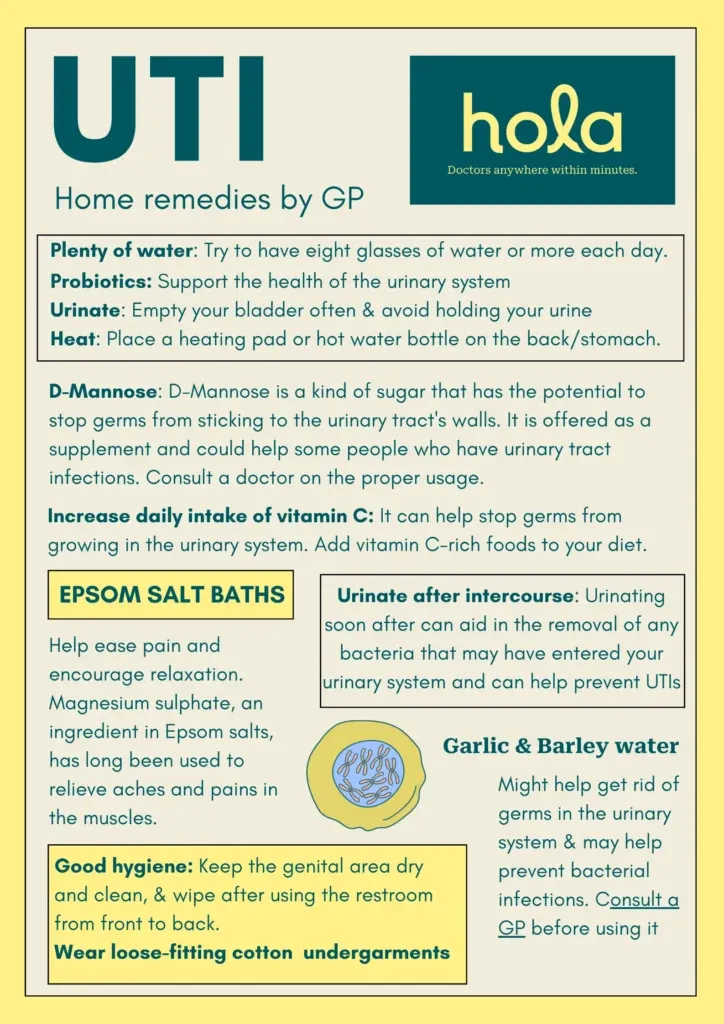
1. Hydration and diet:
- Water: Drinking plenty of water helps flush bacteria from the urinary tract and promotes faster healing. This simple habit is one of the most effective foundational measures for UTI relief.
- Cranberry juice: According to a new study3 led by researchers at Bond University, people who drink cranberry juice are less likely to develop a urinary tract infection.
- Tip: Choose 100% unsweetened cranberry juice with adequate amounts of active compounds (proanthocyanidins).
- Vitamin C and Barley water: These are age-old remedies that may provide some relief. Vitamin C may reduce urinary pH and boost the immune system, while barley water acts as a gentle, calming diuretic. Evidence is limited, so it should only be used in conjunction with proven treatments and always in consultation with your GP before trying it.
2. Lifestyle and hygiene habits:
- Urinate after intercourse, wipe front-to-back, avoid irritants: Often recommended to limit the spread of bacteria and reduce the risk of infection. While widely promoted, these habits are largely rooted in everyday hygiene practices and personal experience.
- Avoid bladder irritants: Reduce consumption of spicy dishes, coffee, tea, alcohol, and high-sugar foods, as they aggravate bladder discomfort.
3. Natural supplements:
- Probiotics (especially Lactobacillus varieties): Research4 suggests that they may help reduce the likelihood of recurring UTIs by promoting beneficial bacteria and preventing pathogens from sticking to urinary tissues. While results are mixed, they may serve as a complementary approach.
- D-mannose: Studies5 suggest D-mannose may help prevent recurring urinary infections by blocking E.coli from binding to bladder walls. Some studies suggest D-mannose may help support bladder health and prevent recurrence. However, it should not be used as a substitute for antibiotics during an active infection. Always consult your GP regarding its use.
4. Comfort measures:
- Heat packs and warm baths: Using a warm (not hot) heating pad on the lower abdomen or taking a soothing warm bath (Epsom salts can be added if desired) may reduce pain and cramps. This is a commonly used, low-risk approach.
| Category | Remedies & Notes | Evidence Level |
| Hydration & Diet | Water (strong evidence), Cranberry juice (moderate), Vitamin C & barley water (limited) | Water is strong, cranberry is moderate; others are limited |
| Lifestyle & Hygiene | Post-sex urination, wiping habits, and avoiding bladder irritants | Anecdotal/observational |
| Natural Supplements | Probiotics, D-mannose | Limited/conflicting (probiotics); moderate (D-mannose) |
| Comfort Measures | Heat pads, warm/Epsom baths | Comfort-based; low scientific evidence |
When to see a doctor
Most urinary tract infections are mild and can be treated with a short course of antibiotics. However, seeking medical care is crucial in some cases, especially when symptoms are severe, unusual, or don’t improve.
If a UTI spreads to the kidneys, it is a medical emergency. Call 000 or go to the Emergency Department immediately if you have:
- High fever (over 38°C) with chills or shaking.
- Severe flank (side/back) pain.
- Nausea and vomiting.
- Confusion or disorientation.
See a doctor soon (within a few days) if:
- Your symptoms don’t improve after 2–3 days of self-care or antibiotic treatment.
- You have recurrent UTIs — two or more in six months, or four or more in a year.
- You have an underlying health condition like diabetes or a compromised immune system, which increases your risk of complications.
How Hola Health connects you to care:
For uncomplicated UTIs (typically in non-pregnant women), telehealth can be an efficient way to access treatment.
- Assessment: A GP can review your symptoms to confirm a diagnosis of cystitis.
- Prescriptions: If clinically appropriate, medicine can be prescribed and sent to your phone as an eScript.
- Pathology: If the diagnosis is unclear, the doctor can email a pathology request form for a urine test.
- Referrals: For recurrent UTIs, we can provide referrals to Urologists.
- Medical certificate: Provide medical certificates online for UTI symptoms that are affecting your ability to work or study.
Note: Men, children, and pregnant women often require in-person assessment or urine testing before treatment.
Conclusion:
UTI symptoms can be unpleasant, but natural remedies offer gentle, effective relief when chosen wisely. Simple habits—from staying well-hydrated to trying soothing herbal options—can ease discomfort. Stay proactive with your hygiene and hydration, but always consult a doctor if symptoms persist to ensure the infection is treated effectively.See a Aussie GP online, available 24/7
Download the app today.


Related Articles

Disclaimer
This blog is for general informational purposes only and does not indicate that Hola Health provides all treatments or preventive measures mentioned. It is not intended to be a substitute for professional medical advice. Always seek the guidance of your doctor or other qualified health professional with any questions you may have regarding your health or a medical condition. For emergencies please immediately contact 000. Any medical topics discussed are intended to educate, not to imply availability through Hola Health.